
Photos by Johannes Braun, Sebastian Stumpf and Martin
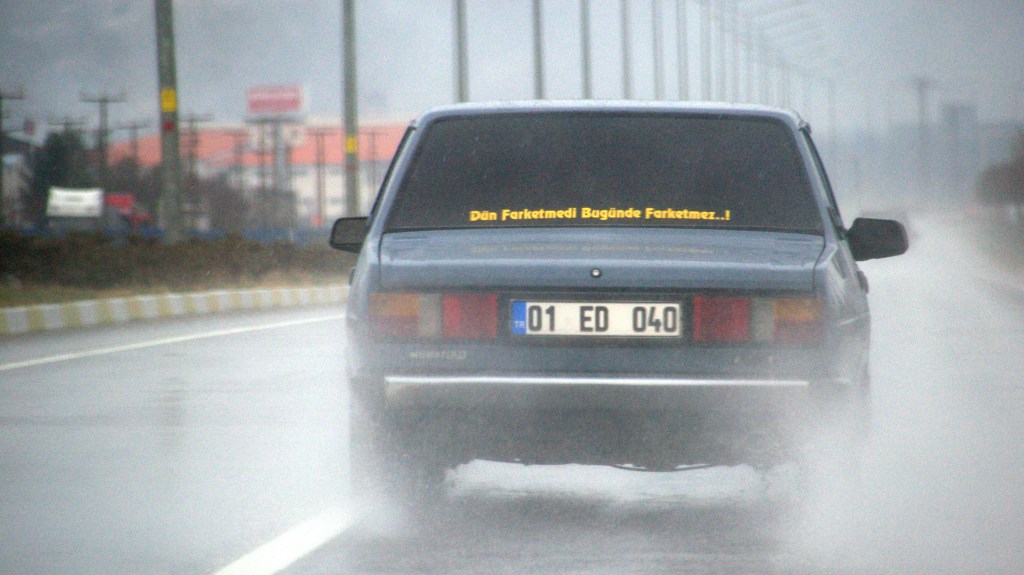
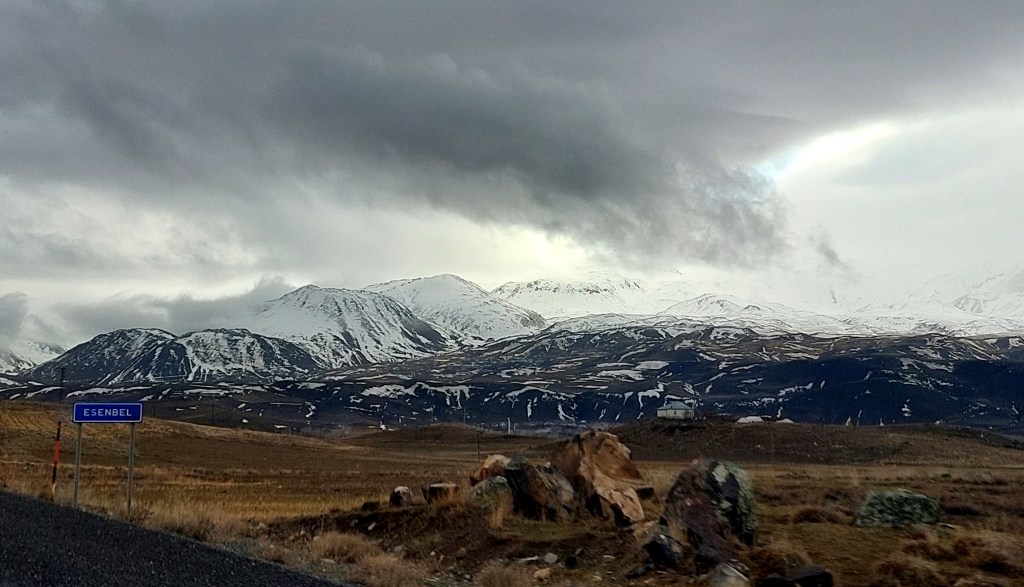
Once Markus gets going behind the wheel, he can be hard to stop. There is of course no denying that, yet again, the weather was also a factor. With snow lines climbing to beyond 2,000m in altitude, stops in Erzincan or Erzurum were not particularly appealing. And so we drove east through the rain on Wednesday, 15 March, with only short stops for a somewhat disappointing breakfast in Sivas and afternoon Köfte somewhere on the edge of Kurdistan. As we passed endless plains and breathtaking mountain scenery, someone would keep saying, “Imagine this place in a proper winter with snow.” No matter how high the roads took us, however, there was only rain. Somehow the scenery was reminiscent of drives through endless North America, with the striking difference that there seemed to be train tracks next to every road, although we never saw a train.
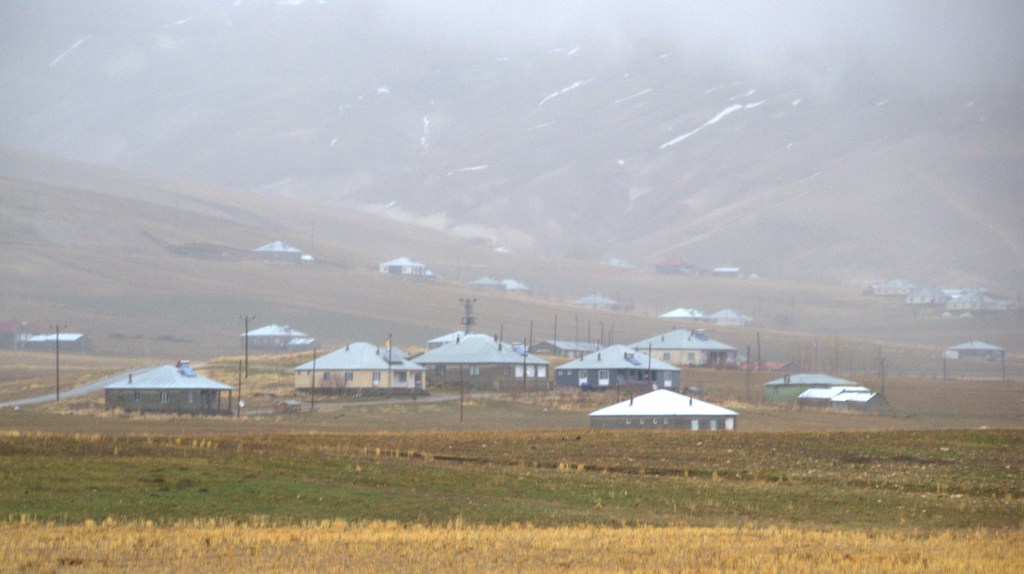
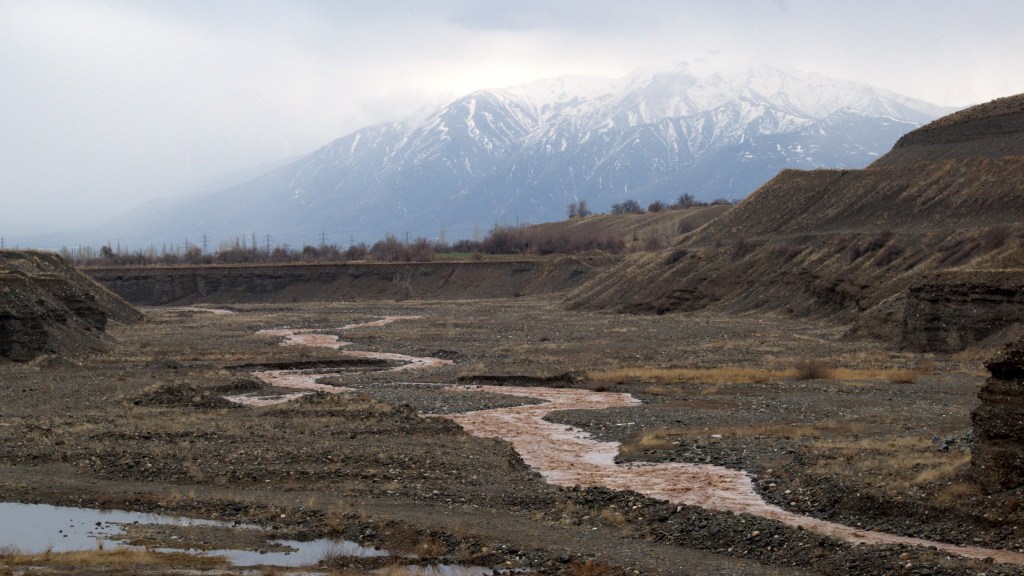

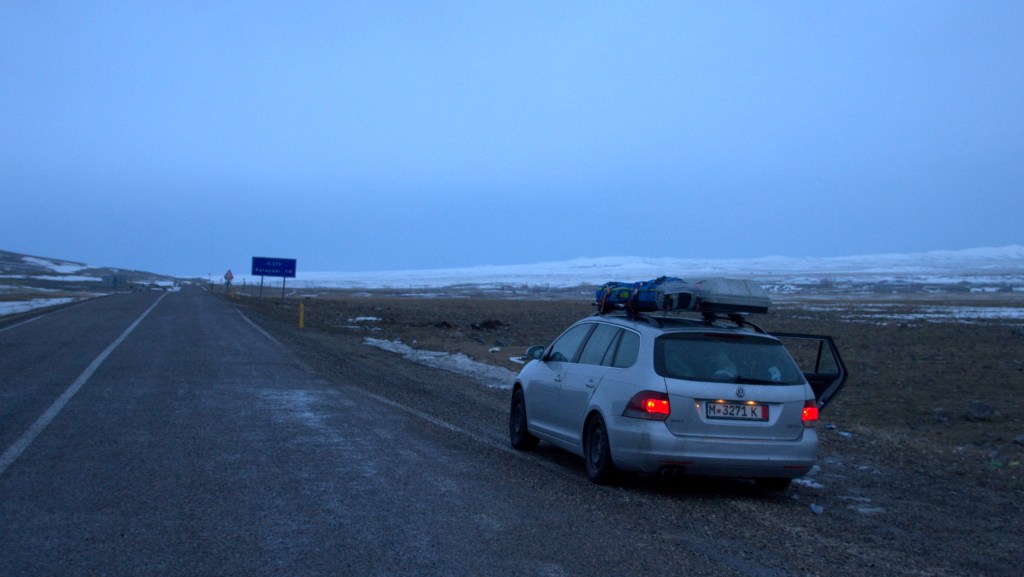
Heading into the Wild East
Kurdistan
We had soon covered more than 800km and arrived in beautiful Patnos near Lake Van, where were set up camp at classy Süphan Grand Hotel, the best (and only) hotel in town. This predominately Kurdish part of Turkey had clearly benefited less from infrastructure investments and other modernisation policies by the Turkish government. It also seemed to have been hit harder than other parts of the country by the latest economic crisis. Parts of Patnos resembled the abandoned villages we had seen in Bulgaria, with the number of collapsing or half-finished buildings only exceeded by the potholes in the streets and dirt roads. While it had become something of a running joke among ourselves that someone should pray to Allah for snow, the locals asked us to pray for AKP to lose the upcoming elections. The most frequent question we had to answer, however, went something like, “How did you guys end up here?” according to Google Translate. Barring a few truck drivers, we were quite certain to be the only foreigners in the area and positive that there were no other tourists. To the disbelief of our Kurdish hosts and other interlocuters, all of whom were exceptionally friendly and welcoming, the simple answer was “skiing”. This was, of course, as much wishful thinking as it was a gross oversimplification of reality.
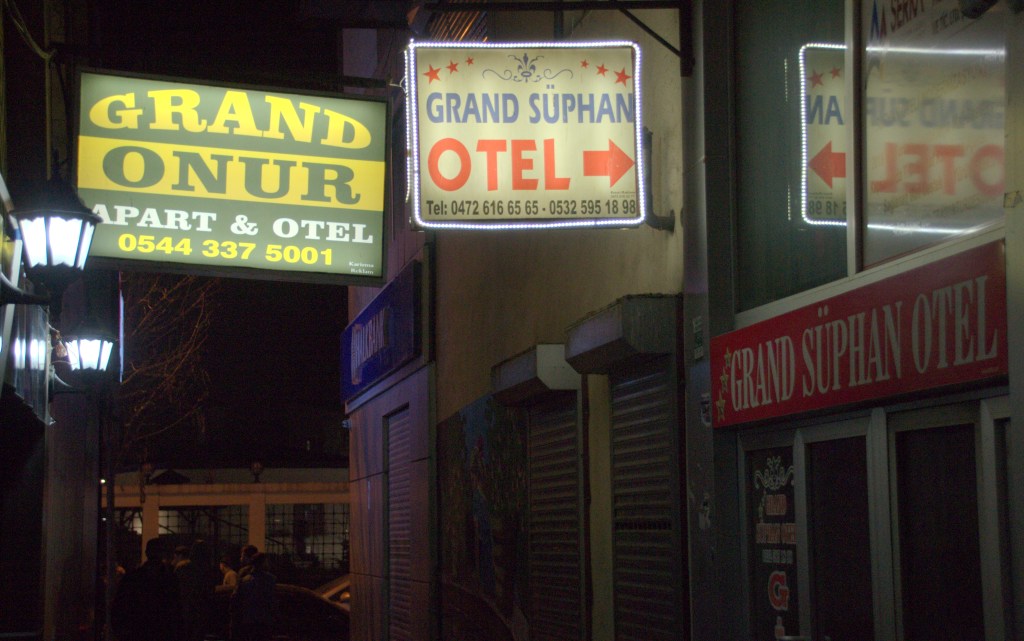
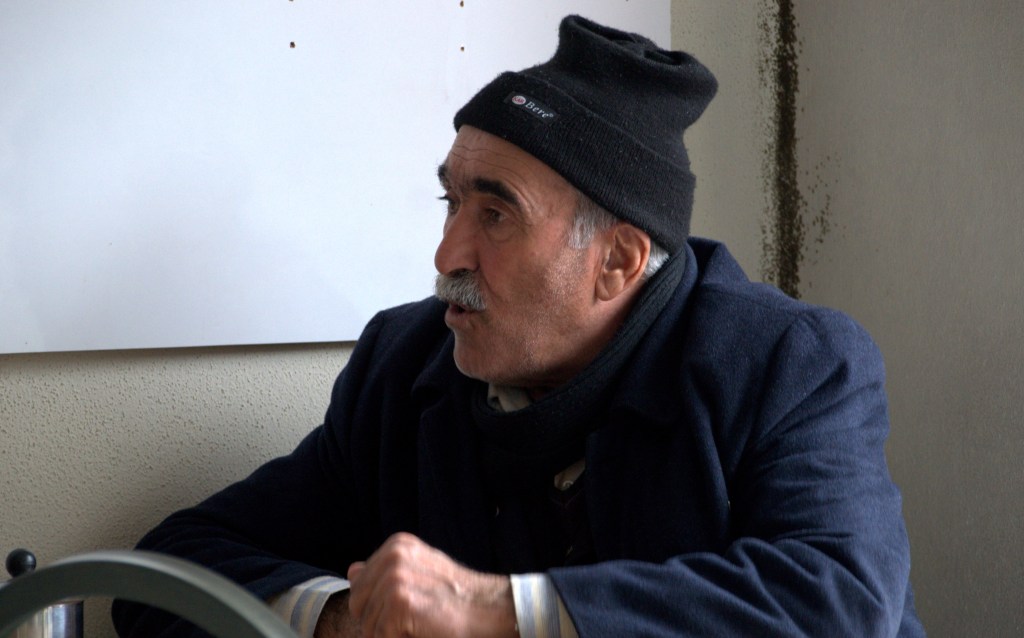
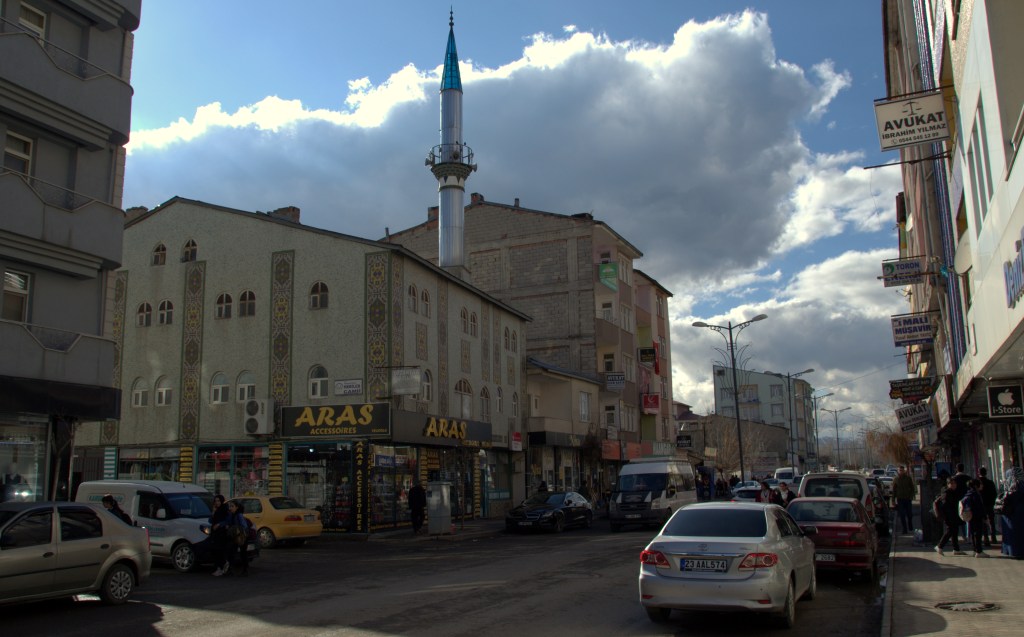
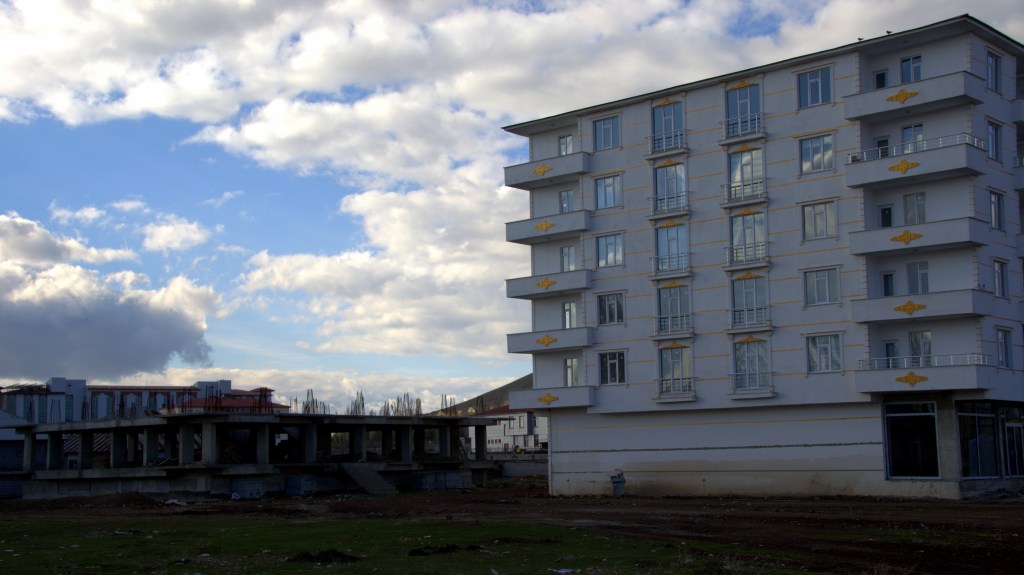
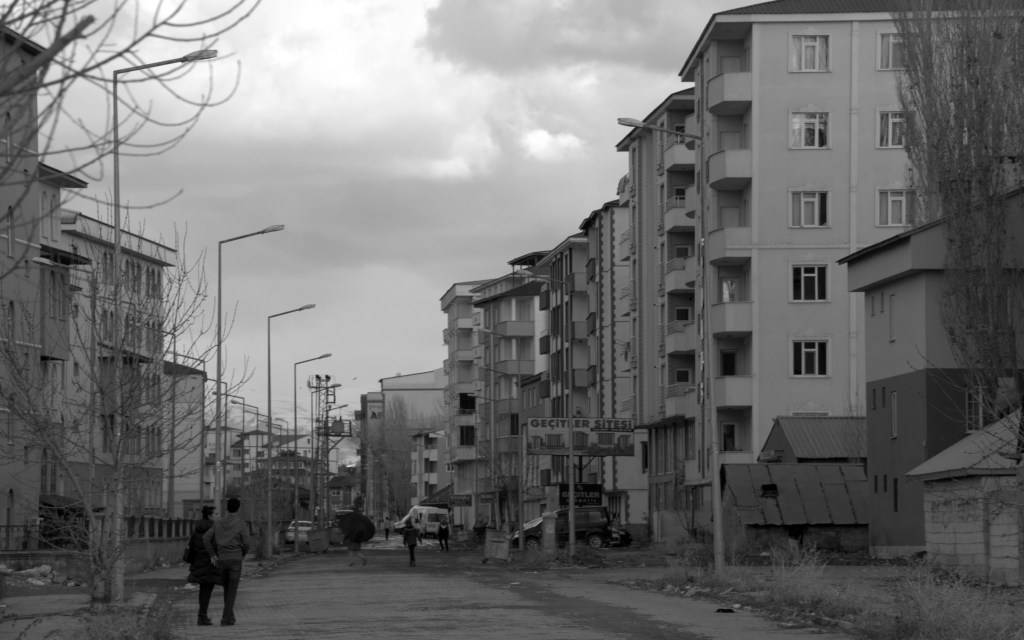

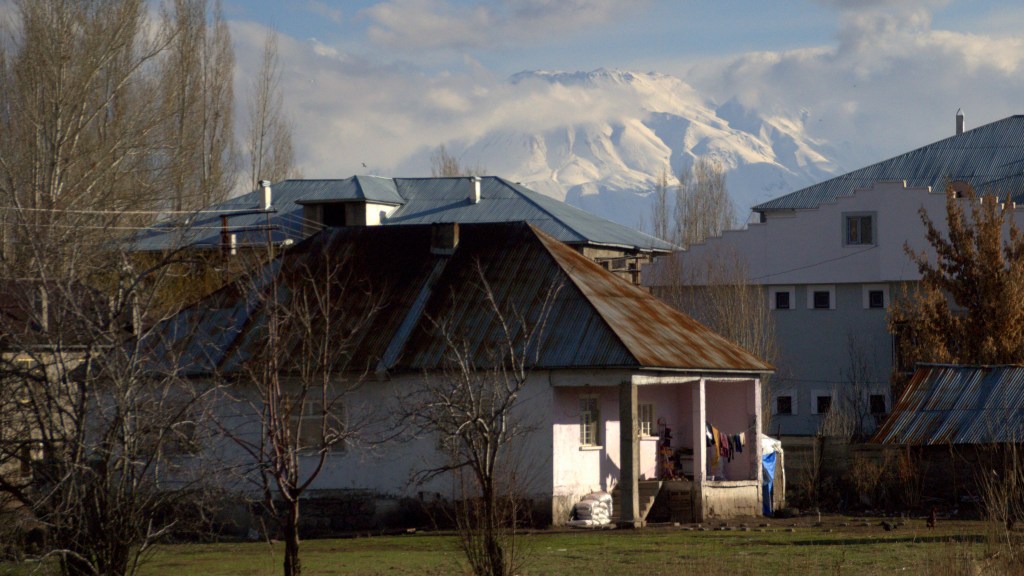
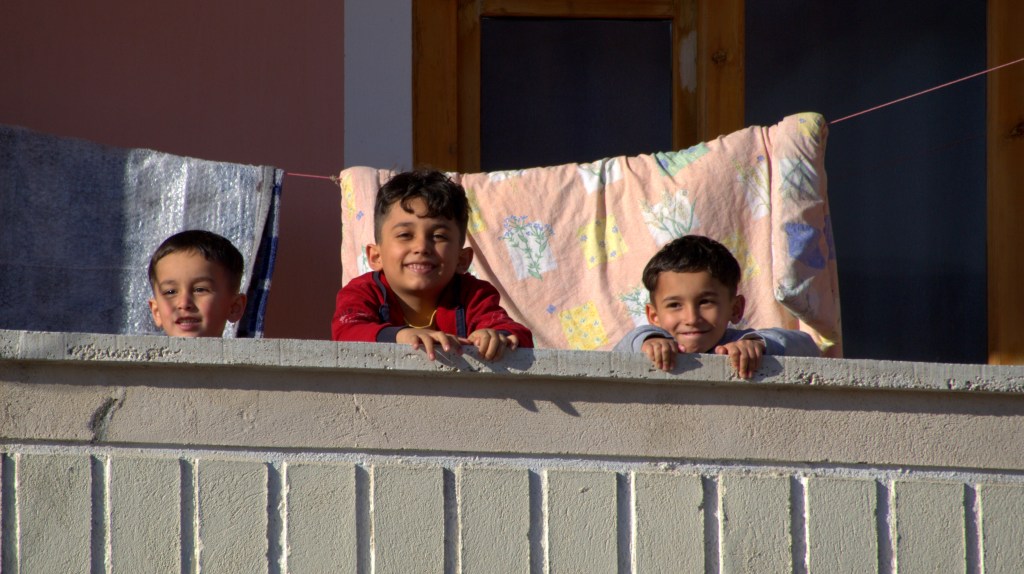
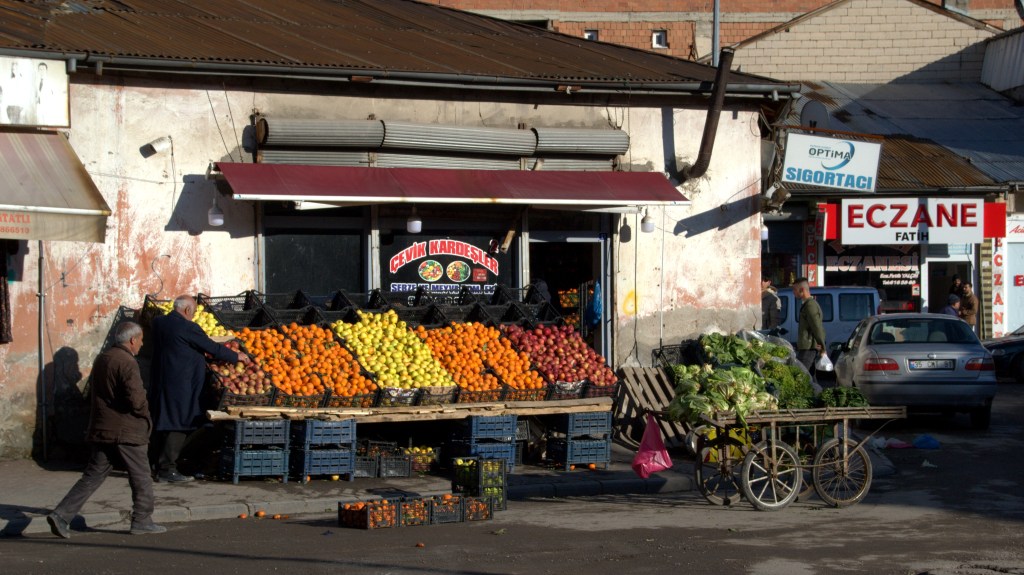
Thriving Patnos
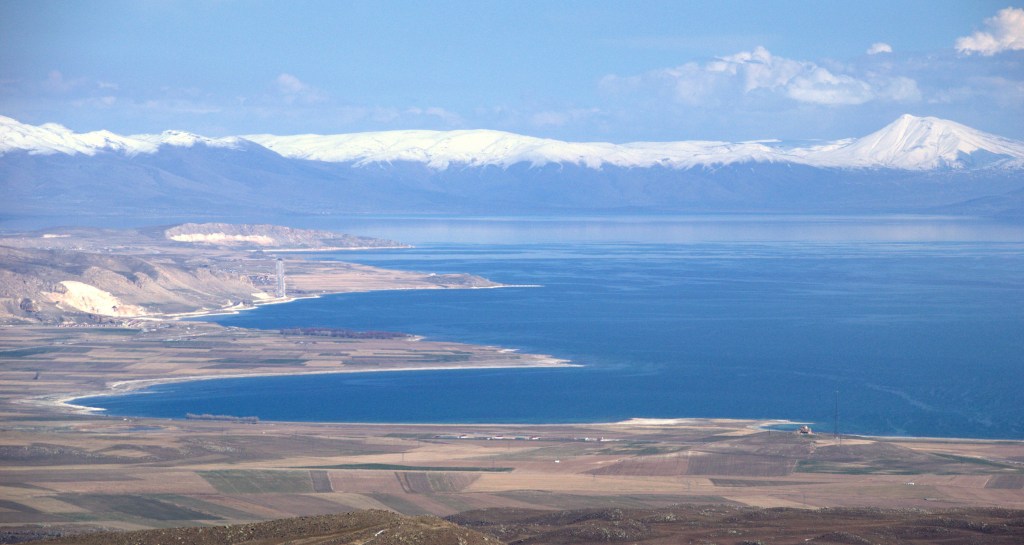
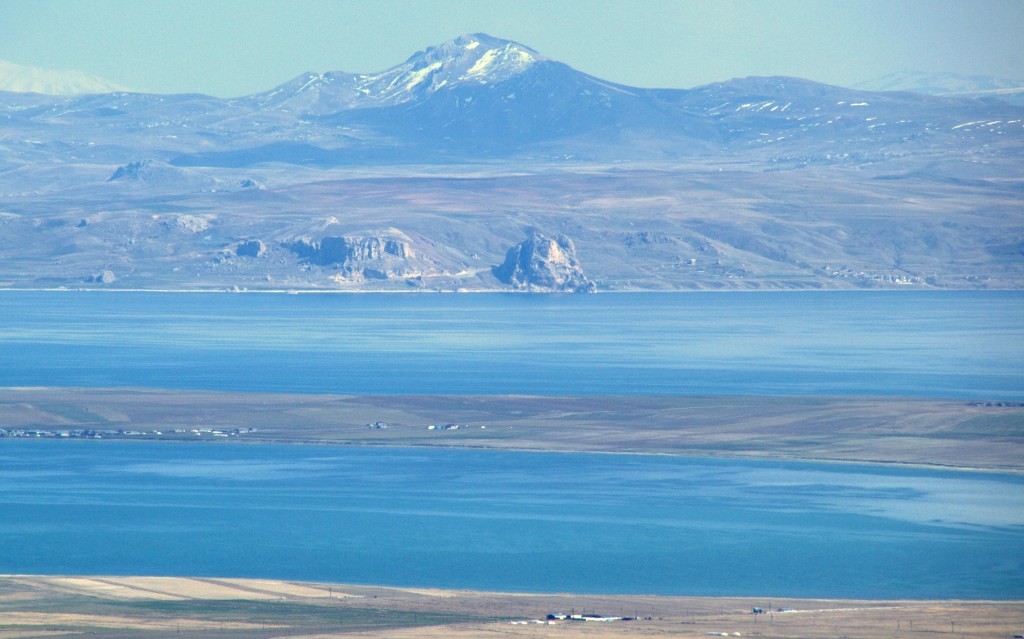
At more than 3,000km2 in surface and 400m in depth, Van Gölü is not only the largest lake in Turkey but also one of the few lakes on the planet that have no outlet. Even in a usual winter with temperatures well below freezing level at roughly 1,600m altitude, if the concept of usual hasn’t yet turned completely non-sensical in 2023, high saline content prevents its water from freezing. Salt and carbon also make the water utterly inhospitable to fresh water and marine fish alike, with the notable exception of the tarek, pearl mullet or Van shah kuli, a species of fish found nowhere else in the world. Apparently, in spring time, tareks travel upstream through rivers around the lake to lay eggs, giving rise to a special fishing technique whereby airborne fish are caught with bags. Coincidentally, Patnos became our first stop in Turkey where we ate a warm meal without meat. Tarek was absent from the menu but we weren’t entirely sure whether eating deep-fried fish imported through Istanbul fish market was any less damaging to global ecosystems.
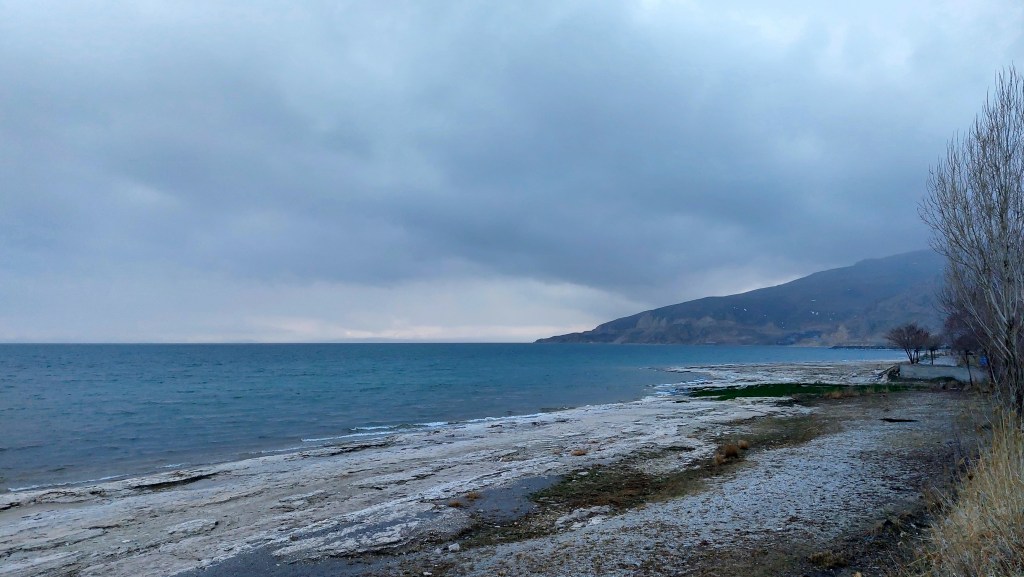

Lake Van
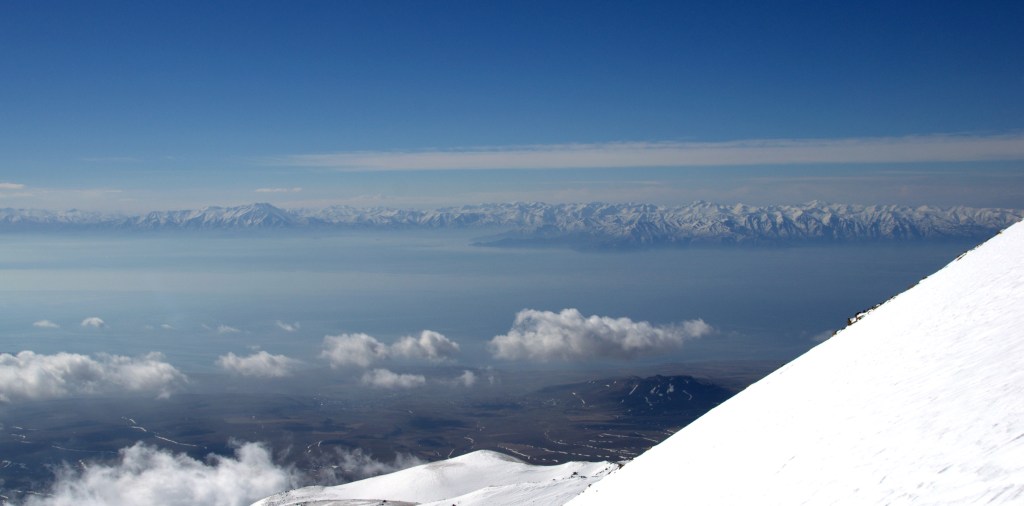
Süphan Dağı an extinct volcano that rises from the shores of Lake Van to some 4,050m in altitude. According to Ski Rando’s World Ski Touring Guide, the snow-covered landscapes around the mountain in combination with the saline lake make for spectacular scenery. Spectacular it was but something was missing. Although the weather had been a factor in the decision to take the detour via Kurdistan, conditions for skiing would be no more favourable than anywhere else on our trip. Our stay would continue to be accompanied by warm southerly winds, thick cloud cover and precipitation that would fall in the form of rain anywhere below 2,500m.
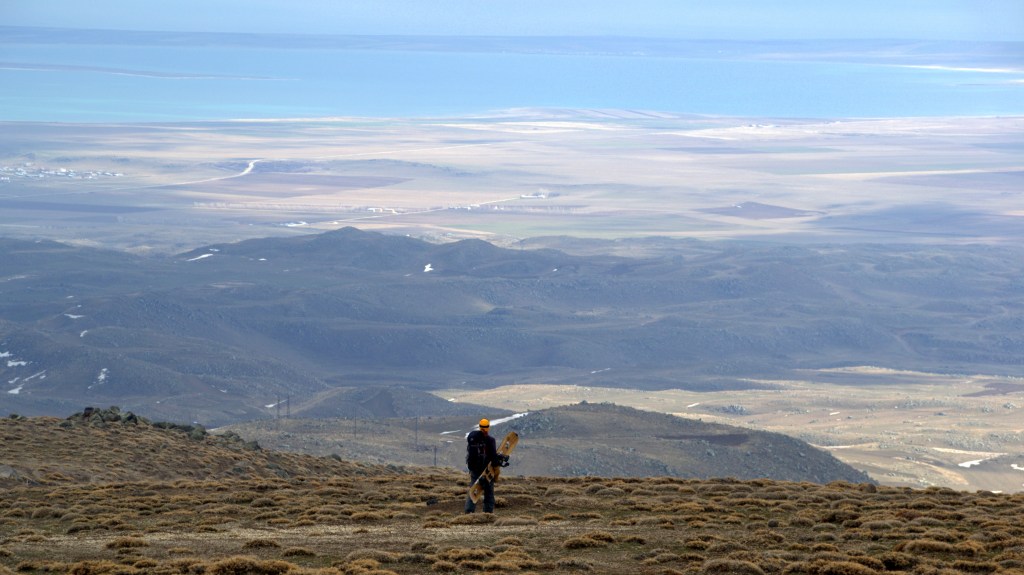
As the weather forecast started to look more promising for Friday, we drove to the east and south-facing slopes of Süphan Dağı above the lakeshore for a first reconnaissance tour. A dirt road led up to a tiny village close to the snow line above Aydınlar, which would make a good starting point for an attempt at the summit the next morning. We made plans for returning early, fantasising of clear blue skies, views of the lake and fresh snow at higher altitudes. Only after having returned to Patnos did we learn that the permit required for climbing Mt Süphan could only be obtained at an army post in Adilcevaz, close to Aydınlar. Markus and Johannes returned to the far side of the mountain, presented our passports and registered our blood groups, and permission was ours.
Needless to say, the weather forecast turned and we found ourselves in thick fog the next day, skinning up disgustingly wet and unstable snow. It seemed to have rained to as high as 3,000m. As Sebastian was struggling with a respiratory infection and temperatures jumped from chilly to unbearably hot from the sun radiation trapped in the fog, we soon abandoned our attempt and returned to Süphan Grand. After the third consecutive U-turn far from any summit and continuing rain, morale was at an alltime low. Johannes had now been a this trip for nearly a week without a single day of skiing. While Martin was considering taking a flight home or to North America, Johannes was more decisive in cutting short his stay and bought a ticket back to Germany for Sunday.

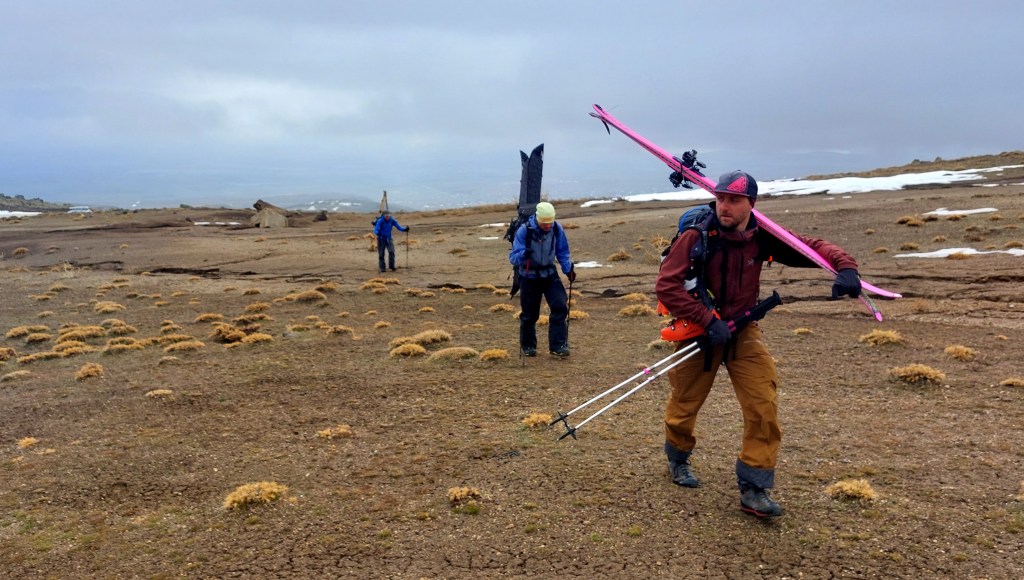
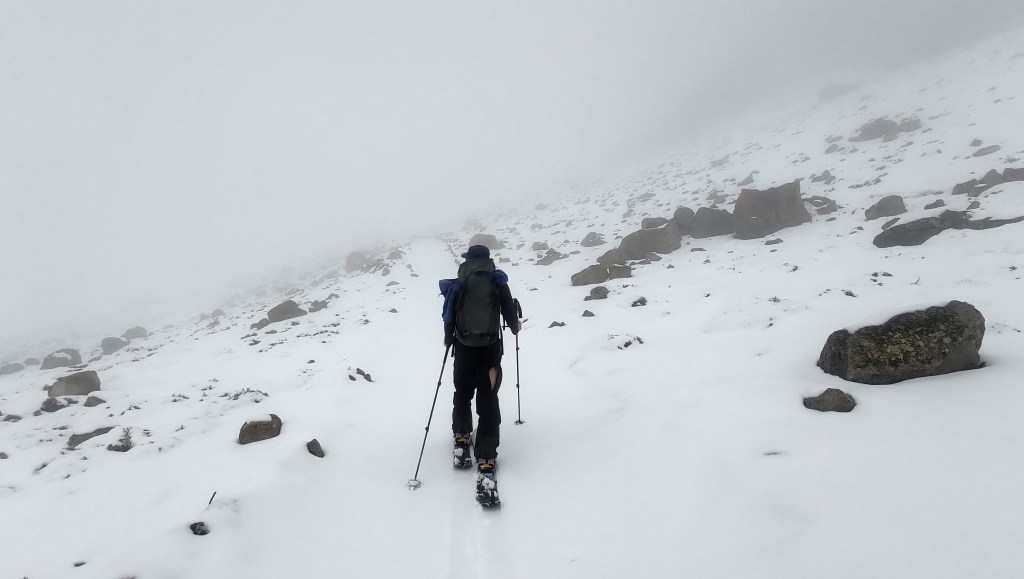
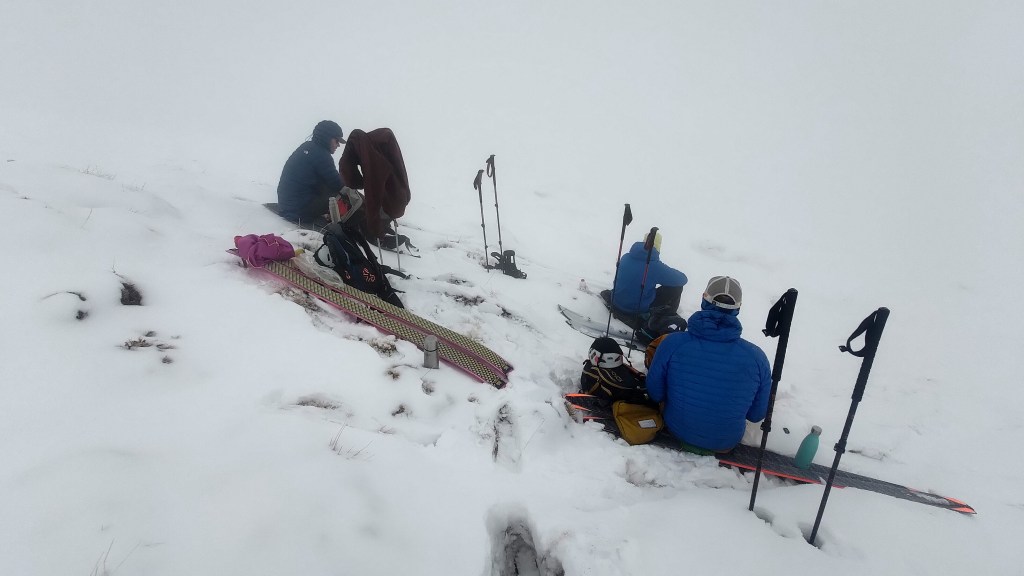
Mt Süphan in the rain and fog
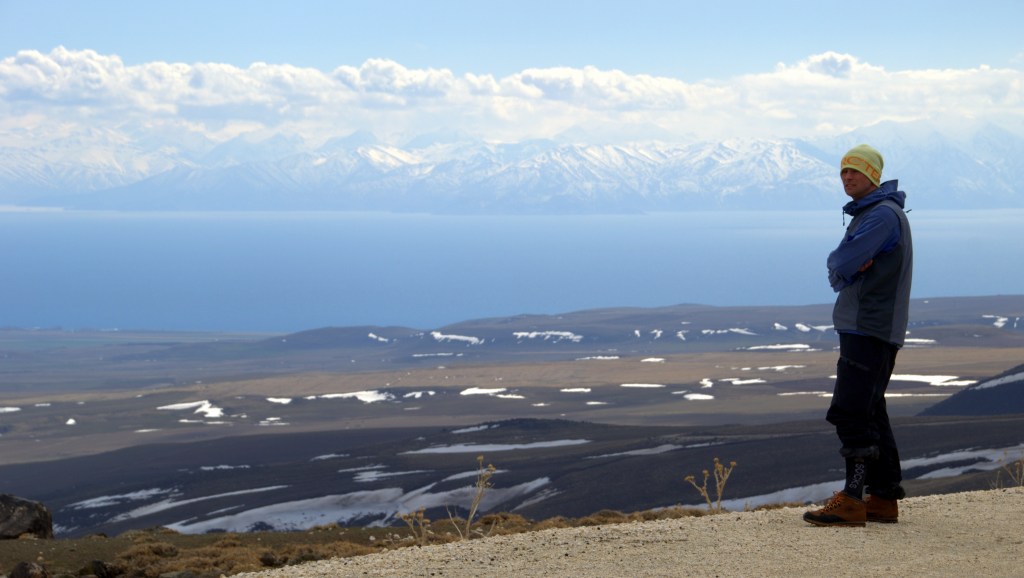
Luckily, Markus is not the type to throw in the towel and scheduled a 4am wake-up call for the next morning to launch another attempt before dawn. Indeed, Saturday turned out to be somewhat of a redemption. We set off at dawn from Aydınlar and, as the sun rose in spectacular morning twilight, the crust on the south-east face made for an efficient climb. Strong winds picked up above 3,000m but, after a short lunch break in a natural shelter behind a cornice, we reached the summit by noon. Although clouds were moving in, the descent in the sun offered spectacular views of Lake Van and nearby mountains as well as quality spring snow below 3,000m. Martin’s attempts to small talk with a group of mountaineers from Istanbul, who had set off hours earlier during the night, were disappointing. The men made no attempt to hide their disdain of the fact that we had skis, climbed at twice their pace and were already on the way down as they ascended the final face below the summit. That did little to spoil the mood. Saturday evening was a time for celebration with copious amounts of Köfte and other meats at a local grill.
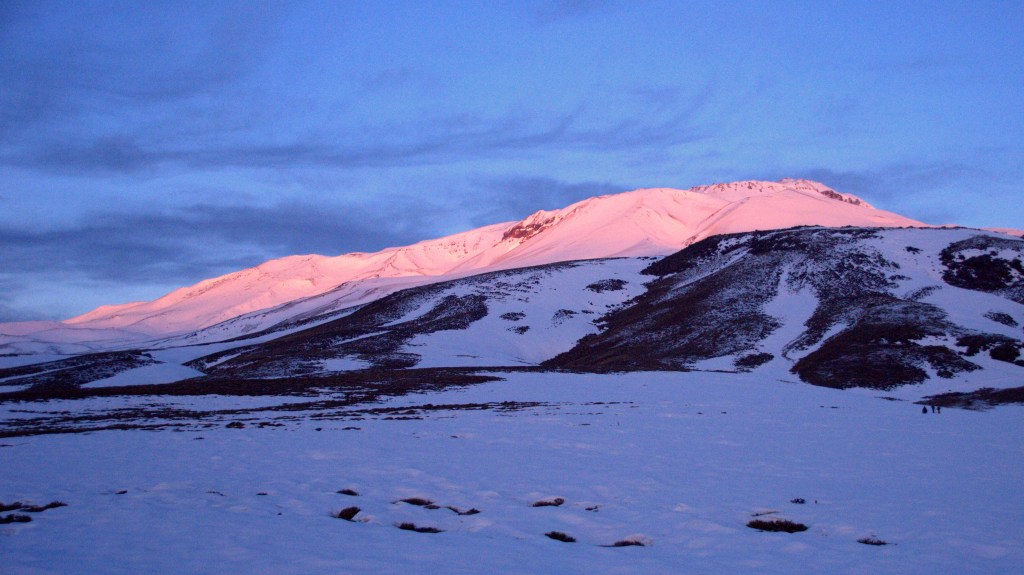

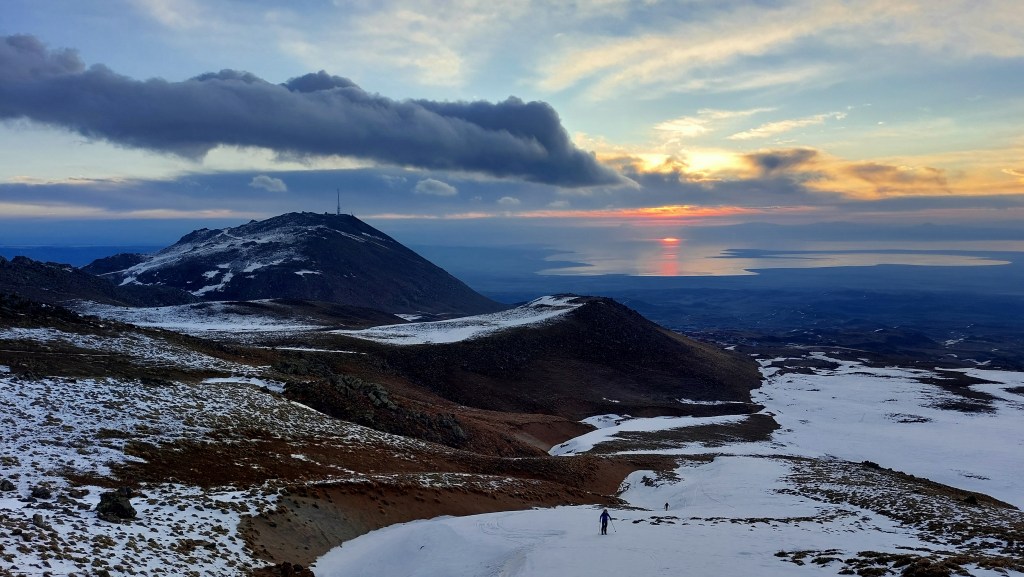

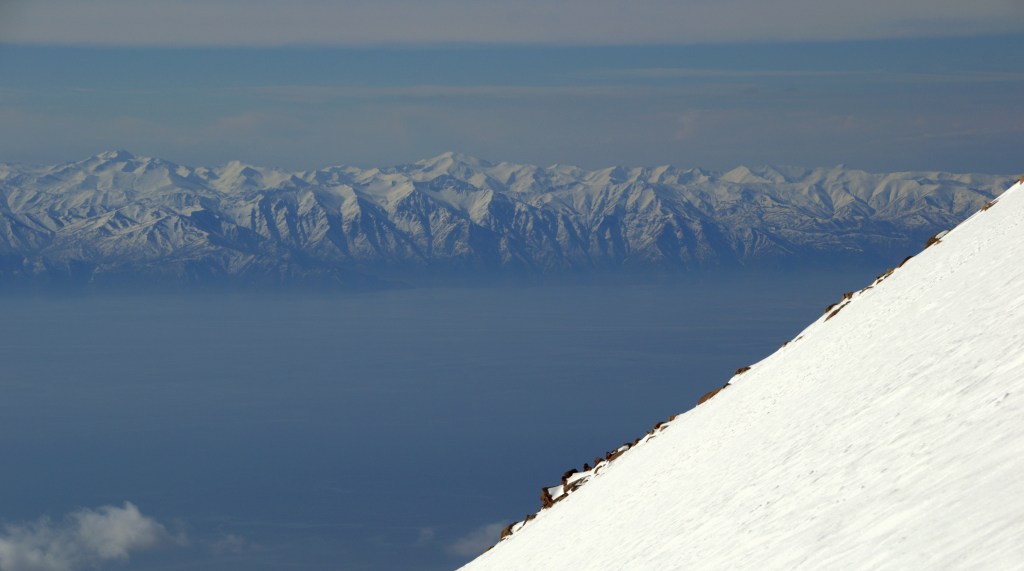
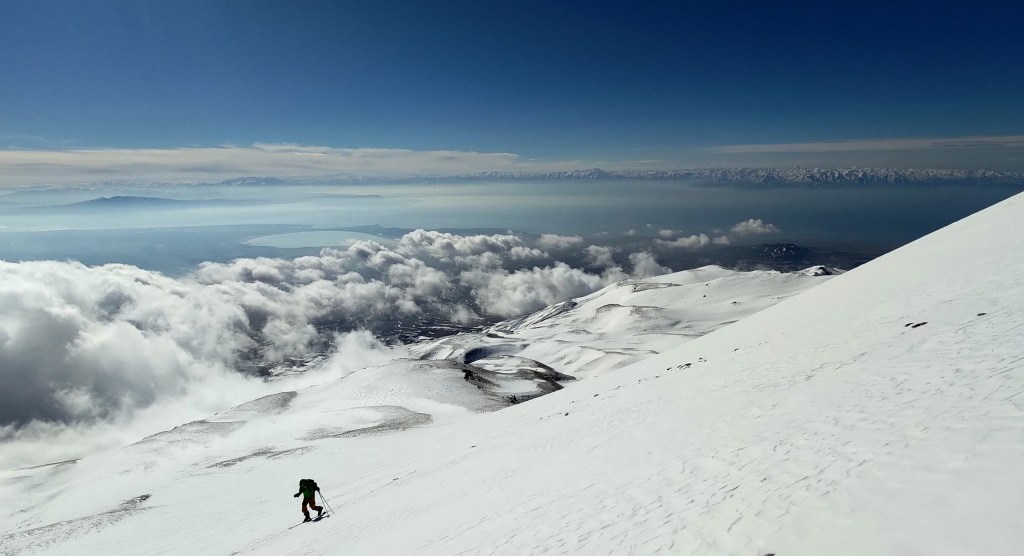
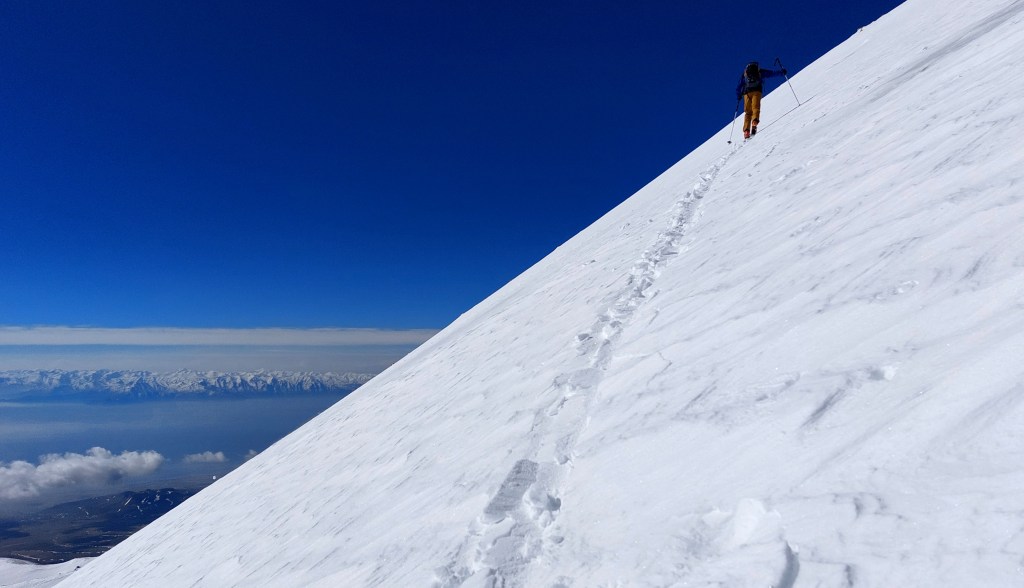
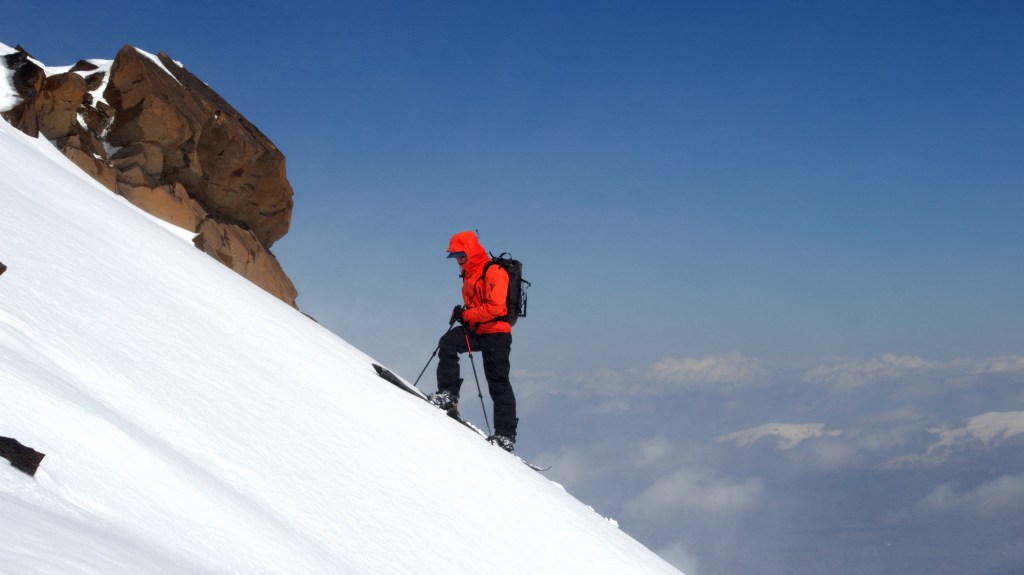
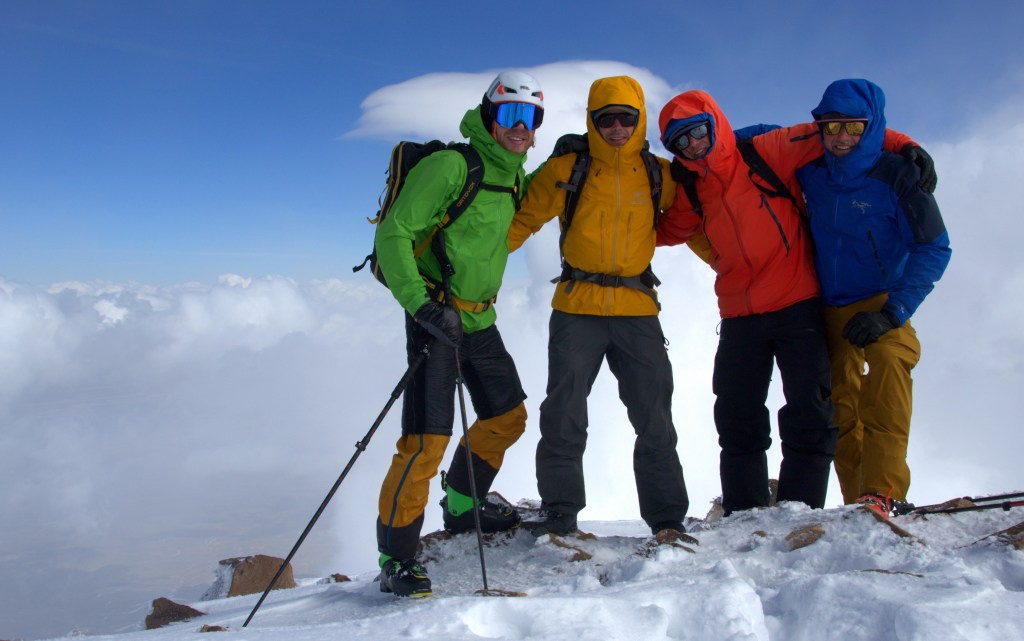
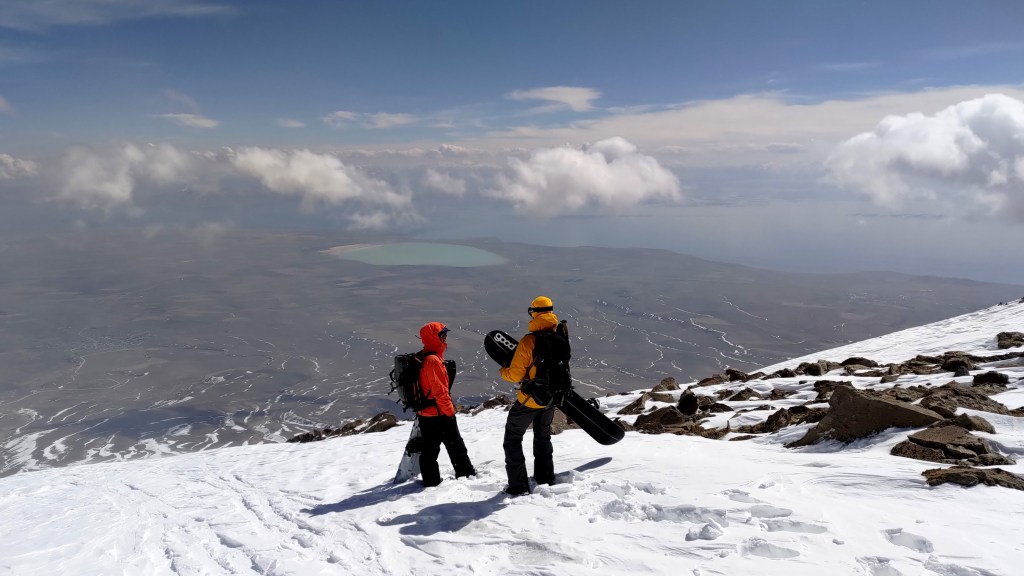
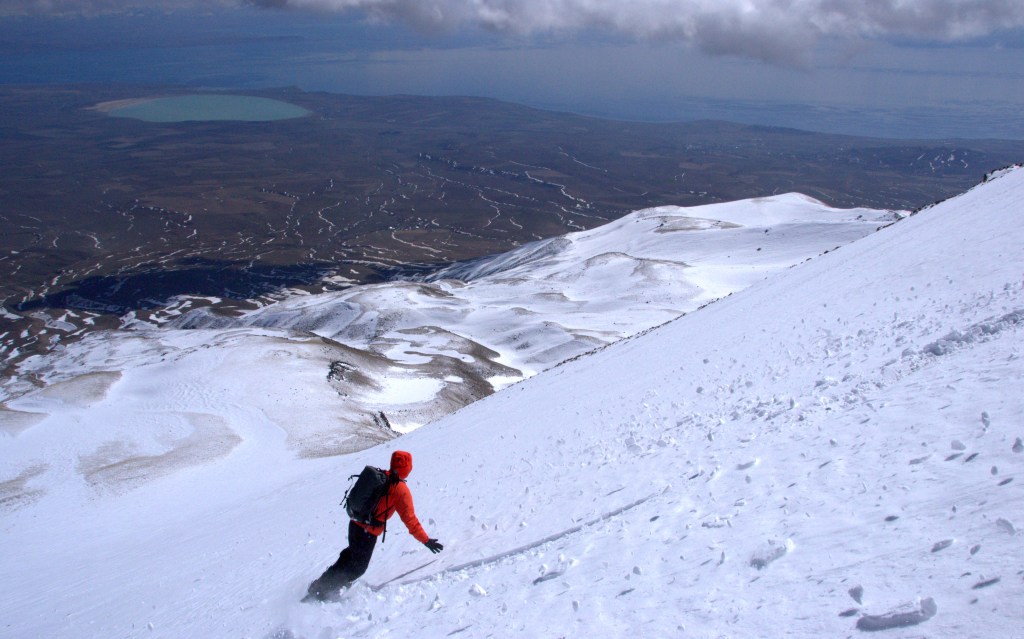
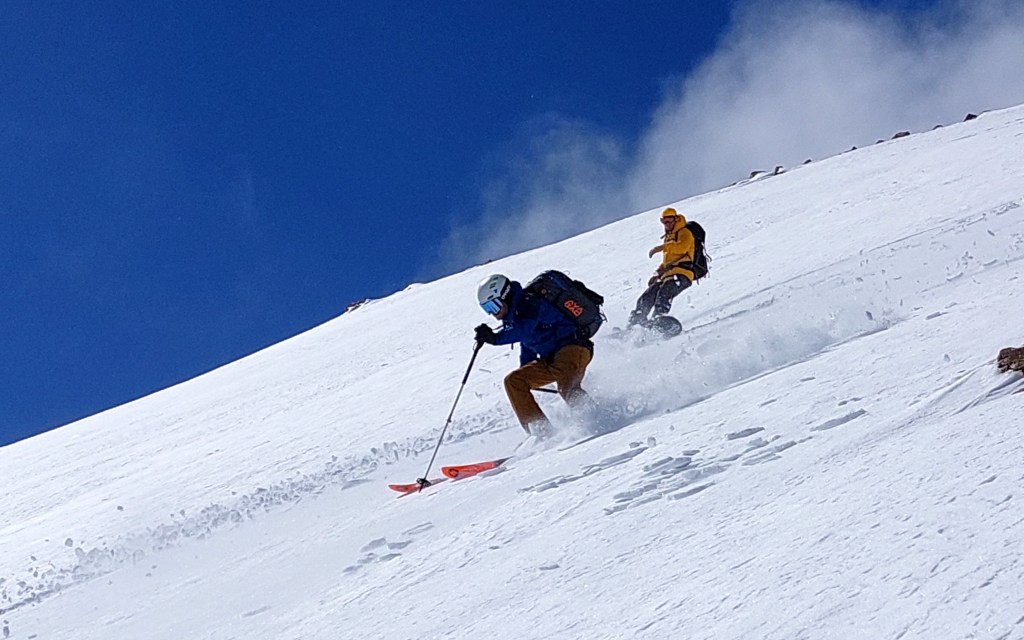
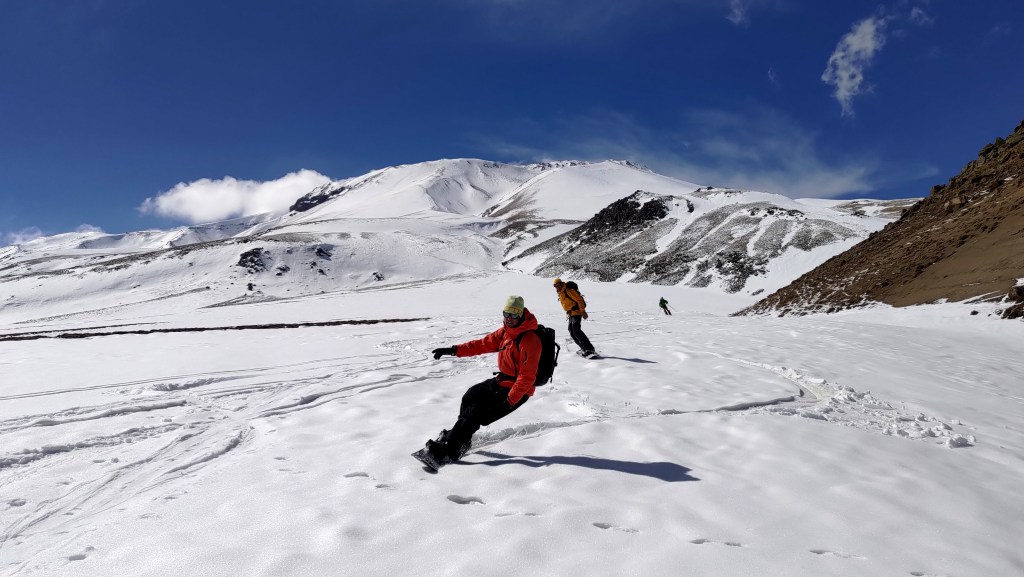

A second and successfull attempt at Mt Süphan in the sun
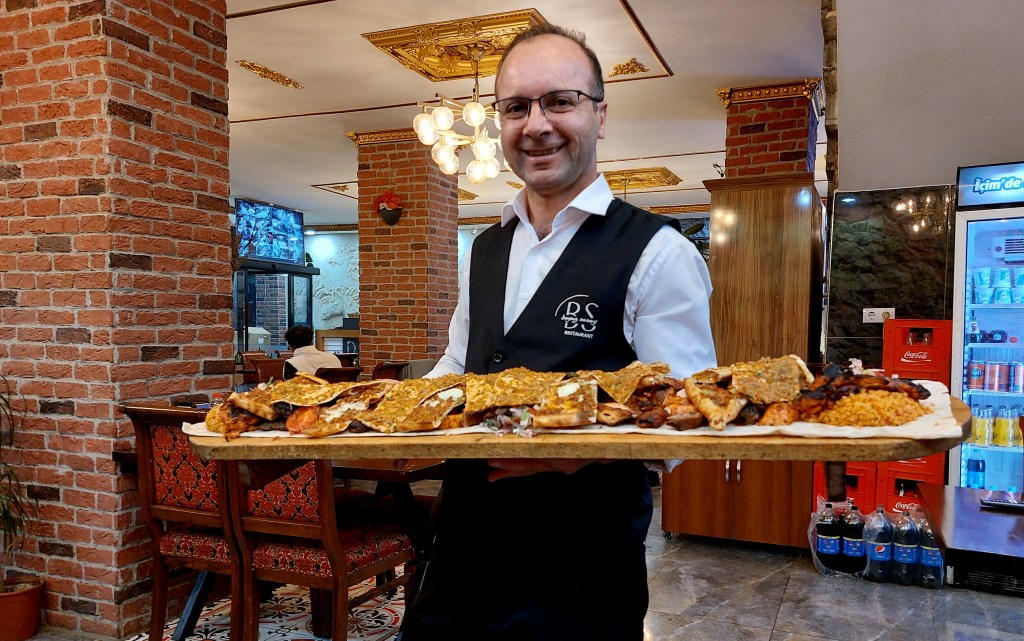
The quantity of grilled meat served at the average restaurant is not among the many factors that set the Kurdish east apart from the rest of Turkey (see platter for 4 above)
Kaçkar Mountains
We passed Yusufeli in the Kaçkar Mountains around noon on Sunday, a few hours after we had dropped Johannes at Erzurum airport and stopped for breakfast. Not that Yusufeli was a fixture on the itinerary but there was something strange about the atmosphere in this small town. It soon became clear that the abandoned buildings and giant concrete structures were part of the construction of Yusufeli Dam, the highest dam in Turkey built to feed a 540 Megawatt behemoth of a hydroelectric power station. Already a decade in its making and several years behind schedule by 2023, the project would flood a number valleys in the area and displace wildlife and the entire human population of Yusufeli to higher grounds. The other remarkable feature of Artvin Province was that there seemed to be a highway tunnel through nearly every mountain. The purpose of all the road infrastructure was not immediately obvious as there seemed to be next to now traffic. There was, on the other hand, no highway to Olgunlar Mahallesi, a small mountain village some 50km west of Yusufeli where Markus had booked four nights at Kaçkar Pansiyon.
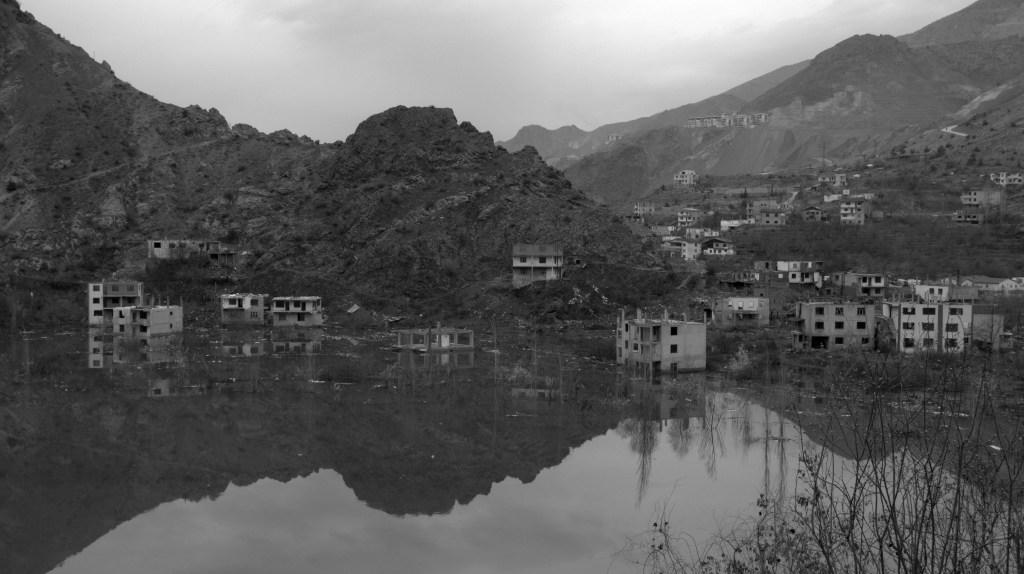
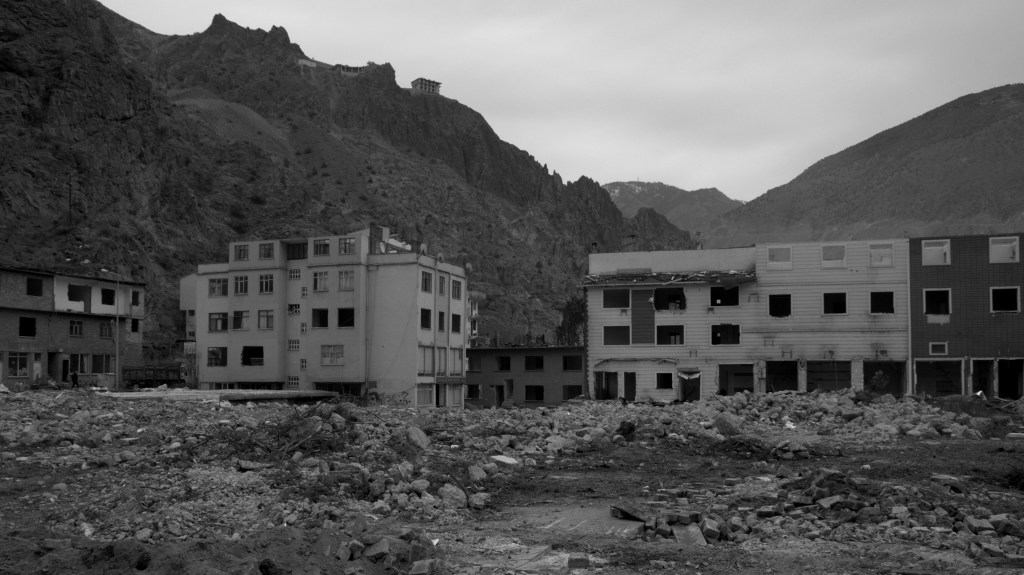
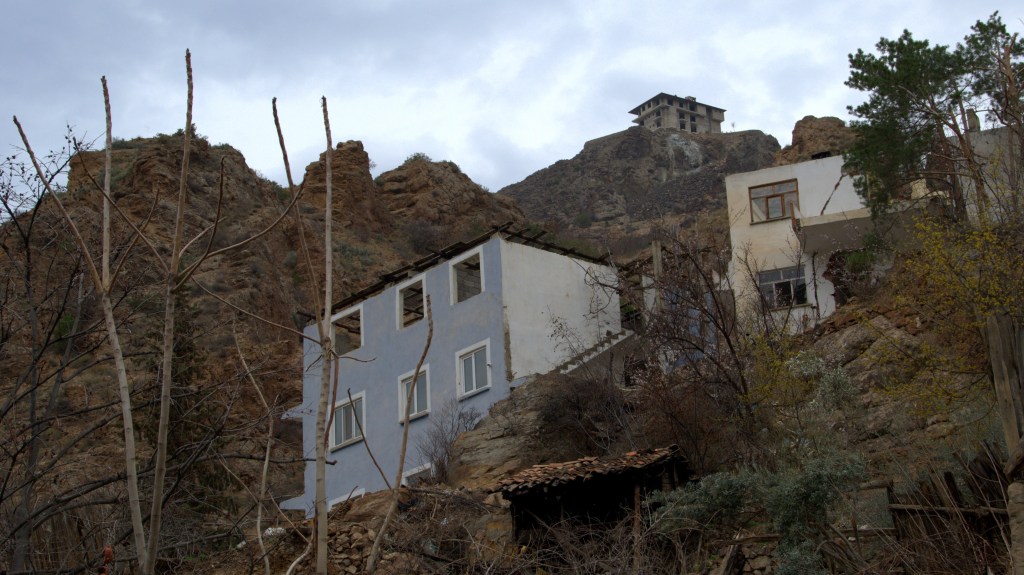


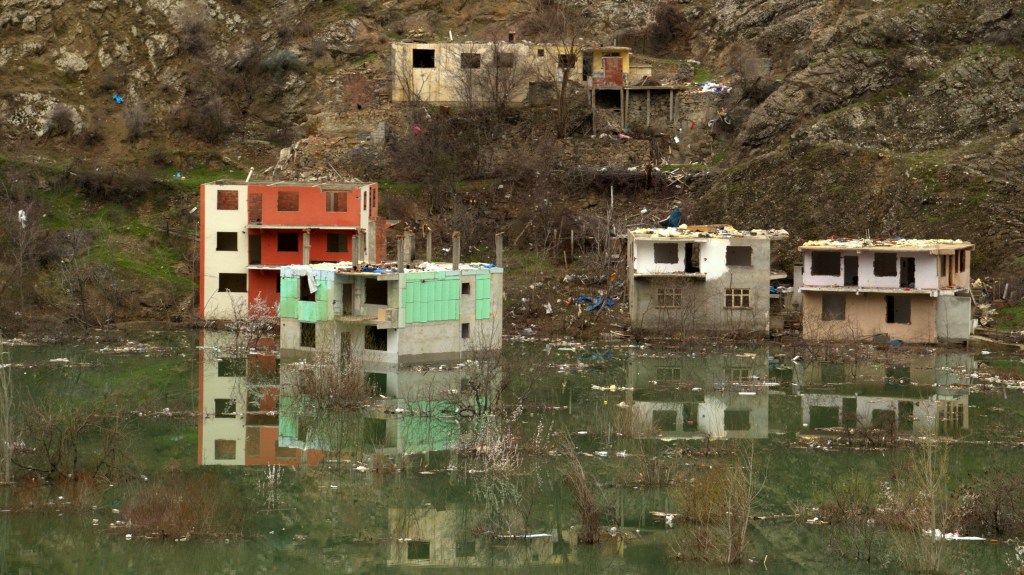
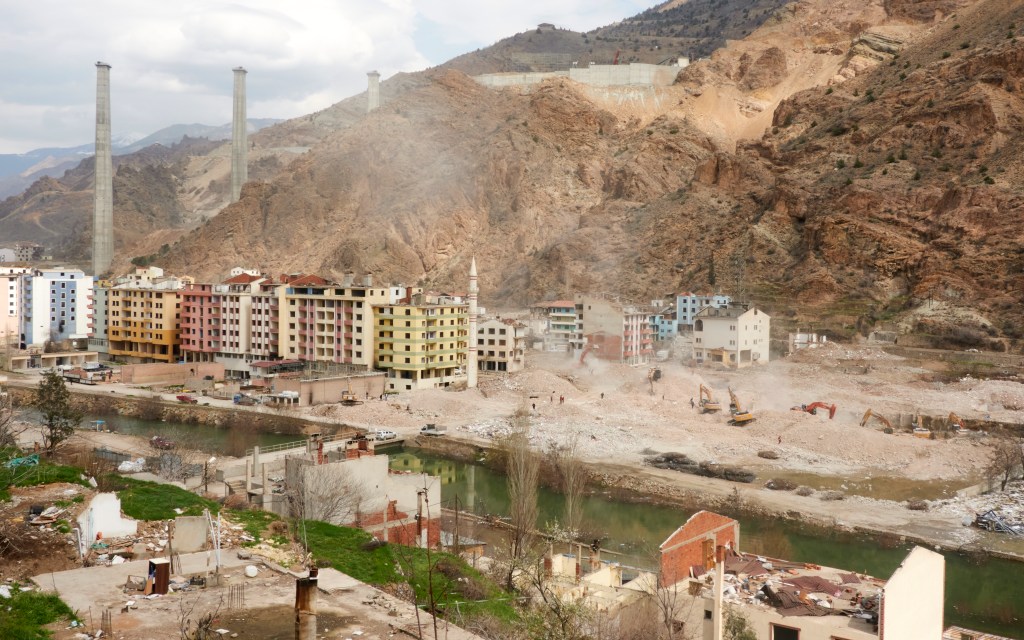
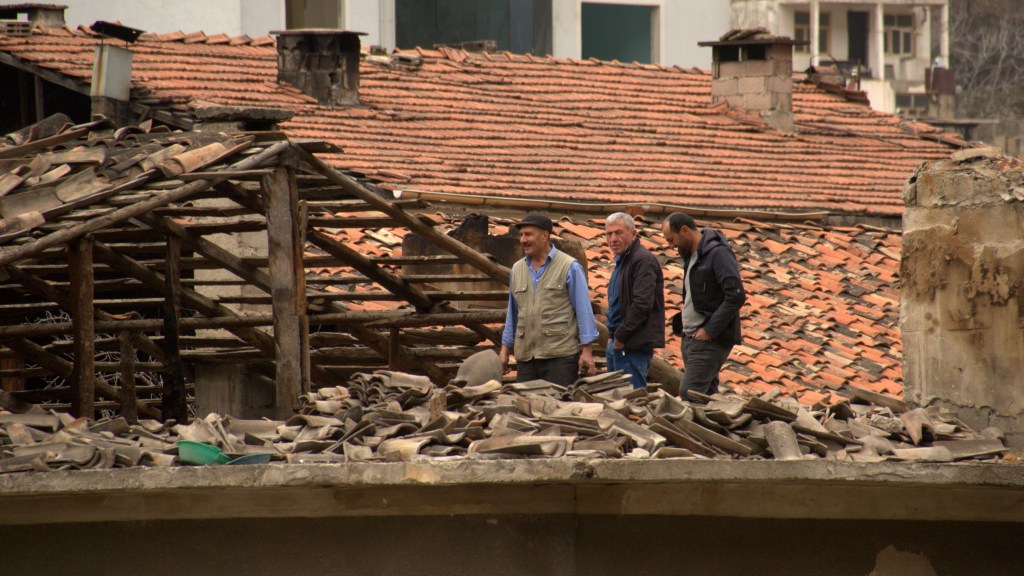

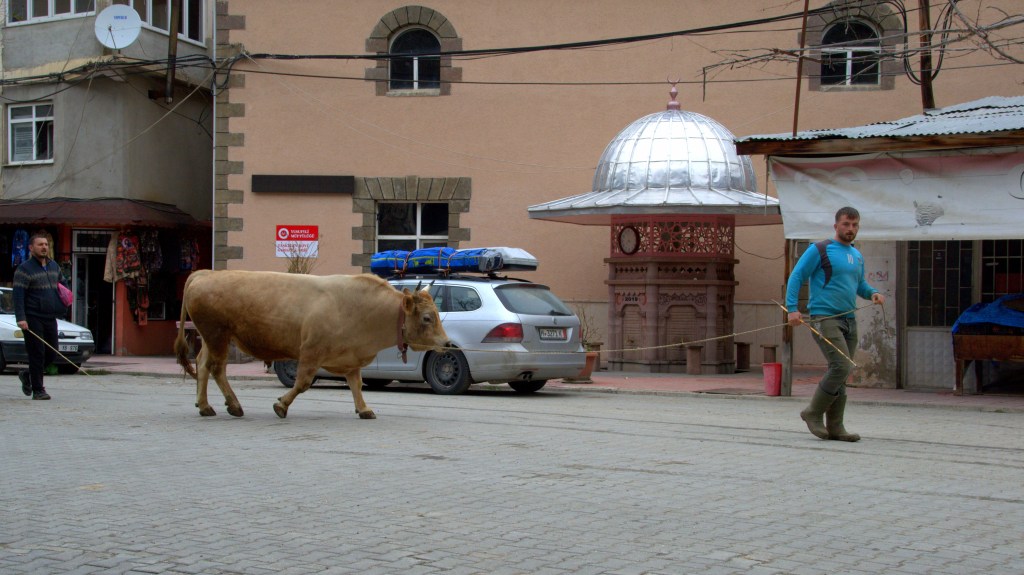
Imminent apocalypse in Yusufeli
In a peacefully secluded and stunning mountain environment at 2,100m altitude, Olgunlar Mahallesi marks the dead end of seemingly endless dirt road. It is also a perfect staging area for treks into the Kaçkar Mountains that culminate at the summit of Kaçkar Dağı at 3,940m. After the VW Golf climbed reluctantly for several hours past construction vehicles and bulldozers that all seemed to be somehow involved in the prospective flooding of the valley, we were welcomed with tea and coffee by Ismail and his son Cihad, the proud owners and managers of Kaçkar Pansiyon. We were soon joined by Harald, who returned from Germany with Alex via Istanbul and Trabzon. As rain set in, a group of Italian mountaineers returned from a ski tour in an adjacent valley. But the forecast promised a drop in temperatures during the night and everyone was cautiously hopeful that fresh snow was on the horizon.
Somewhere between awe and disbelief, Martin opened the curtains on Monday morning witnessing thick snowfall. This was what appeared to be the first proper snow in three weeks. We had not yet read the notice about the exceptional instability of the snowpack, posted in the hallway in Turkish, English and French by the Swiss heliskiing operator based in Ayder, a little further north. It was not translated to Italian and neither had the Italians. In poor visibility but high spirits we set off on a reconnaissance tour into the valley leading to the base of Kaçkar Dağı, turning left up one of the gentler slopes. Little later, a frightening whoomph and visible cracks that propagated quickly for hundreds of meters above us made the decision to turn back yet again an easy one.
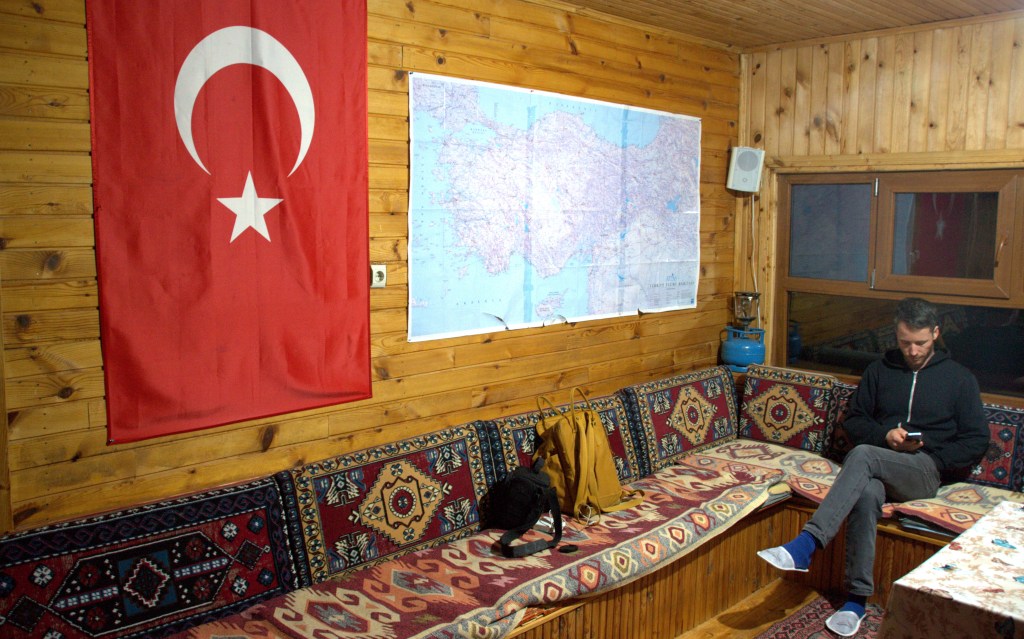
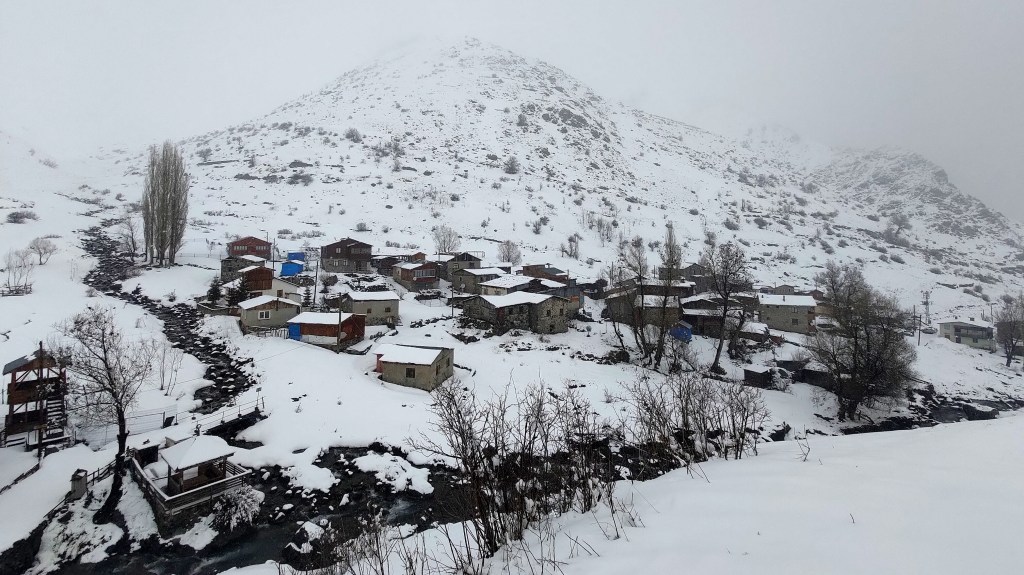

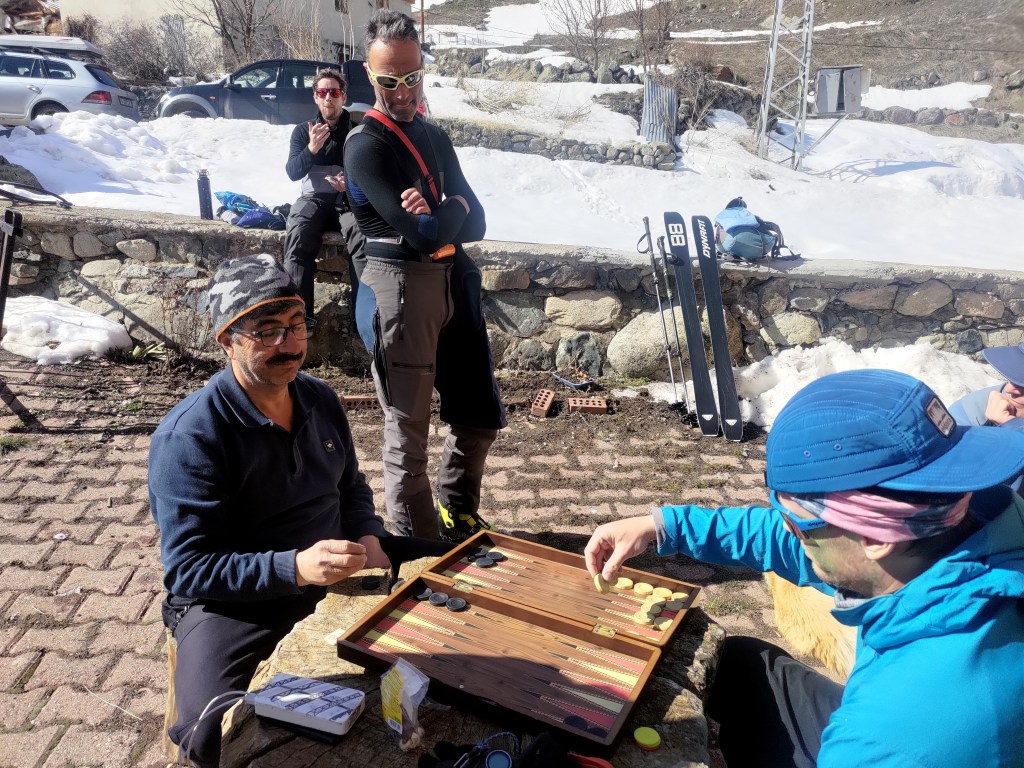
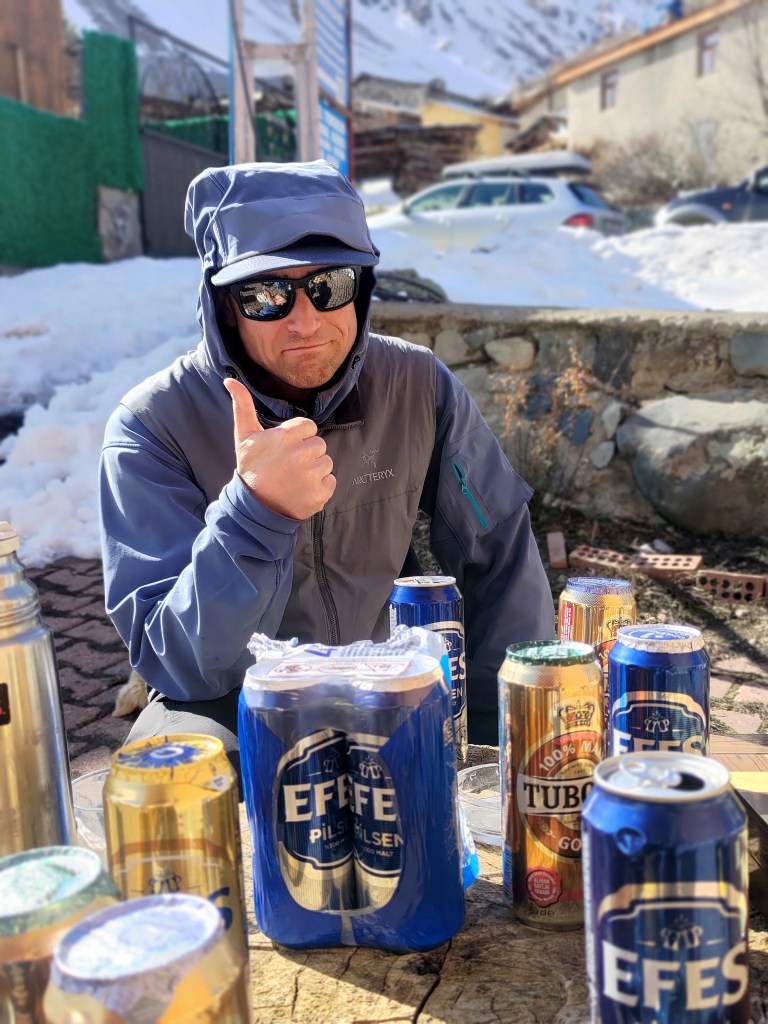
Olgunlar Mahallesi and Kaçkar Pansiyon
“Not since the beginning of our operations in 2005 have we encountered such an unstable snowpack”, read the notice in the hallway by the heliskiers. “Persistent weak layer buried deep in the snowpack; propagation up-slope; large avalanches; hidden hotspots in all aspects; complete avoidance of large slopes >30° in gradient; and so on and so forth”, it continued. This sounded about right. We remembered the news of skiers who had died in avalanches earlier in the month and retired to the lounge. Clearly, not since the beginning of operations in times immemorial were the conditions better for playing backgammon and cards.
Sunny weather and better visibility provided fresh energy for another attempt the next morning. We climbed past the cracks in the slope where we had turned back the day before, up the flattening and widening upper part of the valley. A clear night seemed to have stabilised the snowpack, which was covered in a thin but not negligible layer of spring powder above 2,800m altitude. The views of the untouched mountain wilderness were stunning. We were now squarely back in snowy landscapes but the recurrent phrase, “Imagine this place in good conditions”, soon turned from a running joke to a genuine nuisance. We started coming to terms with the idea that the return of our ‘ski’ trip through Turkey would be no more than one summit per week.
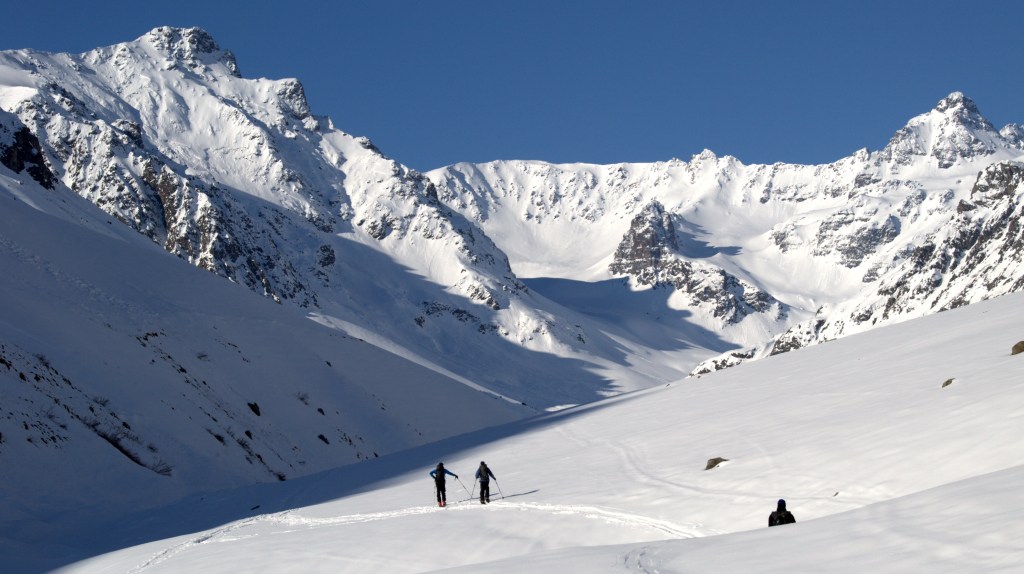
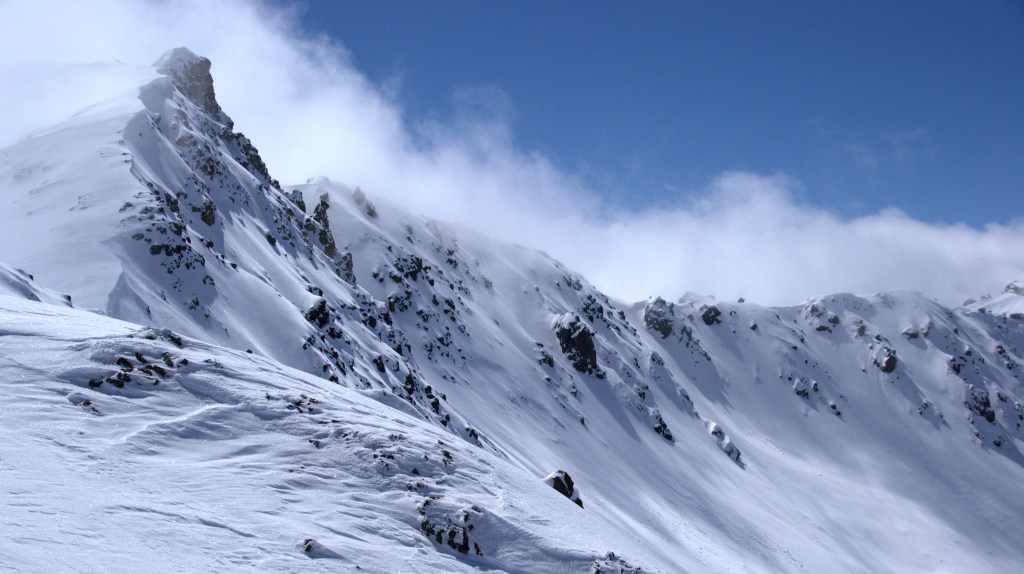
Beautiful Kaçkar Mountains…
Even that turned out to be too ambitious. After a short break, Markus laid the track up the final slope to the ridge at 3,200m between two unnamed peaks. As Harald, Sabastian and Martin followed at some distance, the mother of all whoomphs sent cracks even further above us and across. It seemingly shattered the entire valley. Not a second was lost before turning back and returning to the gentler slopes below. There was no more illusion of stabilising snow and we were grateful for having been warned one more time. A playful descent on what Markus dubbed ayran powder was followed by a short a second lap that increased the vertical count for the day to beyond 1,200m. We would not reach a summit in the Kaçkars. But skiing was on again.
Whoomphs and other signs of instability were successfully evaded in the subsequent valley further west the next day, which also provided calm and sunny conditions with beautiful views of Kaçkar Dağı and the surrounding peaks. The photo and video shoot of the first descent came to nothing as rogue clouds miraculously clogged the final ridge we had climbed to 3,300m altitude. But moods were clouded only briefly. The two sunny days in the Kaçkars would be serious contenders for the best skiing of the trip. Our prudence in the mountains was in stark contrast to the ridiculously offensive, or indeed borderline reckless tactics of Harald’s at the backgammon board. He would would remain victorious even in the Turkish-German face-off against Ismail.


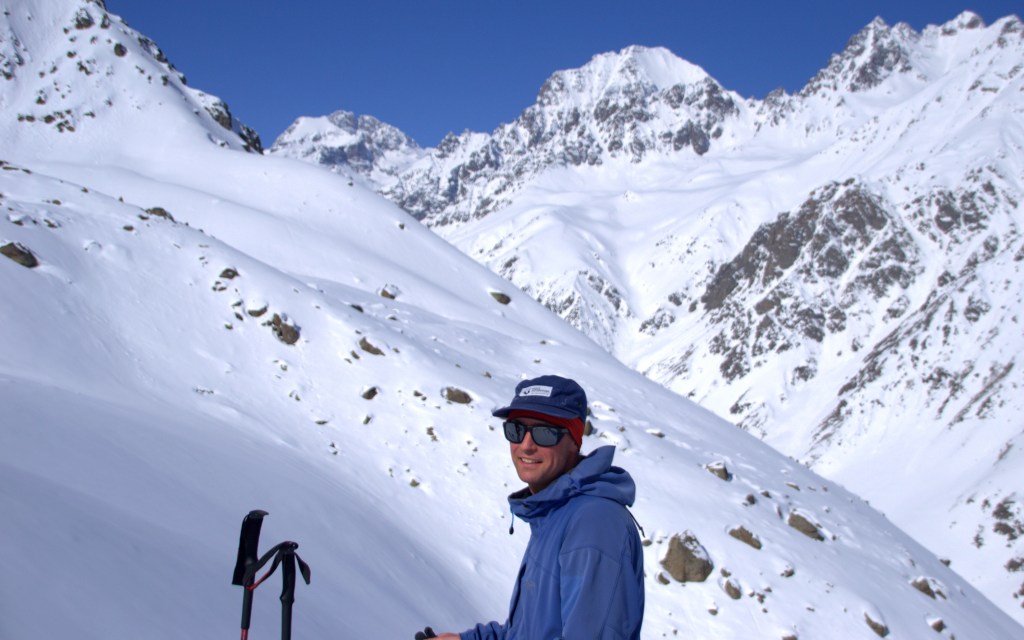
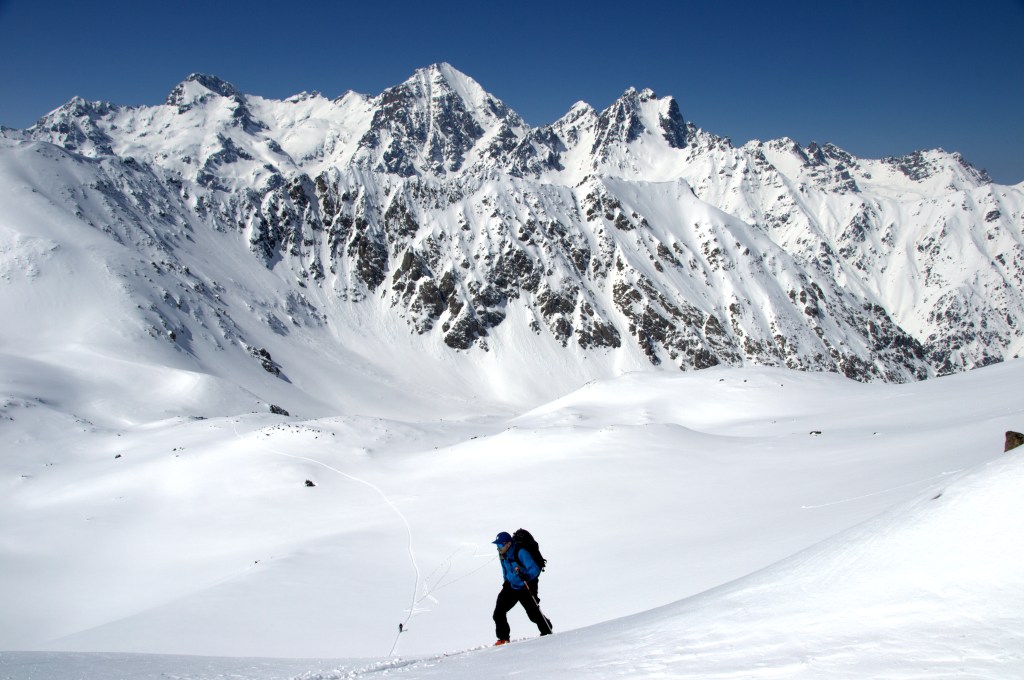
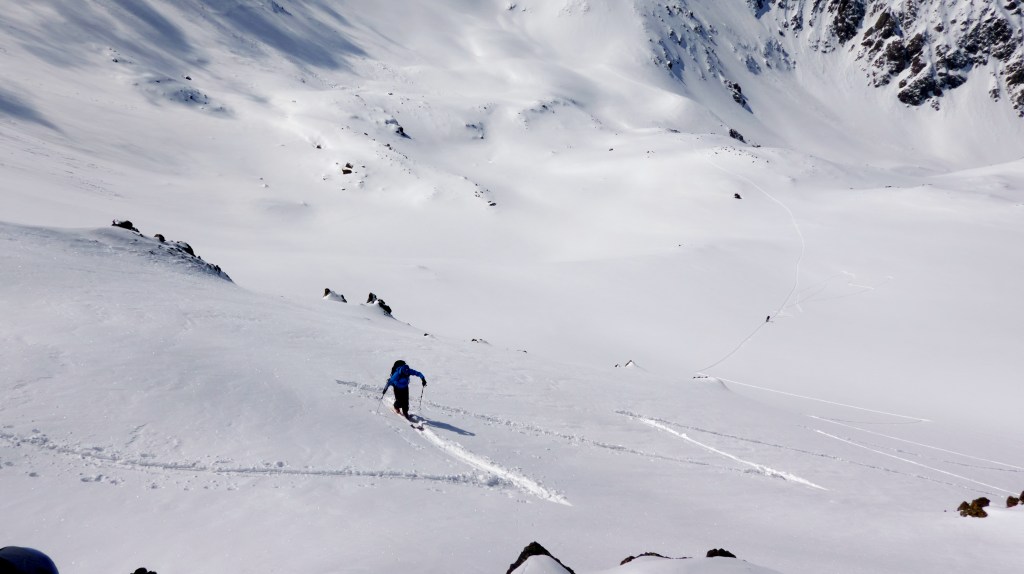
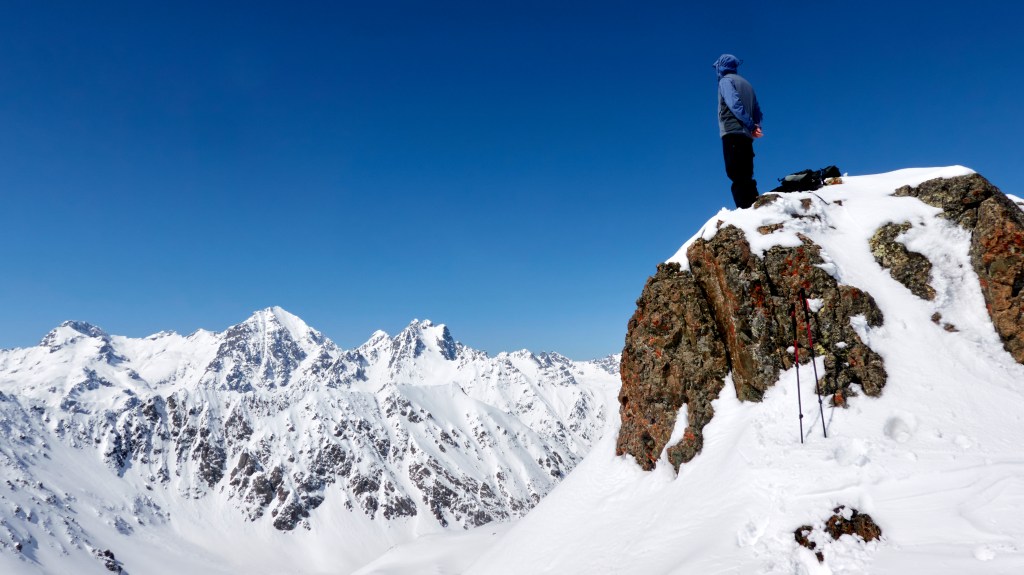
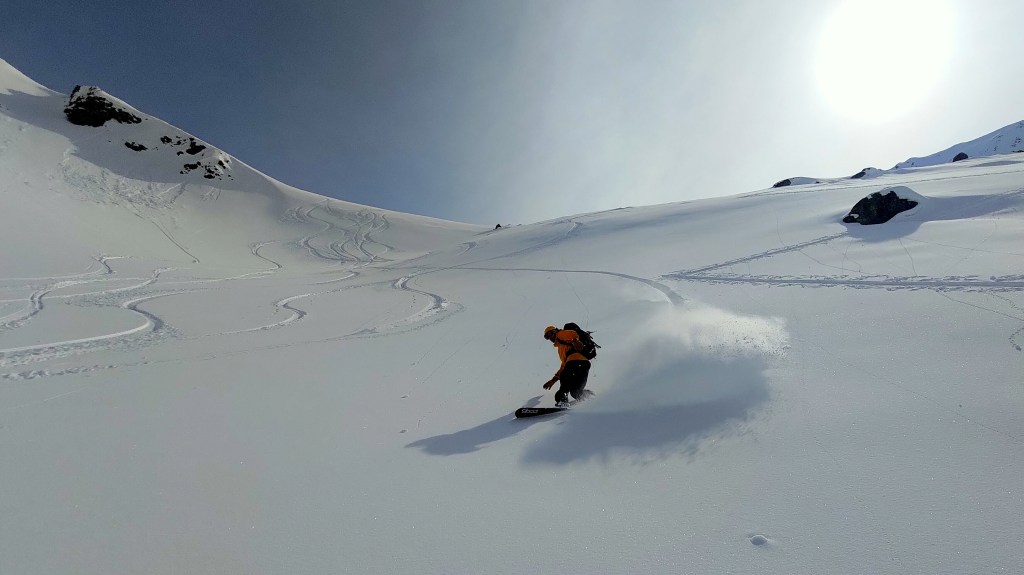
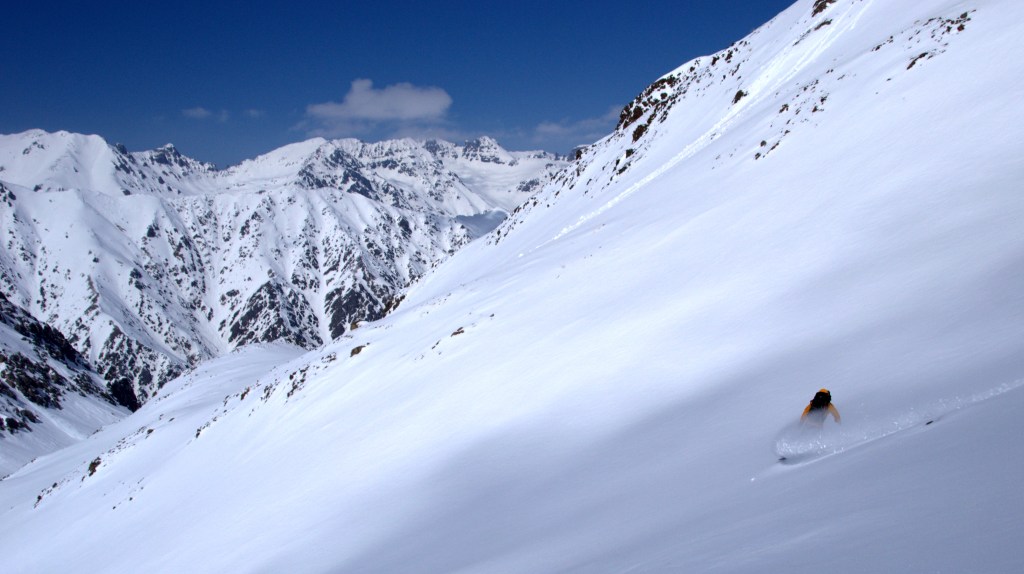
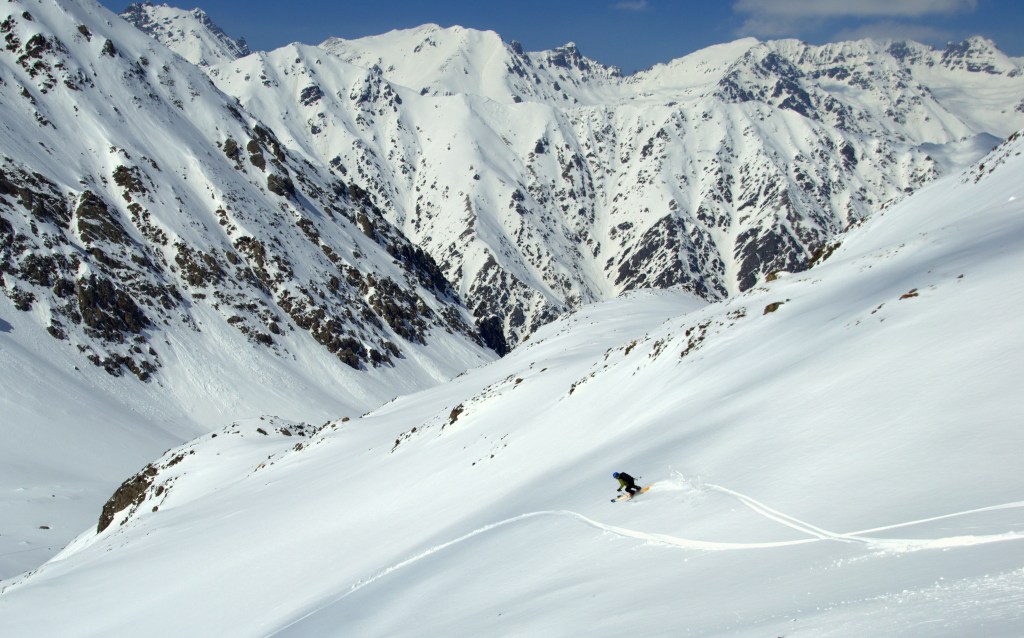

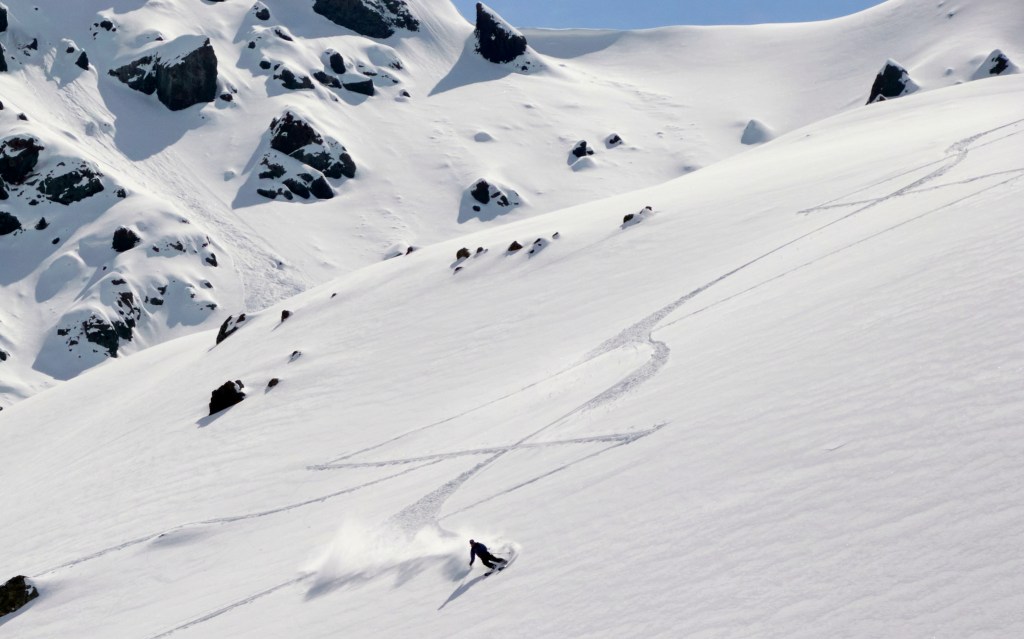
…and two cautious but decent days of skiing
Clouds and rain were back the next morning. We bid farewell to our hosts at Kaçkar Pansiyon and headed east, to cross the Georgian border in time before expiry of the export plates on the VW Golf.
 My Impressions
Leave a comment