
The United States of Mexico, as they are officially called, are vast. So vast and diverse, in fact, that any traveler who has less than a lifetime to spend in the country needs to make some extraordinarily difficult choices. I had signficantly less than a lifetime on my way through in September 2022 and, after some pondering, made the state of Nayarit my first stop followed by another visit to the capital and its surroundings.
Tropical Nayarit
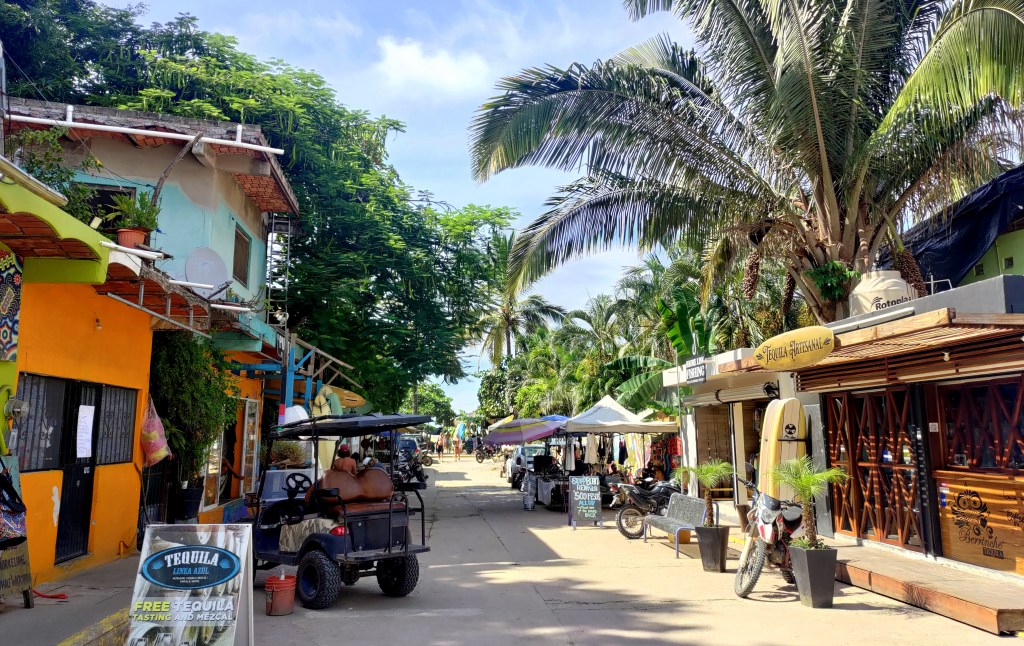
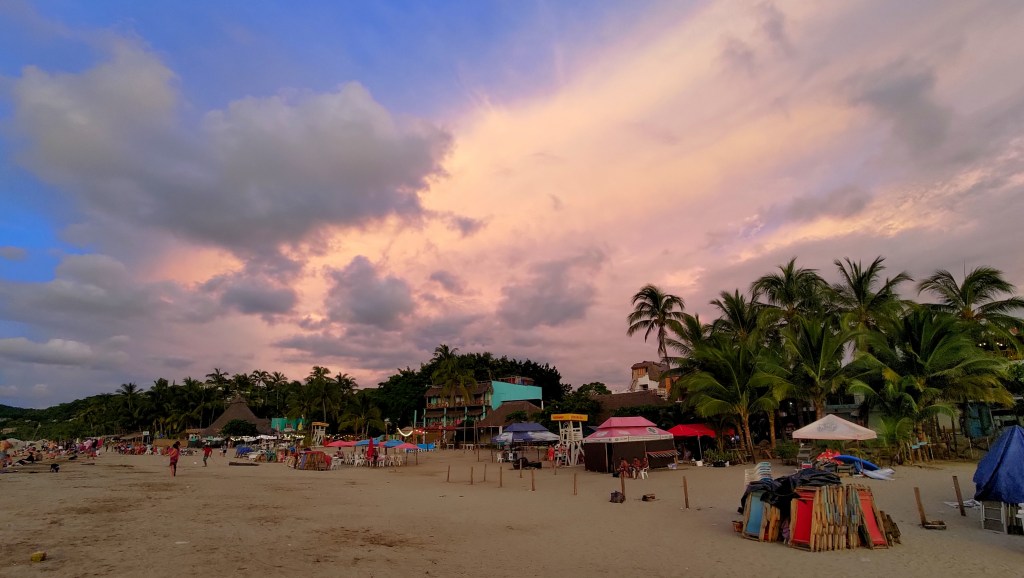
After touching down in Puerto Vallarta and a quick roadside taco, I caught a bus to Sayulita, which had apparently once been a quiet fishing village. Fishermen were still keeping their boats on the main beach and the seafood was excellent but, apart from that, little seemed left of those days. It was no coincidence that, despite its modest size, Sayulita was known some 2,000 km further north – there was no doubt that it had been discovered. It was now somewhere in between a lower-of-the-high-end vacation town for wealthy Mexicans, a real estate investment opportunity for middle class Americans, a yoga and telework retreat for 20- and 30-somethings, and a party town for magic mushroom consuming college kids. The density of hotels and vacation rentals was impressive. Although far from authentic, the atmosphere remained relaxed and pleasant.

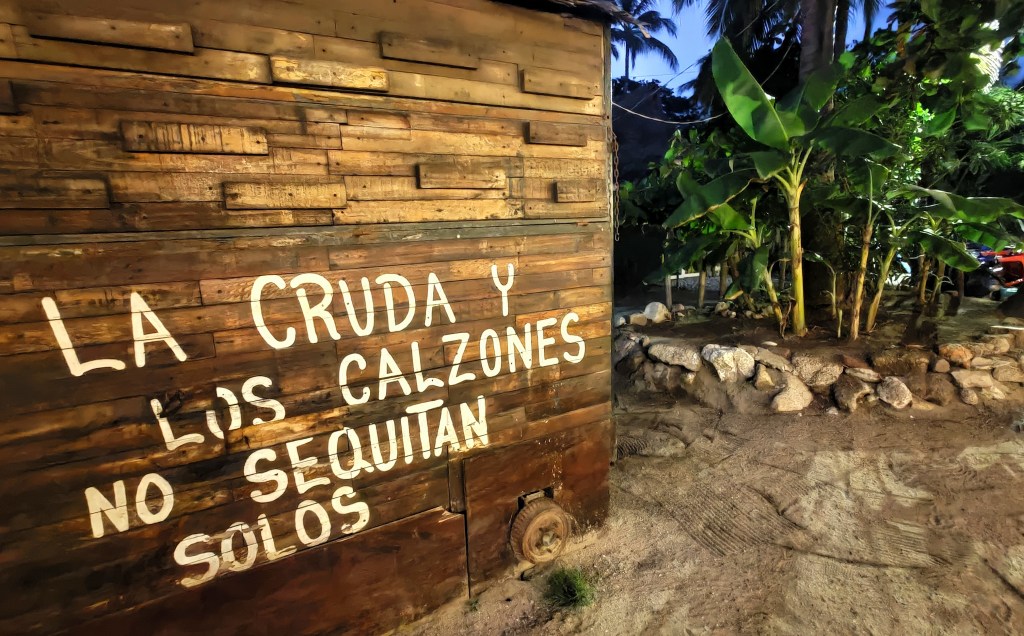


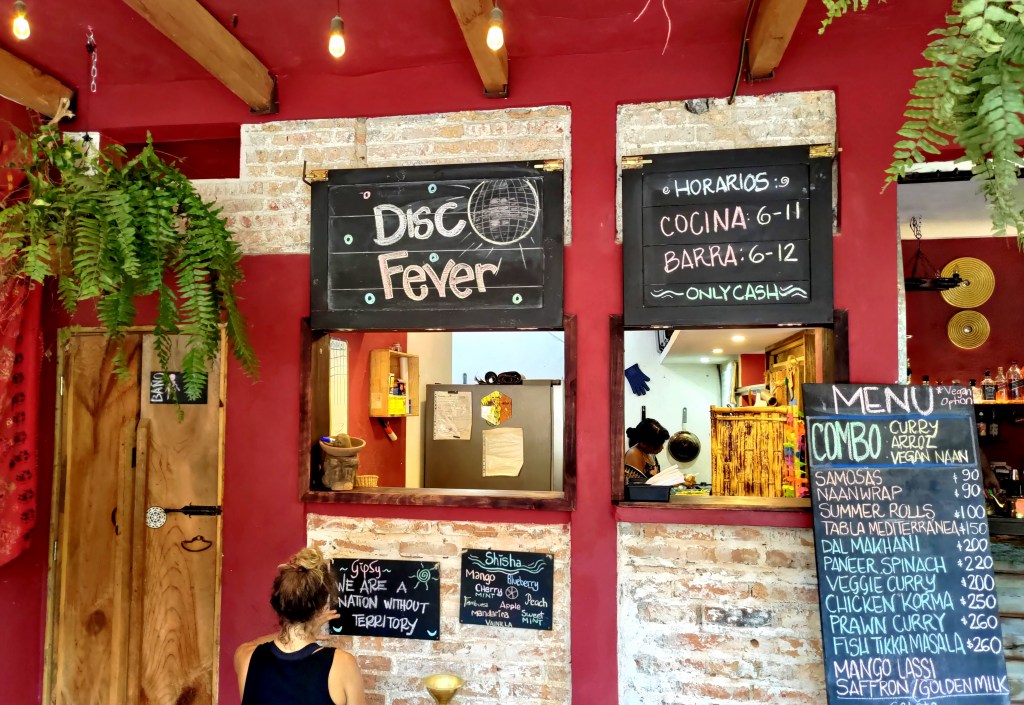
San Pancho, Sayulita and its words of wisdom
To my surprise, however, it would be rather difficult to find an economical means of transport that could carry a surfboard. I started regretting my decision not to rent a car at the airport, to avoid troubles with parking and Mexican highway police. There were several motorcycle and scooter rentals in town but none of them offered board racks, which were, I was told, difficult to mount and only owned by locals. Most people used golf carts to get around but those were not allowed to beyond the city limits. Rental cars were in short supply and seemed overpriced.
Luckily, I soon stumbled upon a home-built vehicle parked outside the bus terminal with a friendly sign on it that said “rentame” above a mobile number. A woman answered the phone explaining that it was her husband Gustavo’s and that it was available for 1,000 pesos a day. She assured me that everything was in order when I enquired about papers and insurance. It wasn’t exactly a bargain either but I met Gustavo an hour later to take possession of the keys in exchange for my ID. We went for a short drive together, during which he showed me how to shift the gears without breaking the transmission and boasted that the engine worked so well that he had recently driven all the way from Guadalajara without stopping. That was hard to believe. He also claimed that it had papers but that he preferred keeping them at home because there was no safe place inside the car. This sounded close to a credible explanation. He immediately added that police were friendly in the area and that, in case I got pulled over, a phone call would suffice for him to ‘make a deal’ with them. I was now less convinced by the claims about existence of said papers.
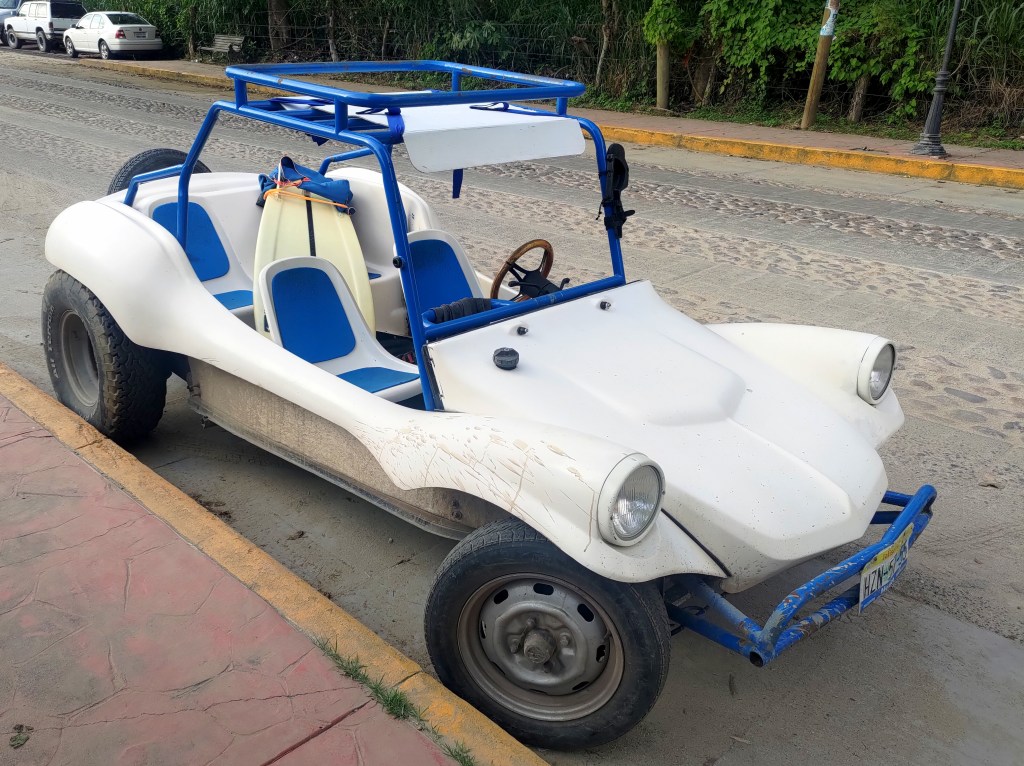
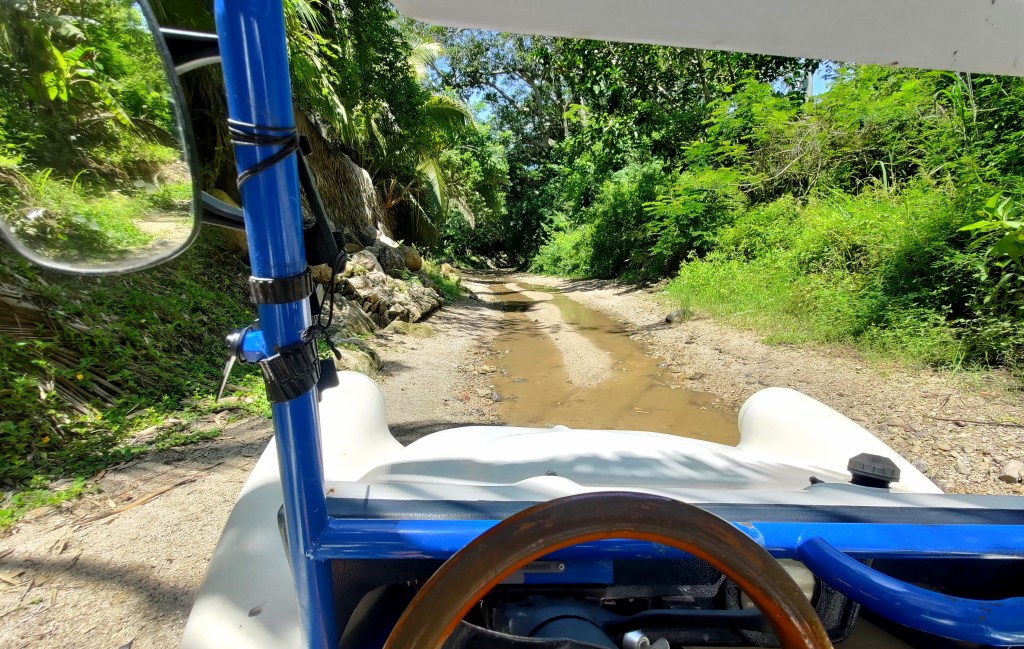
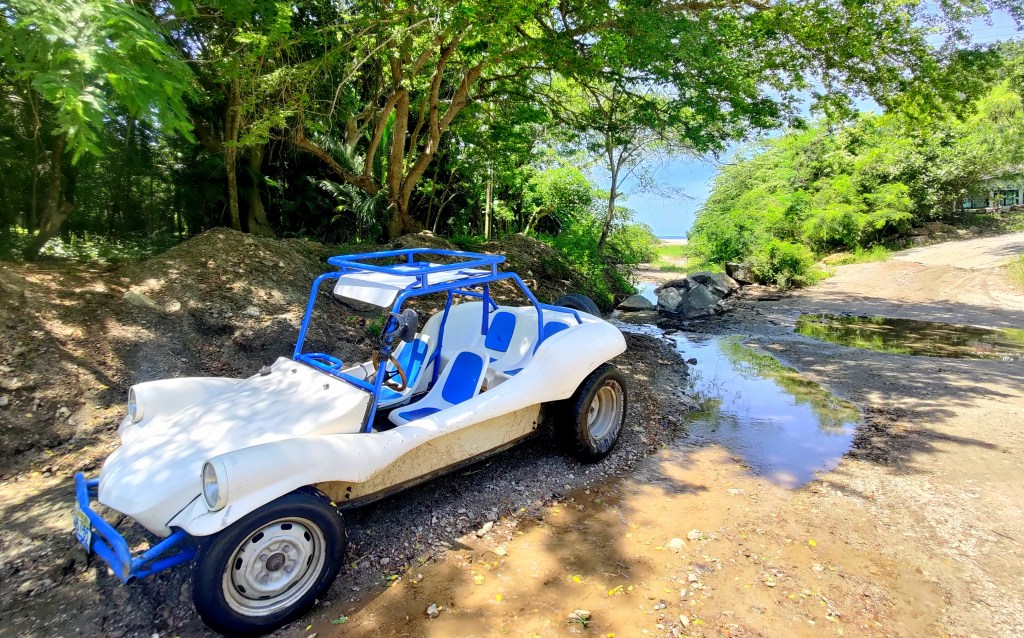
A superior machine
My new ride was a superior machine, with absolutely no gimicks or special effects. But it had four seats, a steering wheel, two wires that could be twisted together to turn on the headlights and ample space for a surfboard. As much as I loved it, it came with two minor drawbacks. First, the plastic roof and absence of a windshield made it hard to keep water out. But, in the tropical heat, my clothes dried almost as quickly as they got drenched while driving in torrential rain. The second and more serious problem was that the engine would, on average, only start on one of two attempts. The first time it died while driving on the highway the issue was quickly resolved by following Gustavo’s instructions and wiggling the fuses underneath the steering wheel to make sure they all had proper contacts. The next time, however, no wiggling or removing and reinserting of fuses would help. Luckily, I hadn’t made it far and Gustavo was on site within an hour, equipped with screw drivers and pliers. He removed all fuses, checked the wiring, and knocked the screwdrivers on various parts of the engine and wiring. None of this seemed to help. Nor did a quick call with his mechanic. I asked whether the number on the front of the fuses, which seemed to correlate with the thickness of the wires on their back, denoted their amperage. Gustavo said he didn’t know but he confidently reiterated the advice of his mechanic that they could be inserted in a random order. Not that l have any expertise in automotive electrics, yet I was pretty sure that any safety protocol would suggest otherwise. But I was in no position to argue. As it turned out, problem no. 2 was related to no. 1 and electrical components that had failed because of the water. Gustavo changed the culprit the next morning, wrapped it in a plastic bag and sealed the bag with a cable tie to avoid water from re-entering the circuit. What could possibly go wrong?
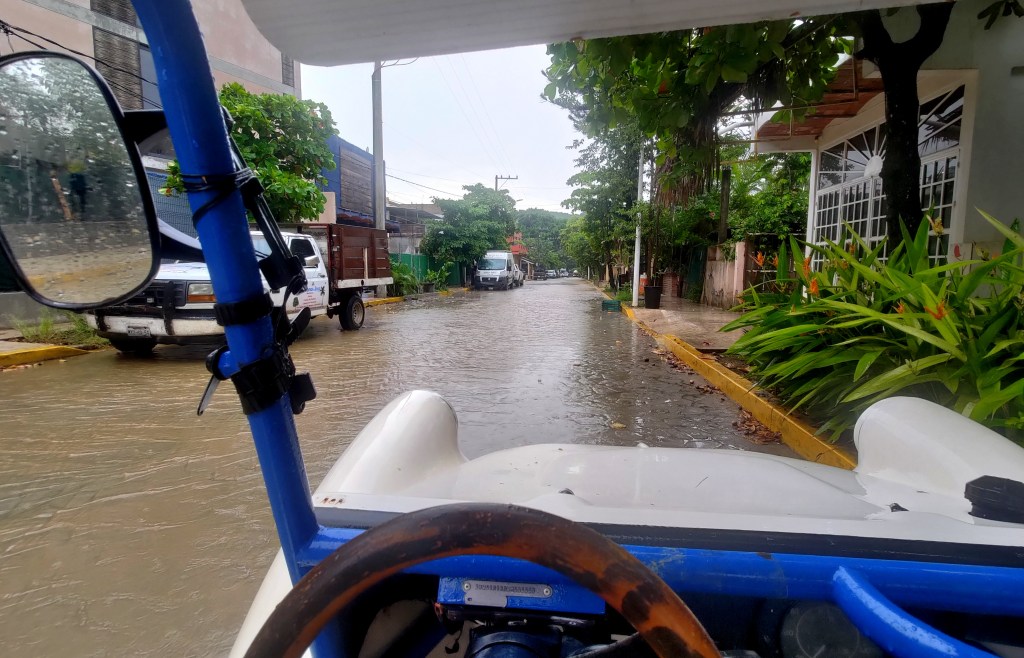
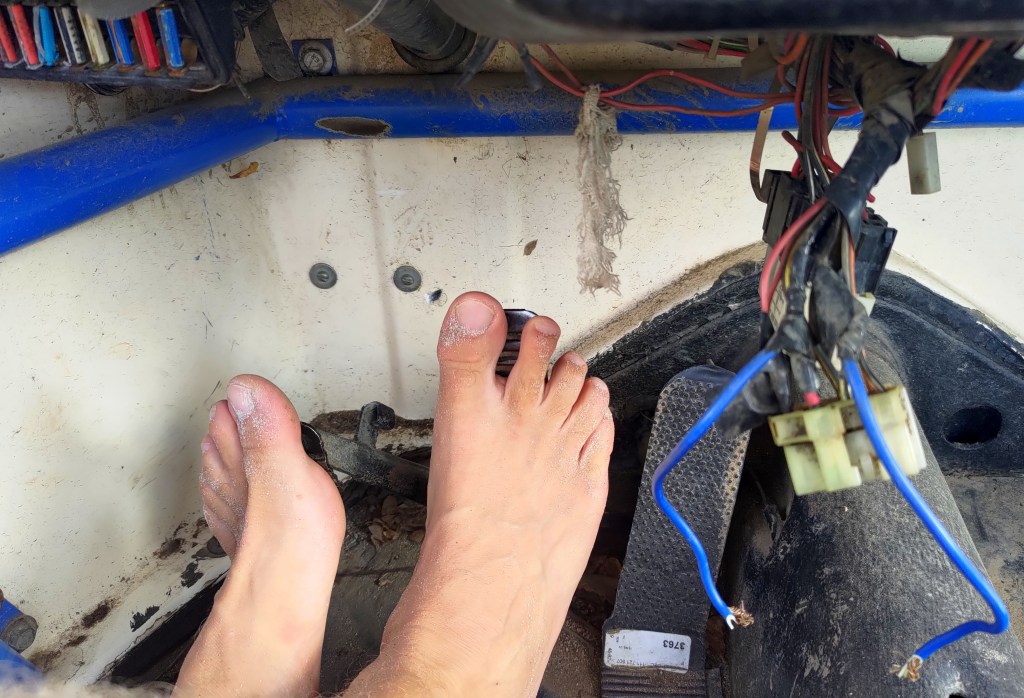
Problems 1 and 2
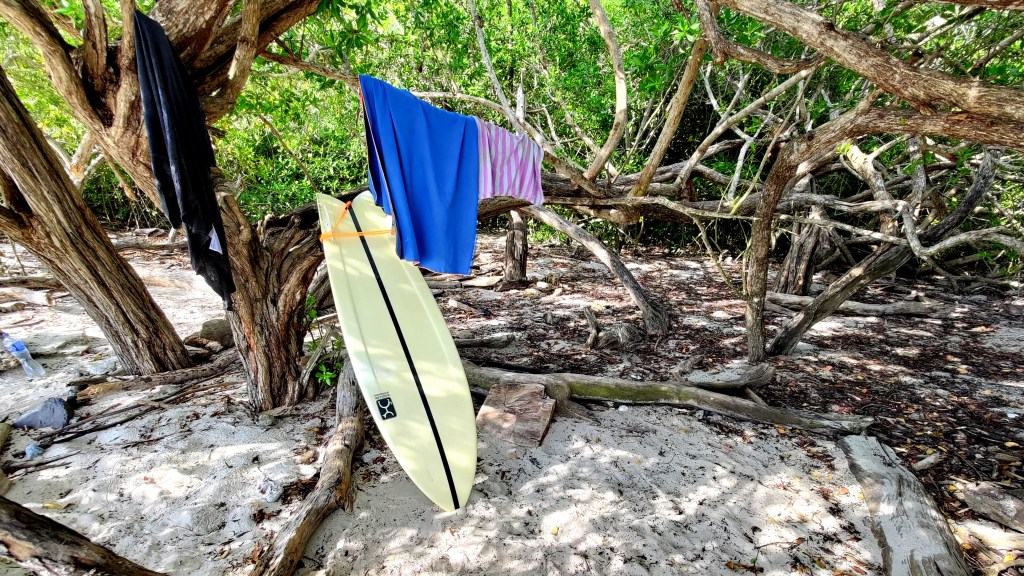
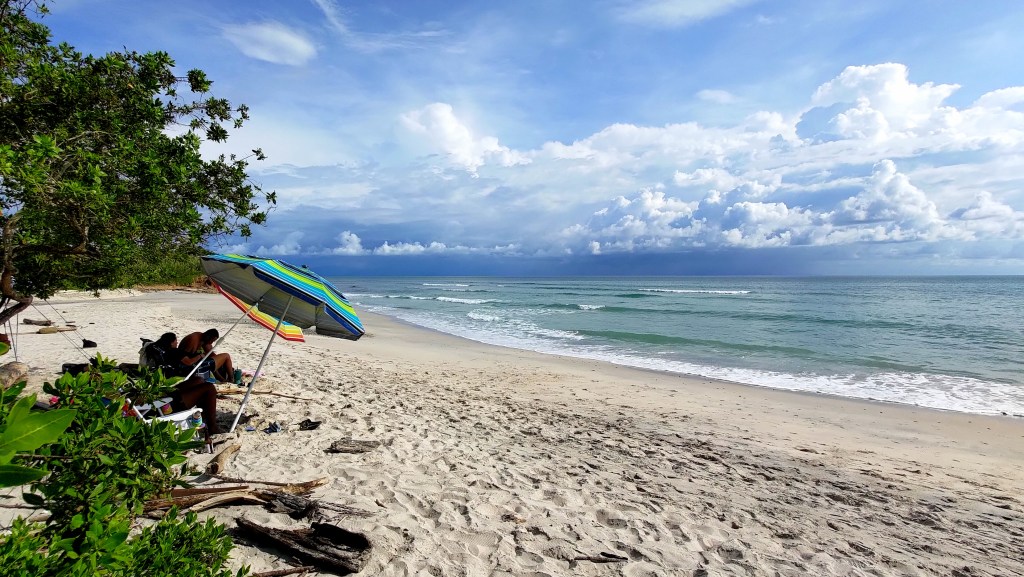
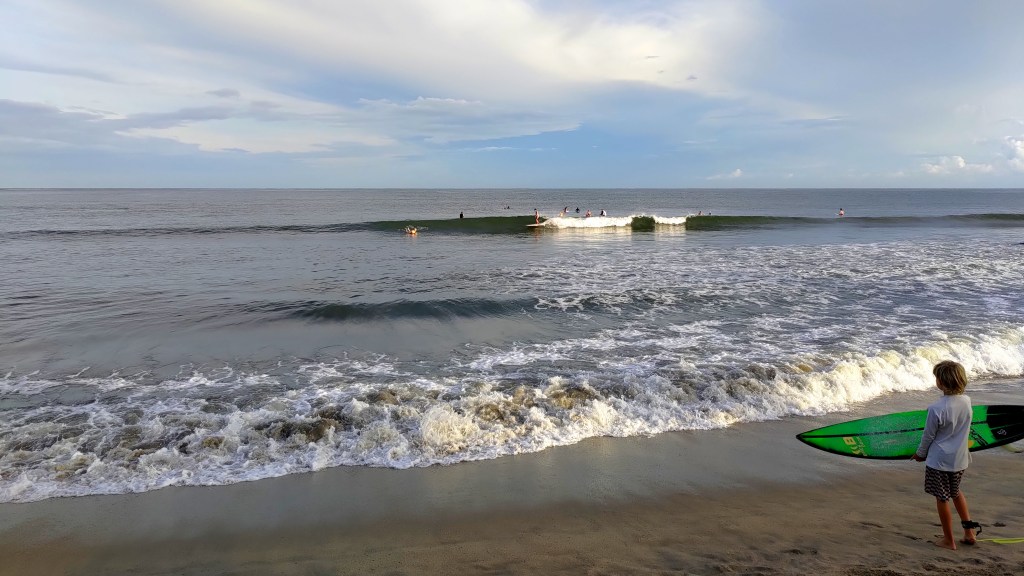
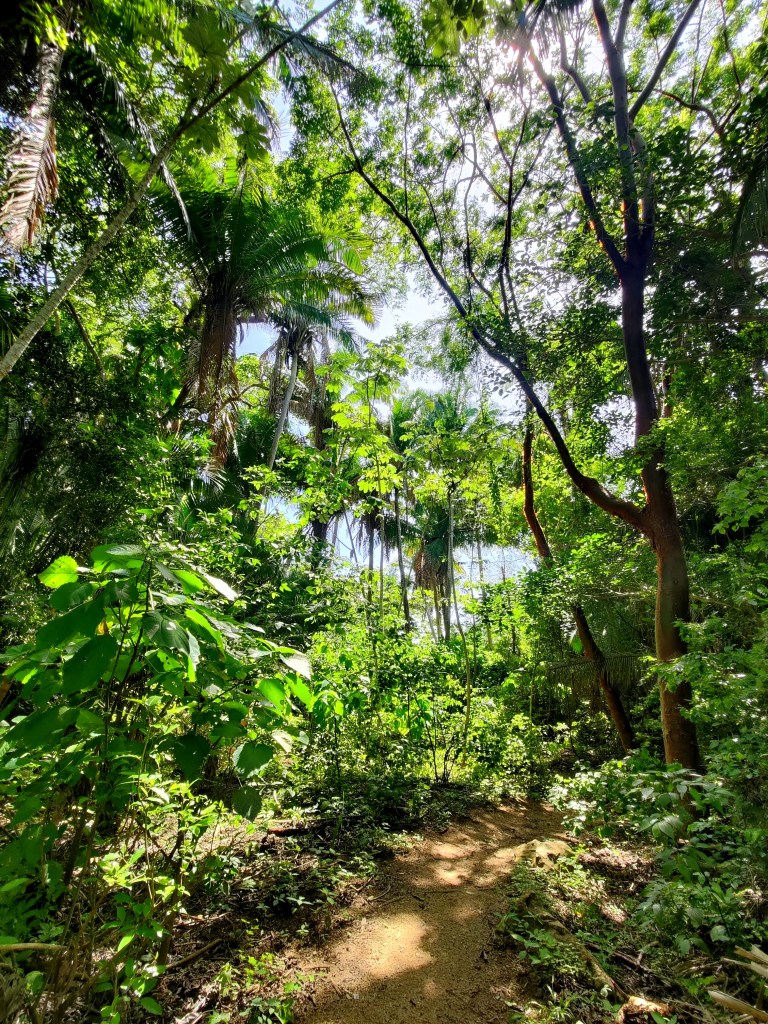
I also rented a surfboard and drove to la Lancha, 30km south of Sayulita. The forecast showed a fading southerly swell that wasn’t big enough to reach Sayulita, whose beach faced northwest and was protected from the south by a peninsula. La Lancha was one of a series of south facing points on the farside of Punta Mita, the larger peninsula between Puerto Vallarta and Sayulita, and, according to the Argentines and Brazilians who staffed most Sayulita surf shops, picked up more swell than any other place. The engine now seemed to start more reliably, which was either a result of the new and waterproof casing of electrical parts or, more likely, the dry weather. From the road where cars were parked, I walked past a sign warning of crocodiles through thick forest but along a clearly visible path to reach the beach. Waves were knee to waist high and even the two longboarders out struggled to ride them. I caught about two and a half after the longboarders had left, dinged the board on the shallow reef and called it a day soon after when a large fin emerged just outside the reef. My rational mind knew that its owner was something else than a shark but, in combination with the crocodile sign, I felt scared enough to leave.
Waves were even smaller to non-existent on the following days, although a fresh swell was forecast for the end of the week. I spent much of the rest of the week recovering from a bad stomach that had been caused by one roadside taco too many, driving around the jungle in the vicinity of Sayulita and paying several visits to San Pancho, Sayulita’s smaller and calmer sibling a short drive north. I was told that a hike up Cerro del Mono was rewarding and would afford great views of the area. Some research revealed two routes, one from the north and one from the south, of which the former was described as longer and more challenging. Anyone would guess which one I attempted. After a miserable failure to find the trailhead amid dirt roads, barbedwire fences, no trespassing signs and barking dogs, however, I ended up hiking from the south. The 6km and 300 or so vertical meters felt like a multiple in the afternoon sun and tropical humidity but the view from the top was indeed excellent. Despite its name, Cerro del Mono did not seem to be home to any monkeys.
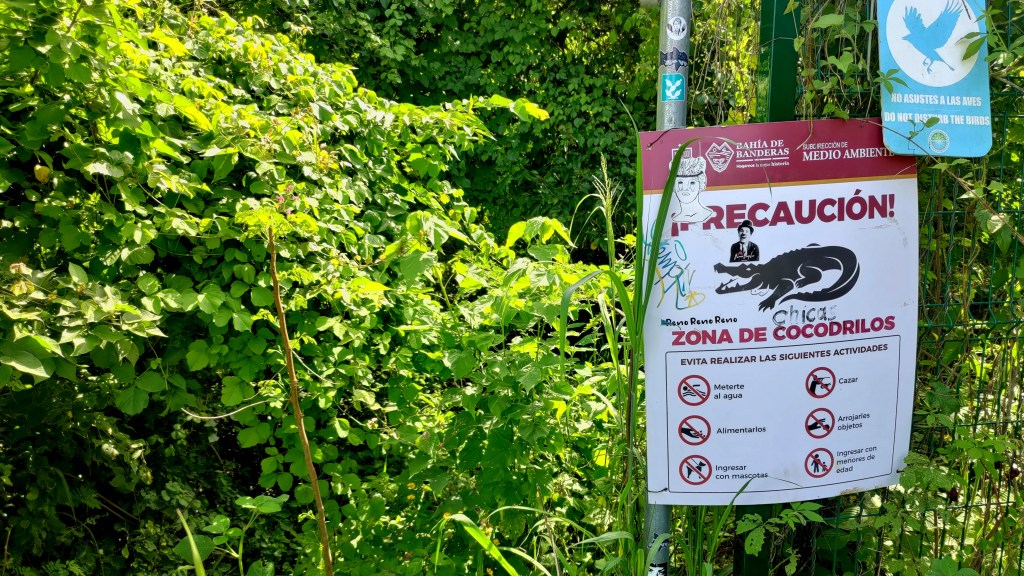
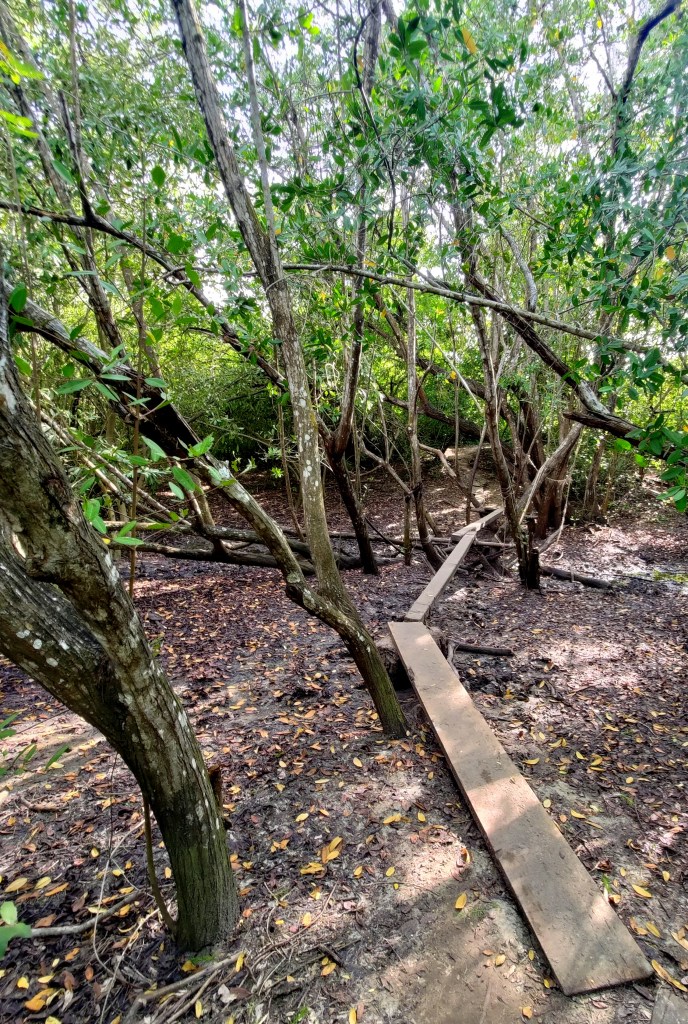

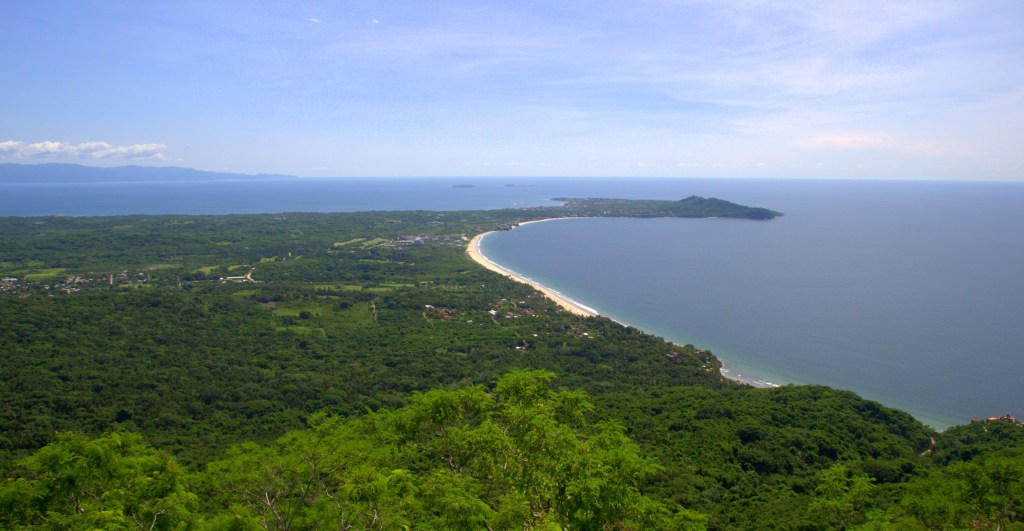
La Lancha, tiny surf and Cero del Mono
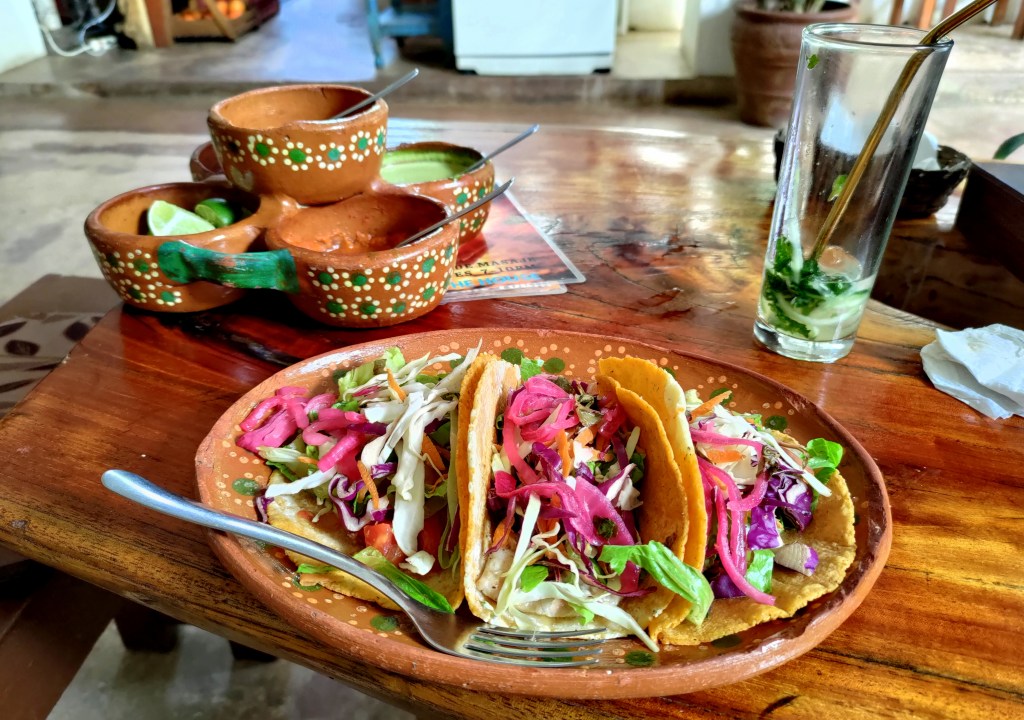
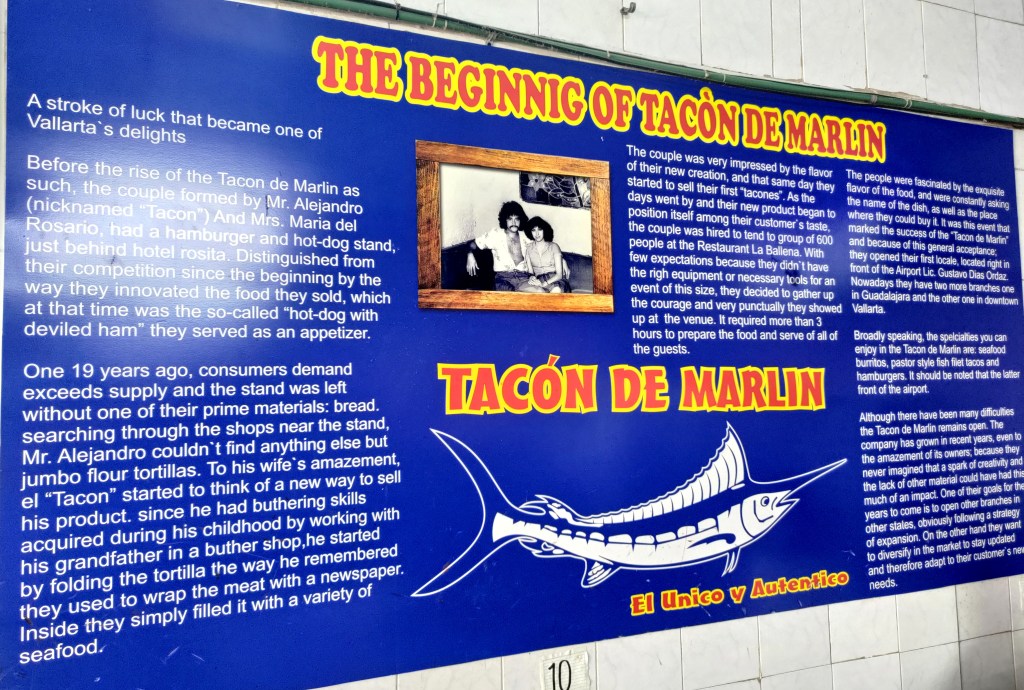
I left Sayulita a week later bound for Mexico City. The new southerly swell had filled in by late morning of the day I left, and I sadly watched prefect lines march towards the south facing coast as I rode the bus to Puerto Vallarta. I must have also looked hungry as I was trying to spot a clock somewhere in the departure terminal, trying to get certainty around whether the airport was on central or pacific time and about how much time was left until departure. The friendly gentleman next to me said that I should look no further for good food, and that el Tacón del Marlin, where he had just had no less than five tacos, was located just outside the building across the highway. I only had one hour left and wasn’t all that hungry but decided to pay it a visit anyway. The tacos were excellent. More intriguing, however, was the history of this place, which had, over decades and through a succession of coincidences and exceptionally business savvy owners, evolved from a hot dog and burger joint to a restaurant that served a dish truly revolutionary along the Mexican coast – seafood tacos. Read for yourself.
CDMX and Puebla
With a population of somewhere between 9 and 20 million, being 50km across and boasting to a multi-leveled highway system constantly clogged with traffic, la Ciudad de México is an awe-inspiring behemonth of a city also known as el Distrito Federal, México-Tenochtitlán or simply CDMX.
The 1hr taxi ride from the airport through the aforementioned traffic jams notwithstanding, it felt good to be back. I had last seen Hendrik at his wedding in 2012. Beyond being a husband, the ten years that had gone by had made him not only into a proud father of two but also a successful business man and an owner of a mansion behind frightening gates, walls and barbed wire fences. He welcomed me with cold beers, a big night out and tequila, a combination of factors that annihilated the next day.
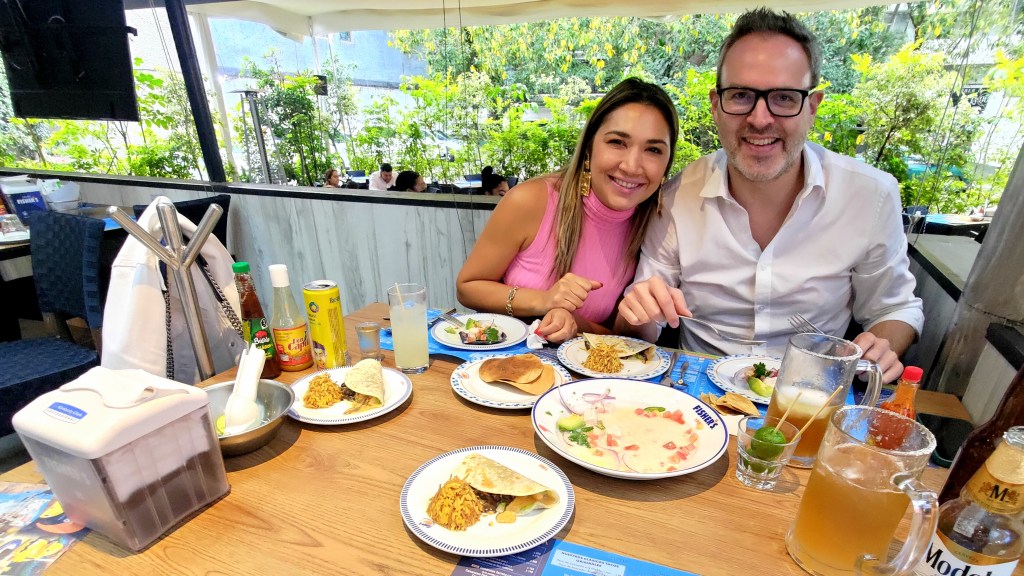

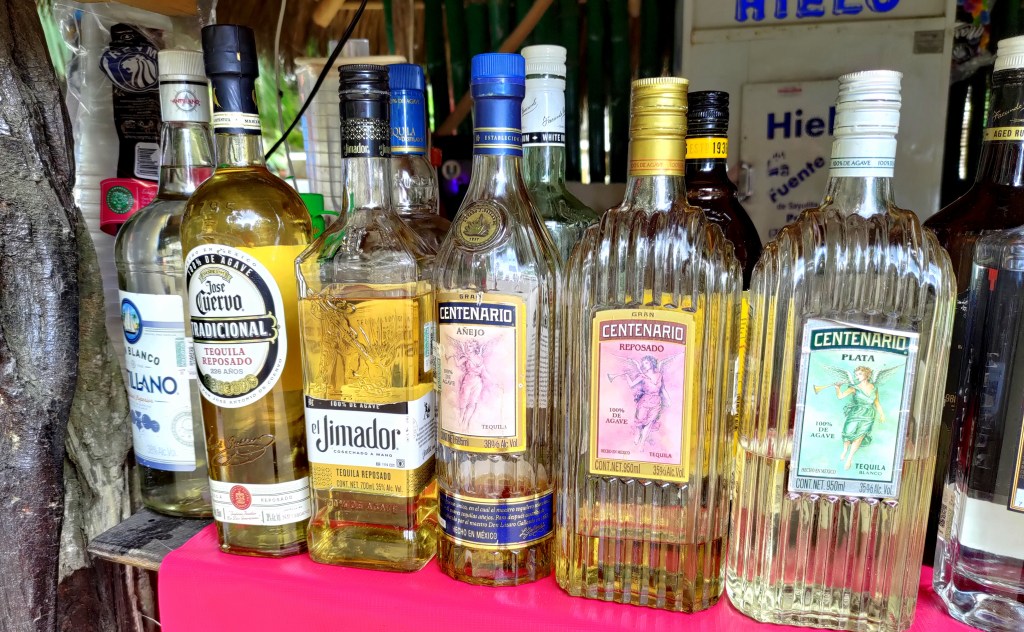
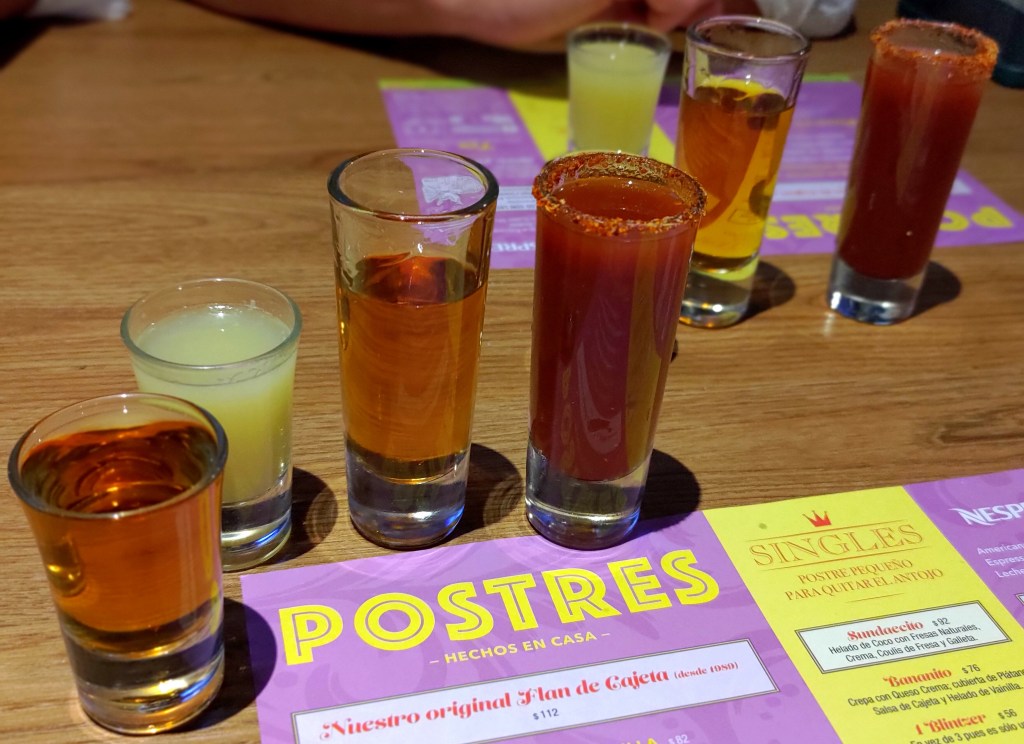
None of our night time follies would keep us from taking a day trip to Puebla, where Hendrik had first set foot on Mexican soil in the mid-2000s as an intern for a German car manufacturer. At a population of 2 million, Puebla is somewhat of a little sister to CDMX, known for its relative tranquility, culinary scene and colonial heritage. Tiles on the outside walls of various historic buildings could also lead casual visitors to believe that it is a distant cousin of Portugal, which it probably is only if one accepts a broad definition of cousinship. Hendrik and I took full advantage of Puebla’s food culture.


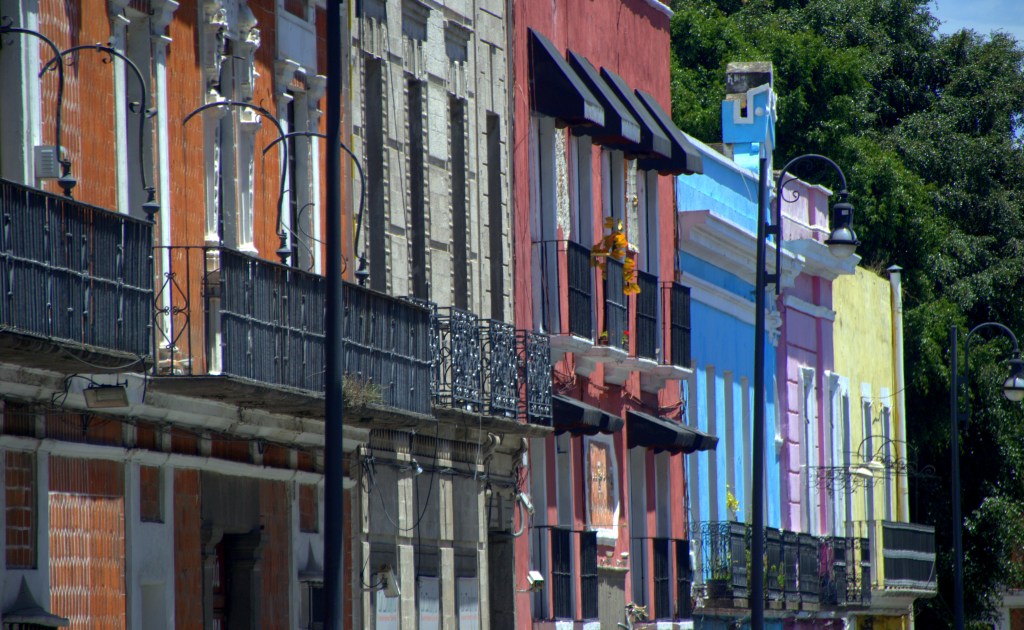

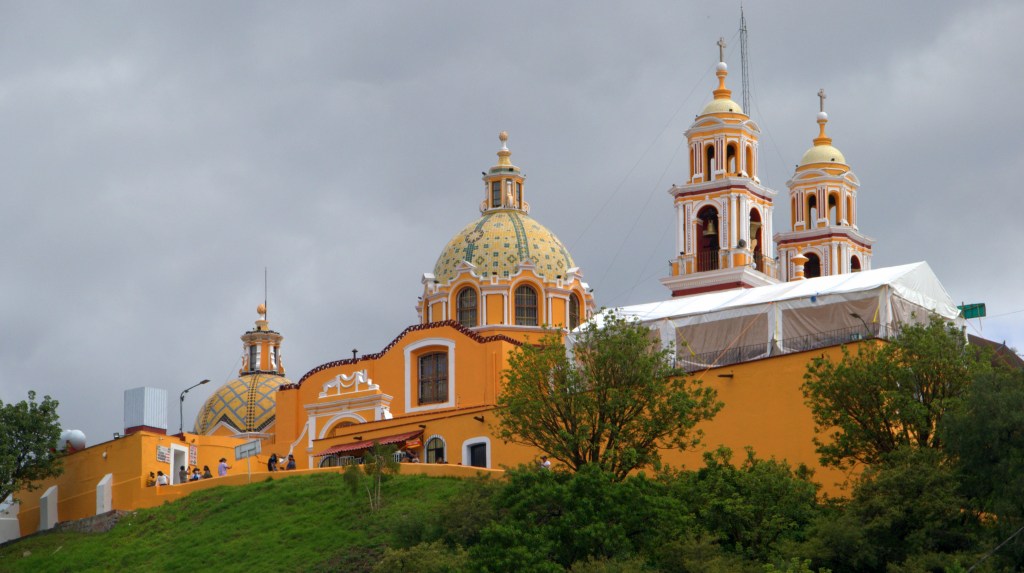
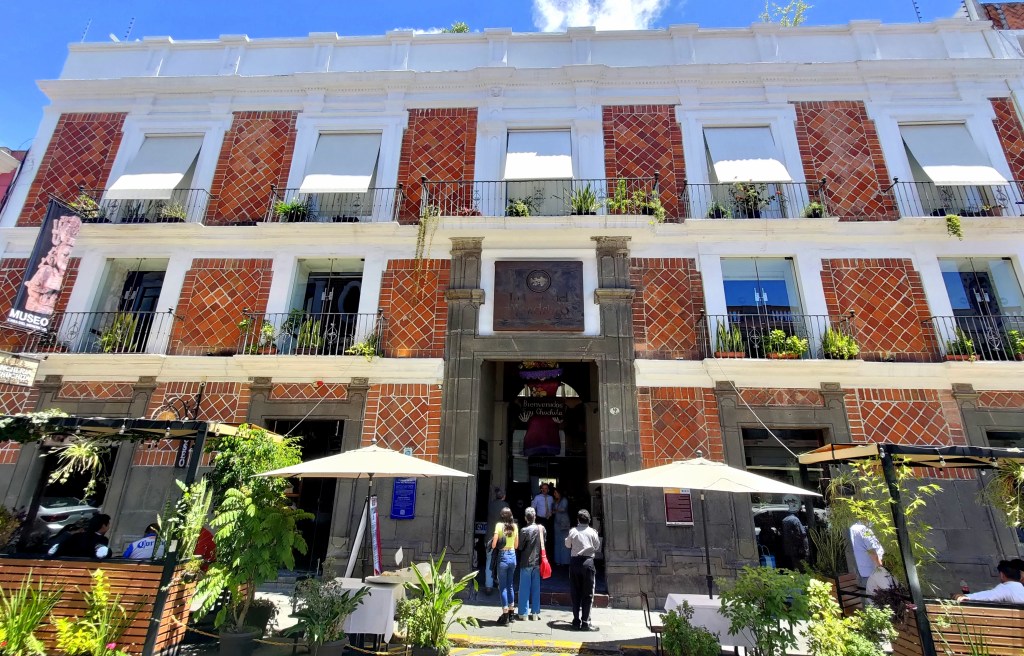
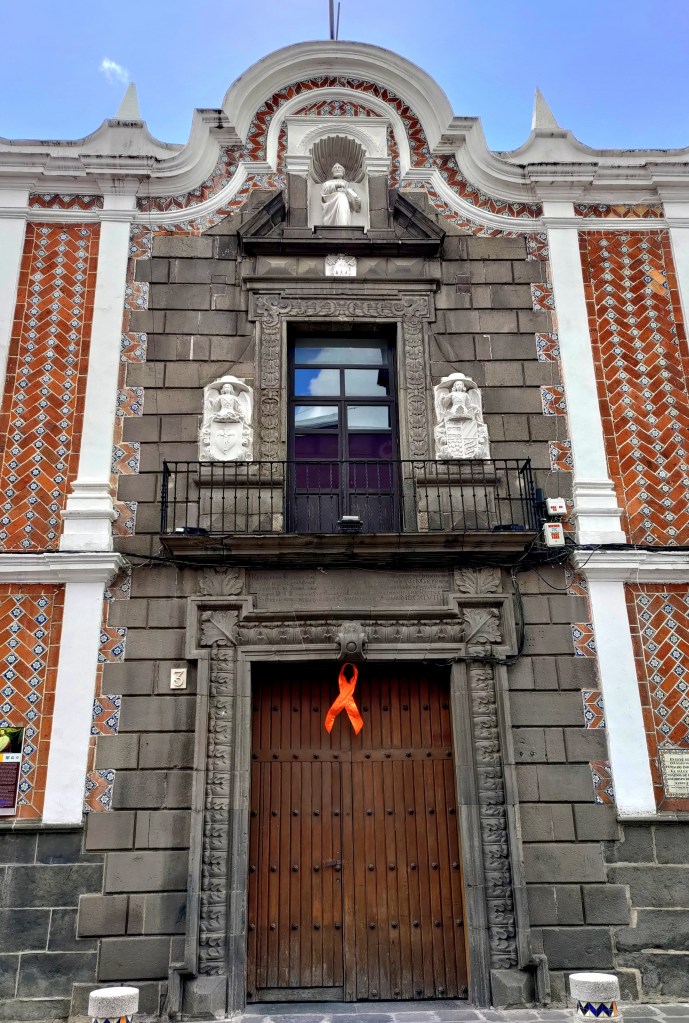
Beautiful Puebla
Xochimilco, a neigbourhood in southern CDMX, is home to the last leftovers of a system of canals initially built by the Aztecs. Although the focus in CDMX remained decidedly on eating and drinking, a gondola ride through what is also fondly referred to as Mexico’s Venice (or, less fondly, Venice for the Poor) was not to be missed. Not that I know much about the vibe in the Italian Venice but, in spite of the canals and countless gondolas, Xochimilco felt rather Mexican. The gondolas were colourful and services of most gondolieri (or perhepas gondoleros??) came as package deals with booze, sound systems and various party-enhancing utensiles or live mariachi music. The price of our tour was quickly renegotiated from an initial ask of 3,000 to 500 pesos, and included buckets of chelada and a talkative guide whose stories weren’t all too credible. We seemed to be the only ones who didn’t have a birthday, a bachelor’s party or a wedding to celebrate.
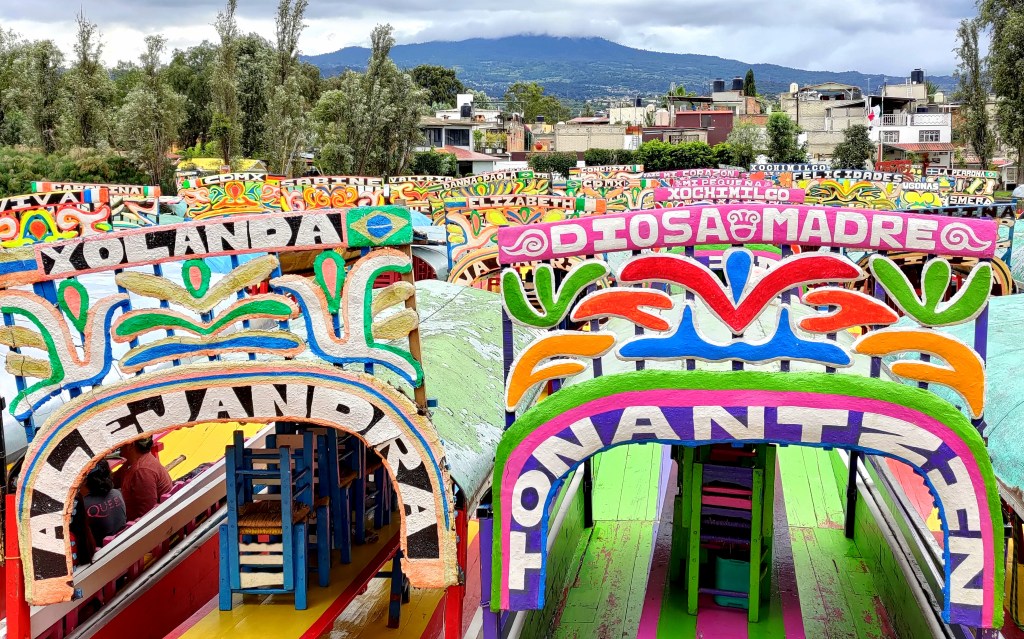
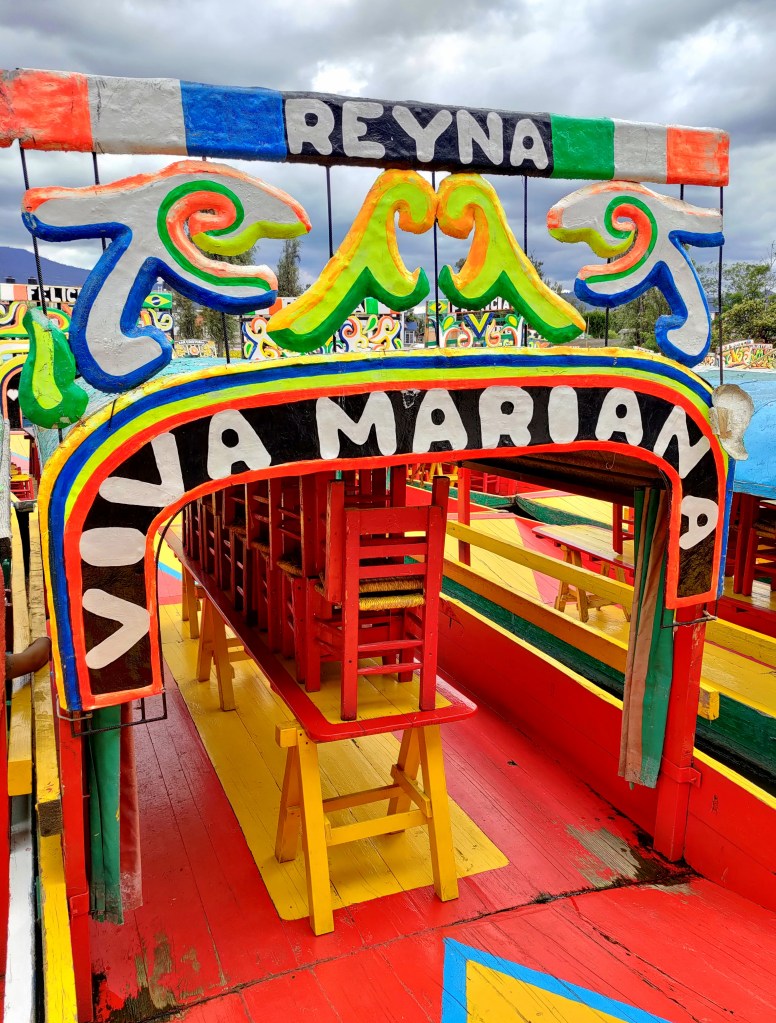
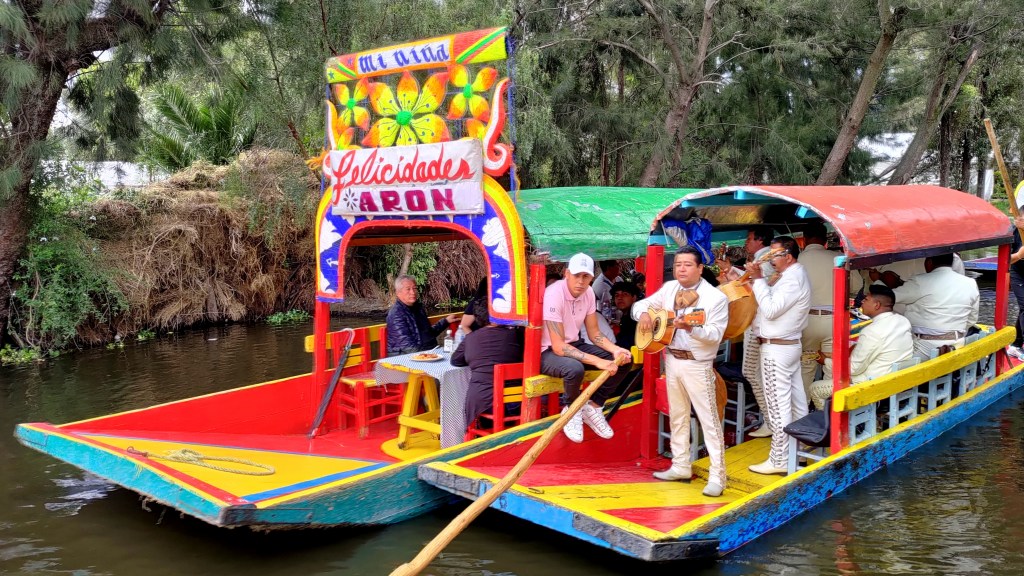

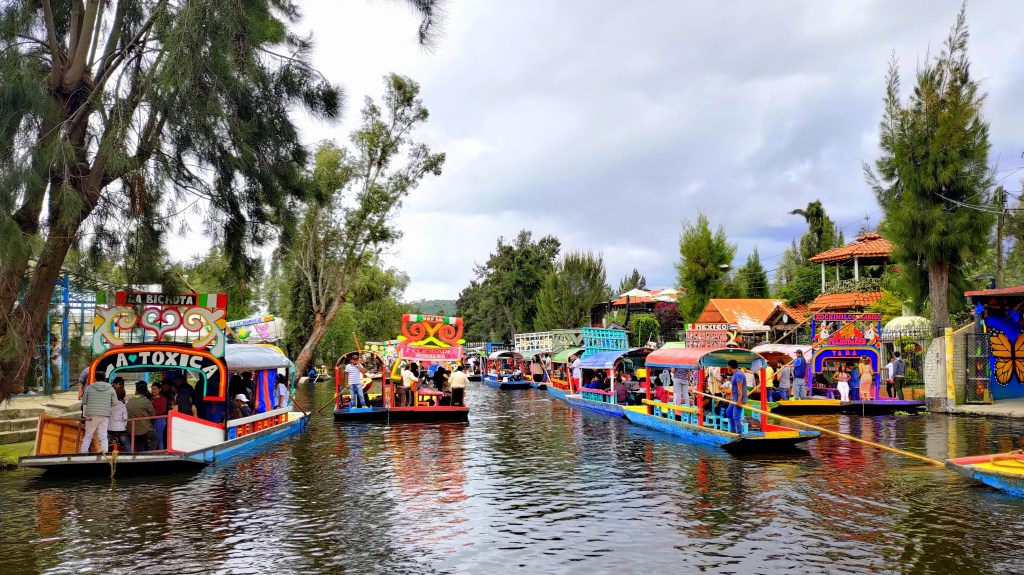
Venice for the poor and/or alcoholic?
Despite having visited Mexico City three times before, I had not yet seen the world renowned museums and monuments that crowd Bosque de Chapultepec. A bus ticket to leave town was purchased for Tuesday morning, which would leave an entire day of education and culture. It was not until standing outside closed doors of the National Anthropology Museum that it dawned to me that museums and monuments, in Mexico as in virtually all other parts of the world, were shut on Mondays. I left with some disappointment but hopeful that I might see the insides of these impressive structures during a potential fifth visit.
 My Impressions
Leave a comment