
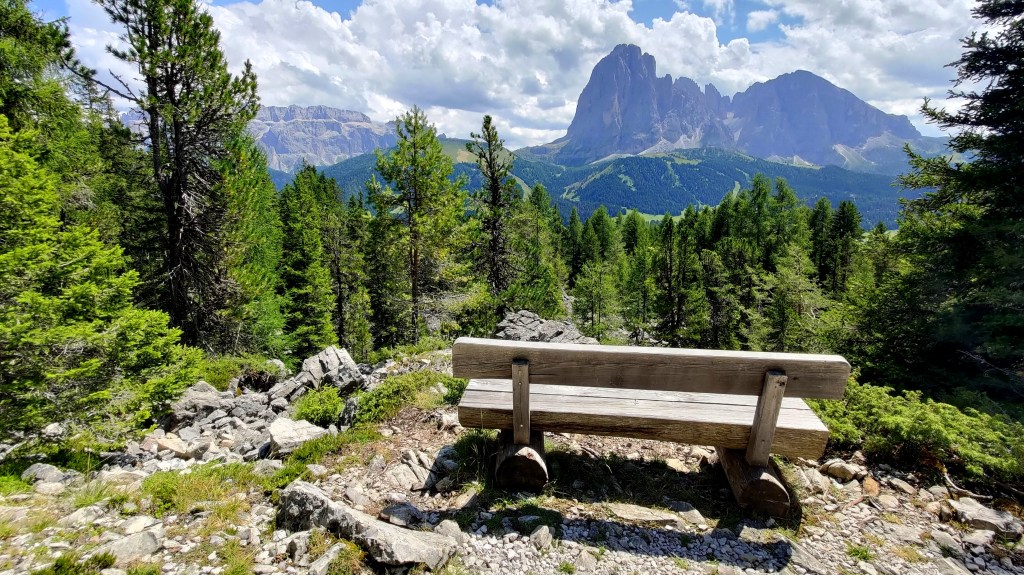
After a visit to Napoli earlier in 2022 (see here), another incursion into Italy would take me to a region that is, on nearly all levels, decidedly different from Campania. Months earlier, Mike had floated the idea of taking our mountain bikes to Südtirol, apparently after binge-watching bike channels on YouTube. It was a long way to go from the French Alps but the days on which both, Mike and Paul, would leave family life in Graz behind to ride bikes with buddies have become few and far between. Alto Adige, as this region is also somewhat misleadingly called since approximately 1918, would thus become the second Italian destination of the year. Coincidentally, it would take me back to the same mountains in which, in the year of 1999, an ambitious attempt to pedal from Brenner Pass on the Austrian border to Lake Garda in a week was abandoned by three 15 year-old and ill-equipped high school kids amid torrential rains. The 23 years that have gone by since had done little to erase unpleasant memories of endless nights of sweat and cold in a tent sized for two that was not even close to waterproof. Most other memories, however, had faded. So I set out to rediscover this region in late July 2022 and remind myself of the side of the border it would truly belong.
Bikes and trains: a journey back in time
This being the year 2022, however, the challenge would be of a different sort. My travel budget and repertoire of high-priced outdoor equipment had multiplied. Meanwhile, the latest heat wave, which really was closer to a constant since mid-June in France, was sending temperatures close to 40°C. Our collective failure to reign in carbon emissions painfully salient, traveling by train was the only option. Despite the recent hype around European railway travel, taking a muscle-powered two wheeler on a train and across international borders had become significantly more difficult since 1999. The northerly route would require tickets with the French, Swiss and Austrian national railways and was quickly off the list, with long-distance trains operated by the latter able to carry a generous payload of five bicycles on trains that seat some 400 people. The southerly route would require taking a French or Italian high-speed train across the border, all of which were fully booked, followed by a succession of Italian trains, none of which would accept bicycles on board unless packed up in a bag no longer than 120cm. Stubbornly unwilling to concede defeat, I ordered an ‘official’ train bag compatible with all types of bicycles, including 27.5” mountain bikes.
Turns out, train bags are compatible with all bikes, including 27.5” mountain bikes, except those that are too big, such as mine. Several failed attempts to use brute force later, I had dismounted wheels, pedals and derailleur to let the bike all but disappear in the bag. It was clearly longer than 120cm and had a bit of handle bar stick out but I was confident that no train conductor one would carry a measuring tape. After a 1.5 hours’ drive across the border and lunch at an excellent family-owned restaurant, I boarded the first train in Bardonecchia. No measuring tapes were to be seen, a change in Torino effortless and the journey smooth.
Passing through Italy on the way to Südtirol
Late in the afternoon, the last train would take me from Verona to Waidbruck, aka Ponte Gardena. Carrying a number of passengers that was at least twice the number of seats without air conditioning, the air inside that train was stagnant and significantly hotter than the 37°C or so outside. With two hours to go, fear of suffering heat stroke or dehydration crept up my back as sweat was dripping the other way, down my legs and into my shoes. I took solace in watching an overweight man close to me standing in a puddle of sweat. For reasons unknown, the train would terminate in Bozen, one stop short of my destination. I was assured by staff that another train would wait on the far side of the station, which it did not. But after a short wait and several staircases descended and mounted, I boarded another northbound train.
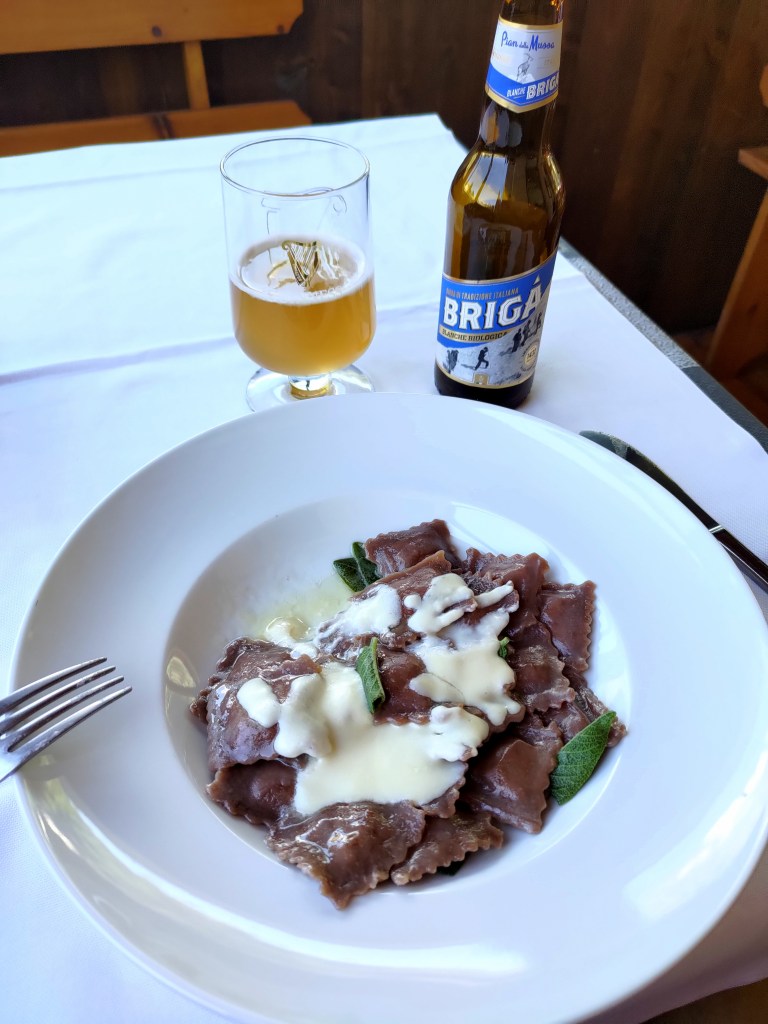
Some 13 hours after departure from France, I declared victory over all trains, disembarking at Waidbruck station. Paul was waiting in his car and took me to nearby Kalter Keller for cold beer and dinner. The combination of cured ham and melon for starters, pizza and Spätzle placed the food was somewhere in between Austria and Italy, but the beer was clearly Austrian.

Bier aus Südtirol
Seiser Alm, Schlern, Kastelruther Knödelfest and 4-star camping
We spent the first nights at Seiser Alm campsite, which is not only outrageoulsy expensive but also prides itself of a 4-star rating. A stark contrast to the 1999 camping experience in a nearby forest, it featured showers and shiny conveniences with elevator music, a pool and a convience store. Despite the price, the space for tents was neither flat nor did it offer offer shade. My guess was that such comforts would have taken us into the realm, and price category, of 5-star camping. A question to campsite staff about whether they spoke German nearly got me expelled from the property. The place felt more Austrian than Austria.
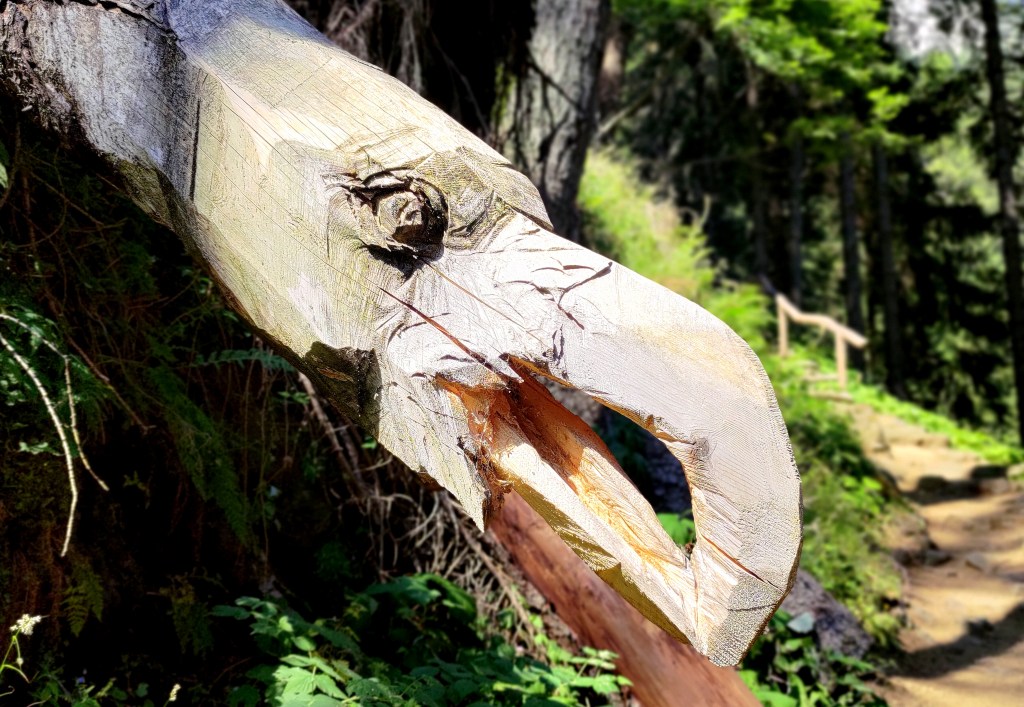
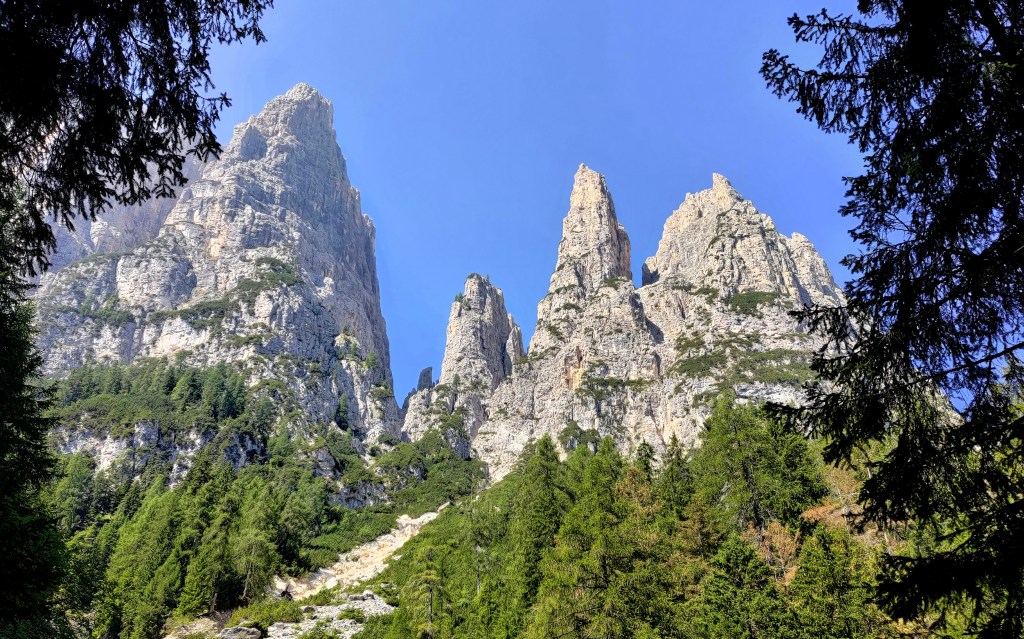
Paul and I decided to climb Schlern, aka Sciliar, from Bad Ratzes, a serious but not overly ambitious and breathtakingly beautiful route for a day’s hike. After reaching the summit just above 2,500m sea level, marked Monte Pez on the map, we had beers and Apfelstrudel on the way down at Schlernhaus and Schlernbödele Hütte. The number of watering holes in the mountains were a clear sign of Austria. Italy was nowhere to be seen.
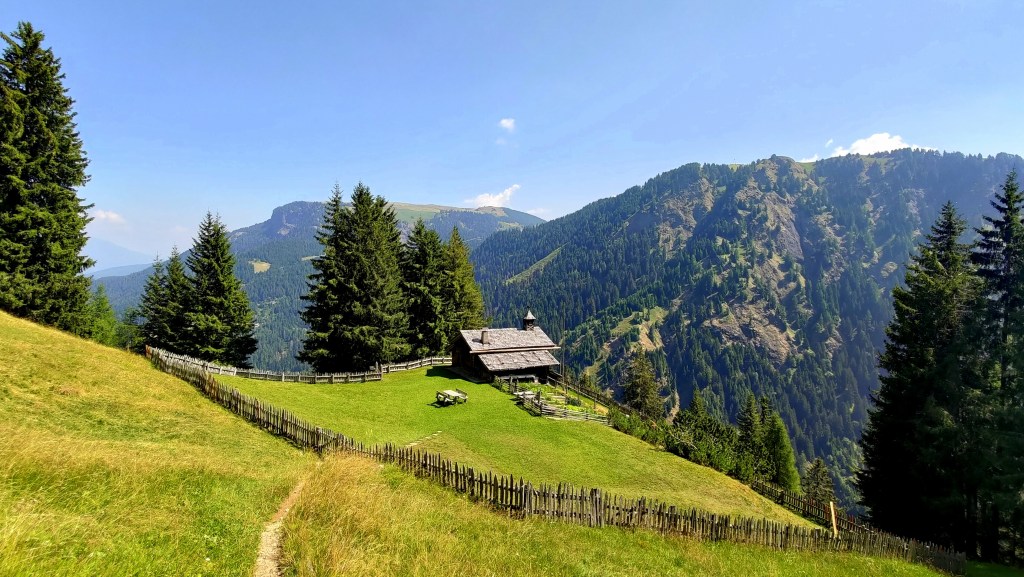
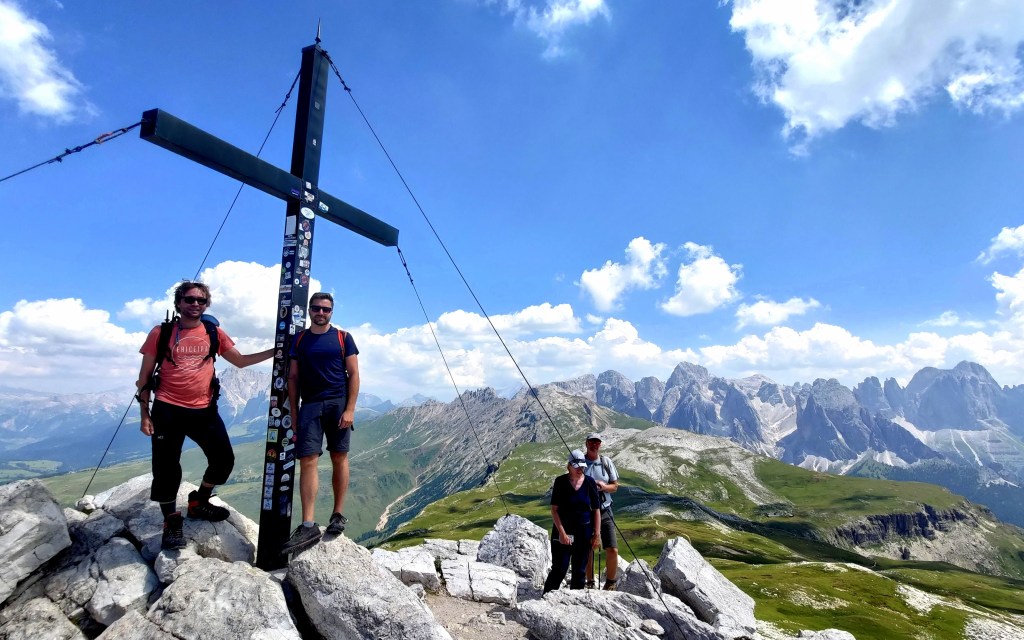
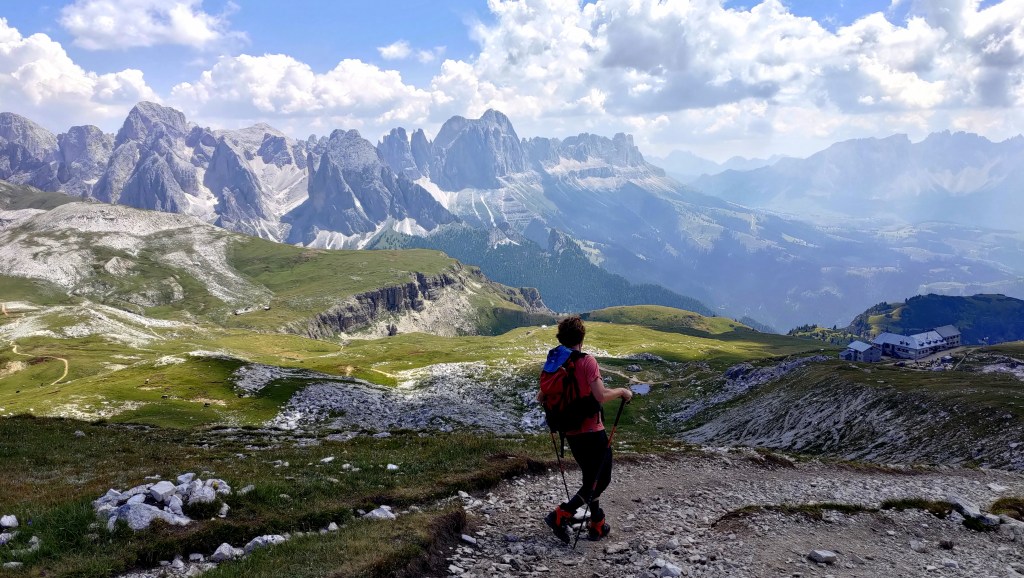
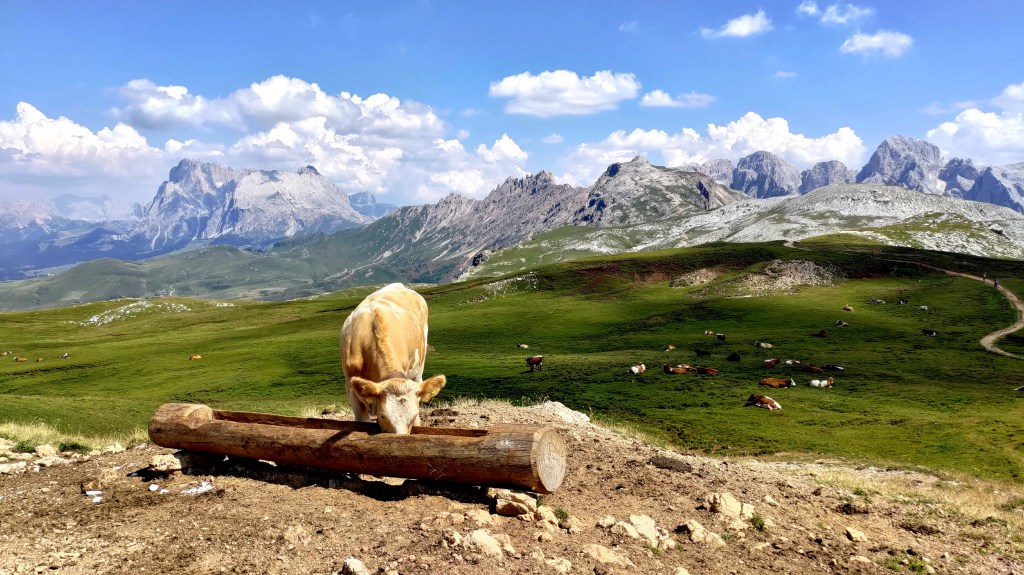
Hiking Schlern
After toying with the thought of eating dinner at a local pizzeria, Paul decided unilaterally that the much-advertised Kastelruther Knödelfest was the more appropriate destination. He was right. The church square had been turned into a massive beer garden and Knödel were cheap and tasty. We had Speck– and Spinatknödel as main and Marillen– and Erdbeerknödel for dessert. By the end of this second day of our trip, Austria was commanding a 3:0 lead. To my elation, Kastelruth’s most famous sons – the infamous Kastelruther Spatzen – were only to be seen in the form of statues outside of town and the brass band present was busier drinking beers than playing music.
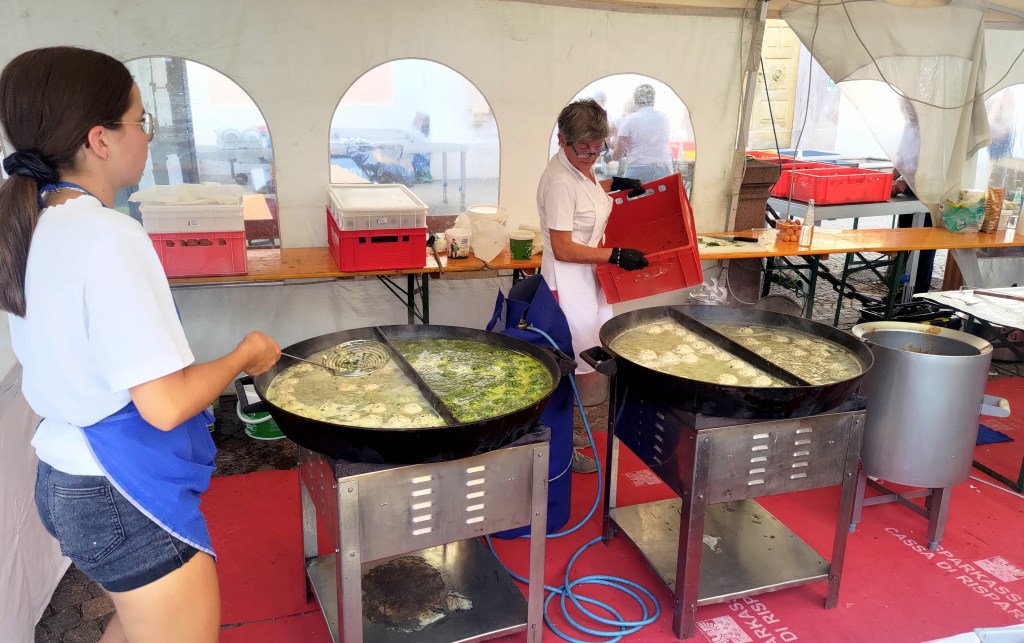


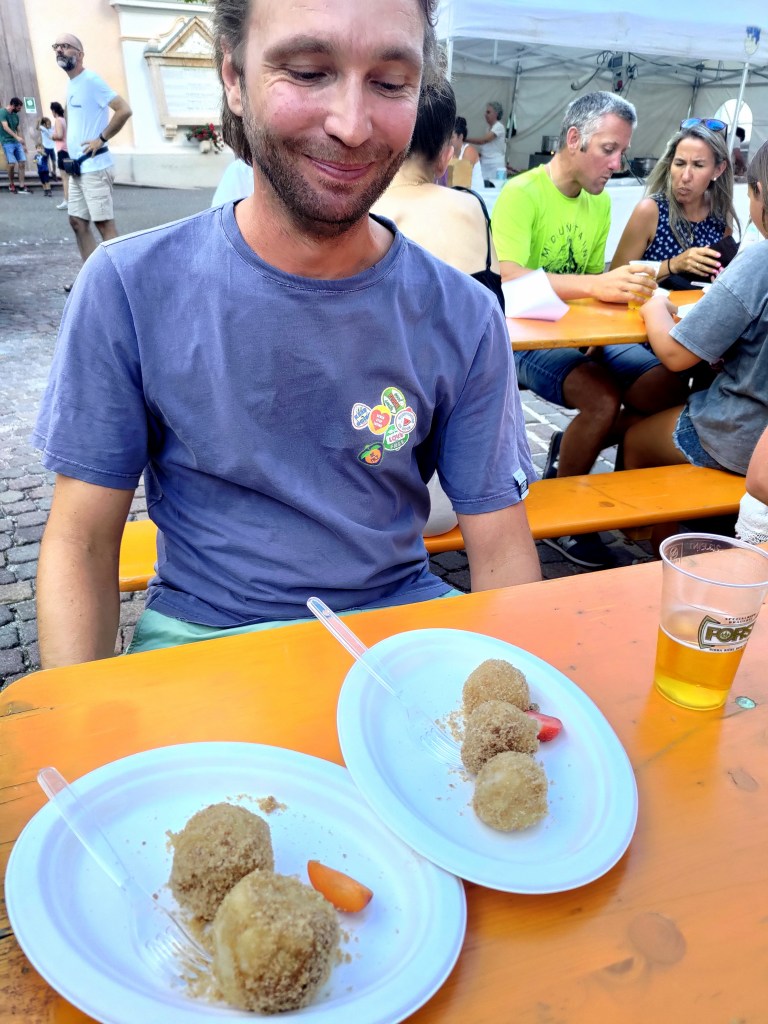
Kastelruther Knödelfest without Kastelruther Spatzen
The night brought several and, in the driest and hottest European summer in decades, much-awaited downpours. My tent kept water out impressively. But the countless Knödel consumed for dinner made sleeping no easier.
A quick one to Baita Sëurasas
The next morning, we moved from Seiser Alm to Santa Christina in Gröden, where Paul had booked us a hotel for the following nights. A quick look at the map revealed the inviting Baita Sëurasas as a destination for an afternoon ride. The climb was steep, first up a road then on forest tracks and hiking trails, but the view rewarding. It afforded a summery impression of the world famous Saslong ski downhill course. Beers were combined with Tiroler Gröstel and Kaiserschmarren. Even though places in this area had names somewhere in between German, Italian and Ladin, the food was as Austrian as anywhere.
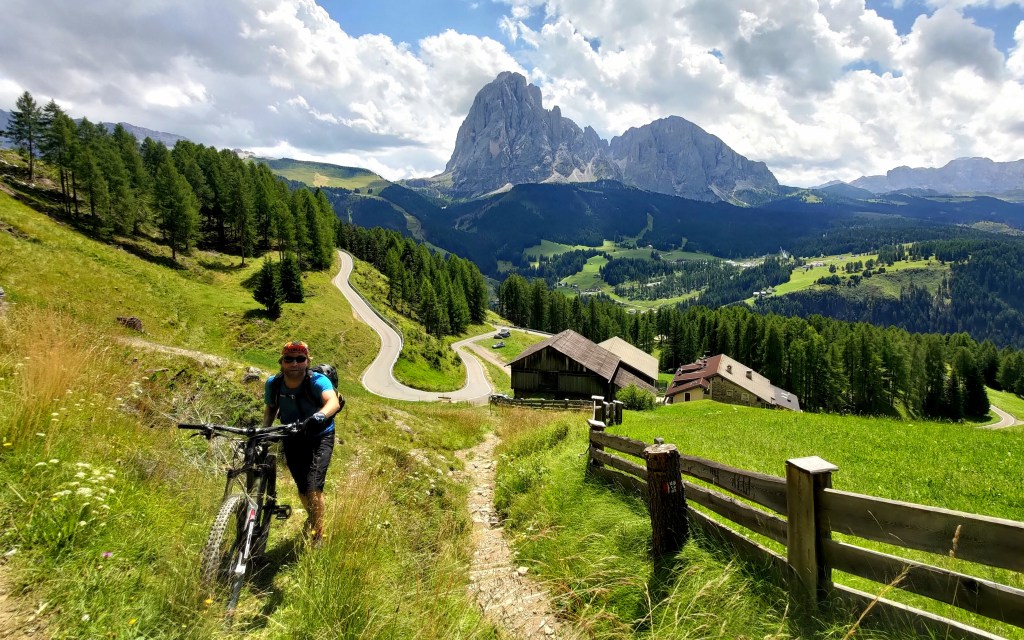
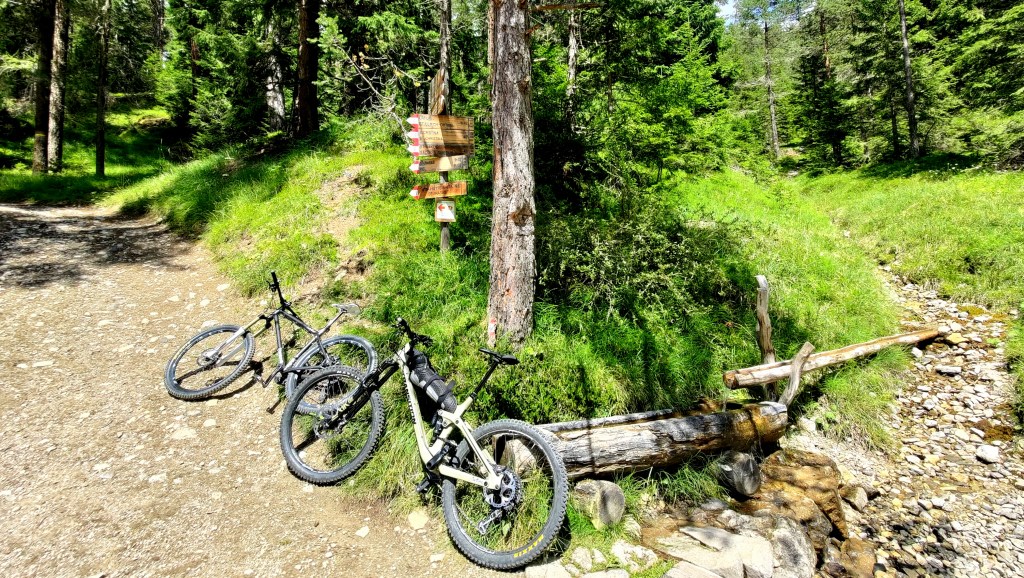
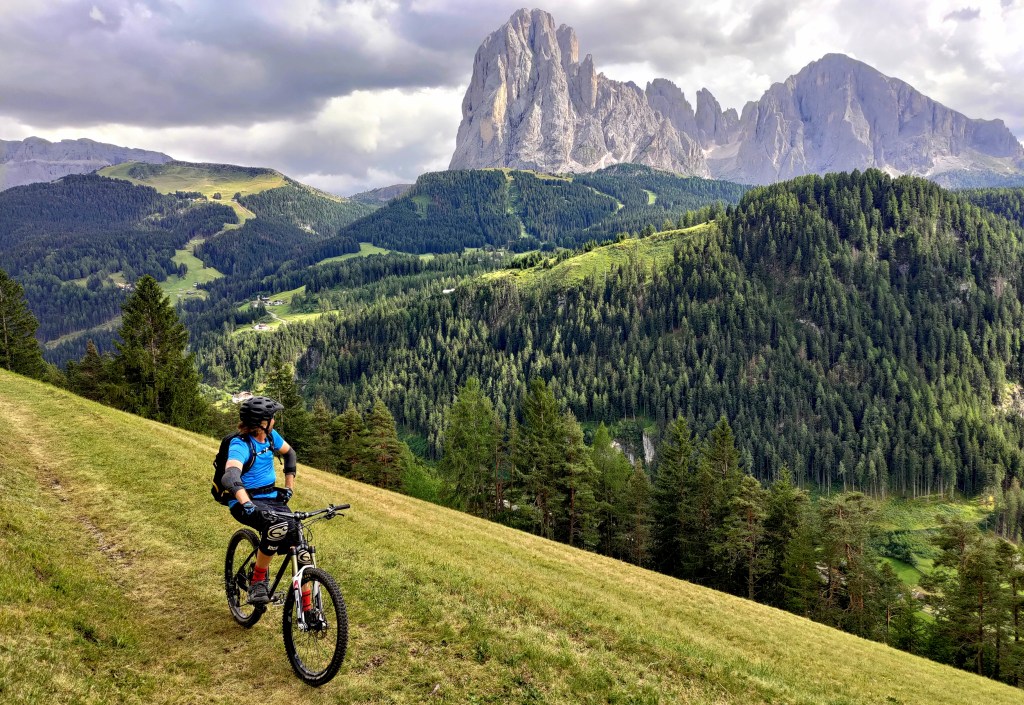
On the way to Baita Sëurasas
Mike was closing in and, not much of the afternoon left, we instructed him to drive half-way up the hill, park his car, continue by bike and join us on the terrace. We ordered him a pint when he sent a text claiming that he was at the last switchback. As the beer got warmer and no one came to drink it, we learned that he had cycled from the bottom and was at the last switchback before reaching the parking lot half-way up. The beer went to waste pitifully and we met him after having returned to the hotel.

The team is complete
Sellaronda MTB Tour
With Mike now with us, it was time to hit the Sellaronda MTB Tour, advertised as “the panoramic tour in [sic!] mountain bike in an area of outstanding beauty around the Sella Group in the Dolomites”, and indeed the main argument of Mike’s in convincing us to travel to Südtirol. It is a 60km loop through dramatic scenery, using mechanical assistance for most climbs and featuring 4,000 or so vertical meters in descents. As we gathered from the website, “the tour takes adequate physical preparation to face some short climbs and descents that require agility and experience.” Experienced as we were, we thus had a few beers more the night before and procured an ample amount of cheese and smoked sausages, locally known as Kaminwurzn, at the local farmer’s market to be prepared. Keeping score between Austria and Italy seemed ridiculous at this point.

Austria’s ultimate victory
We would depart from Wolkenstein, a few kilometers up the hill from our hotel. Front desk staff at the hotel assured us that buses to Wolkenstein would carry bicycles, provided there was enough space. Having shown up at the bus stop right on time early in the morning, the driver of the next bus looked us in the eyes, smiled and drove right past us as we were getting ready to load our bikes. That added a few hundred meters of vertical to the climbs we would do without mechanical assistance.
Sellaronda took us on gravel roads, purpose-built mountainbike tracks and playful single trails for the entire day. Trails were shared with hikers and the odd cow. The rides were fun, albeit not particularly technical, but the scenery as outstanding a advertised. As we ordered coffee after descending from the first mountain pass and tried to borrow tools at a local bike repair shop in German, it became apparent that we had come closer to true Italy. But scoring a point for Italy would have been the wrong decision. Without noticing, we had briefly crossed into Belluno province . By 4pm, however, we were firmly back in Südtirol and the a sunny terrace with beers where we belonged.
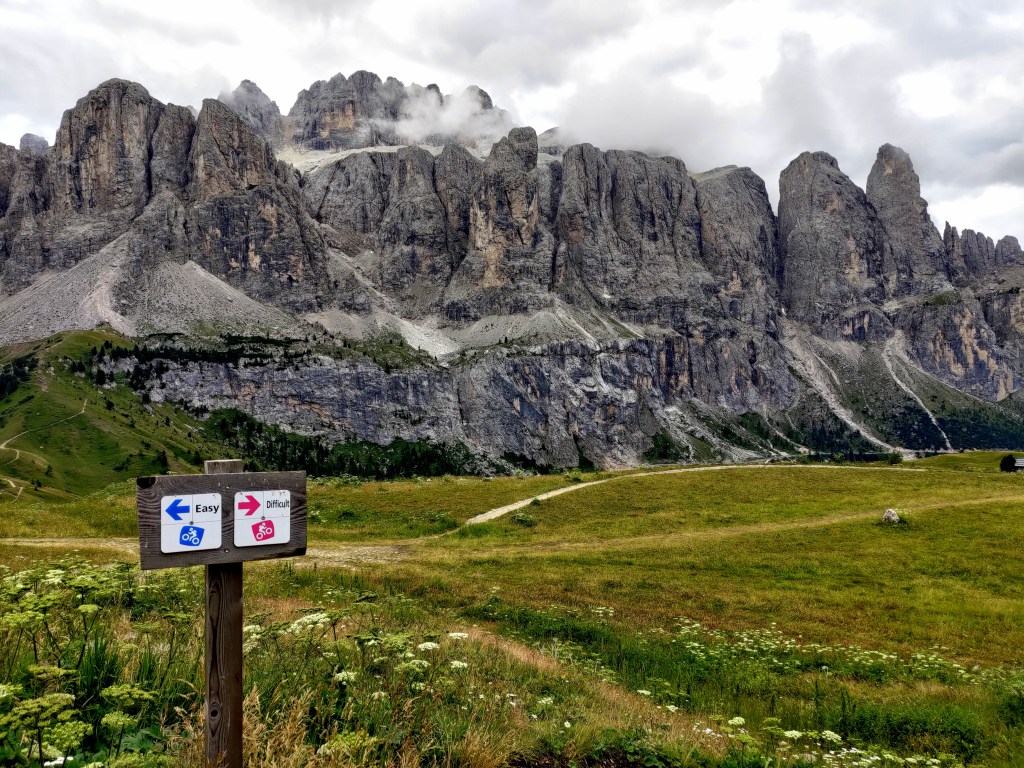
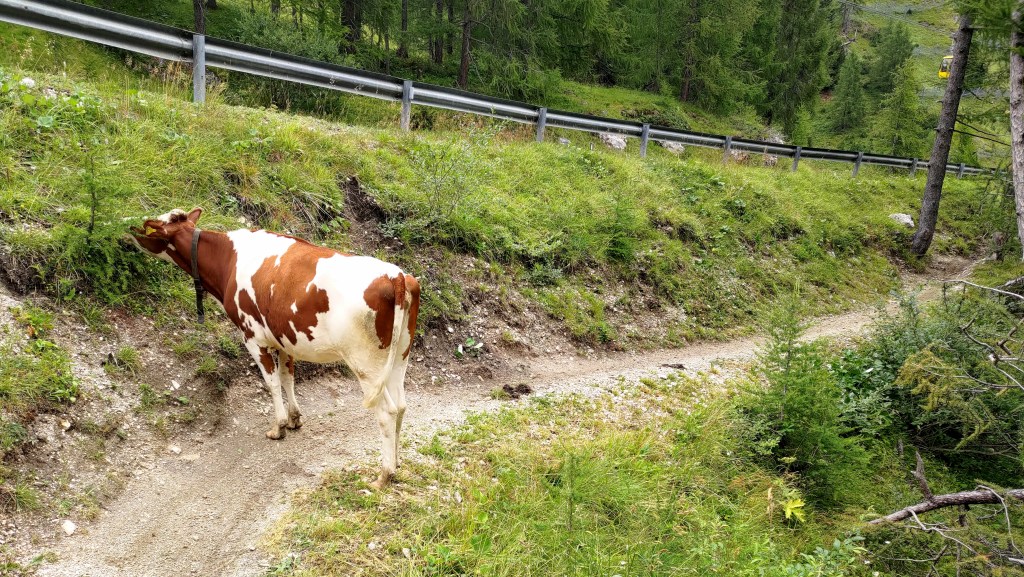
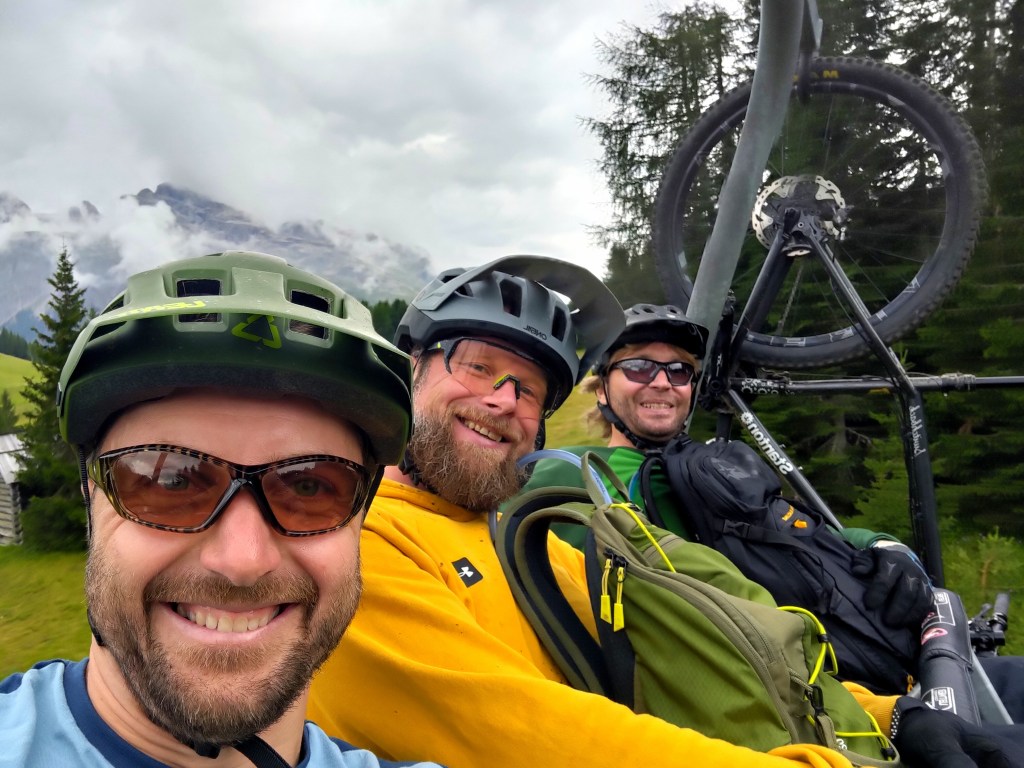
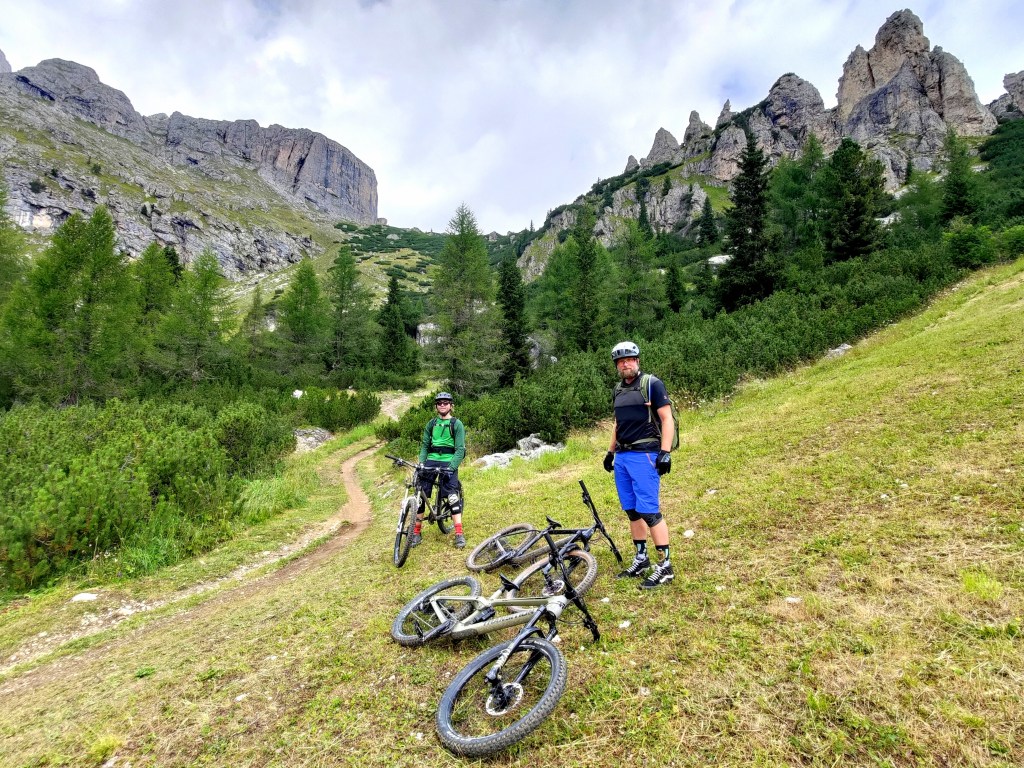
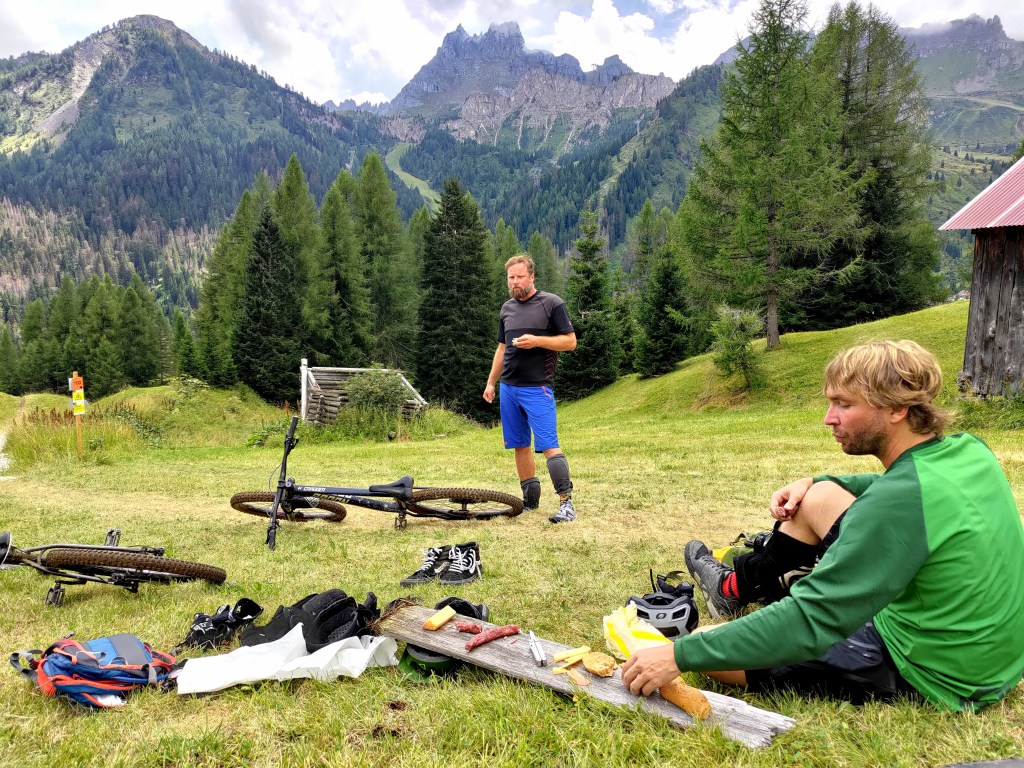
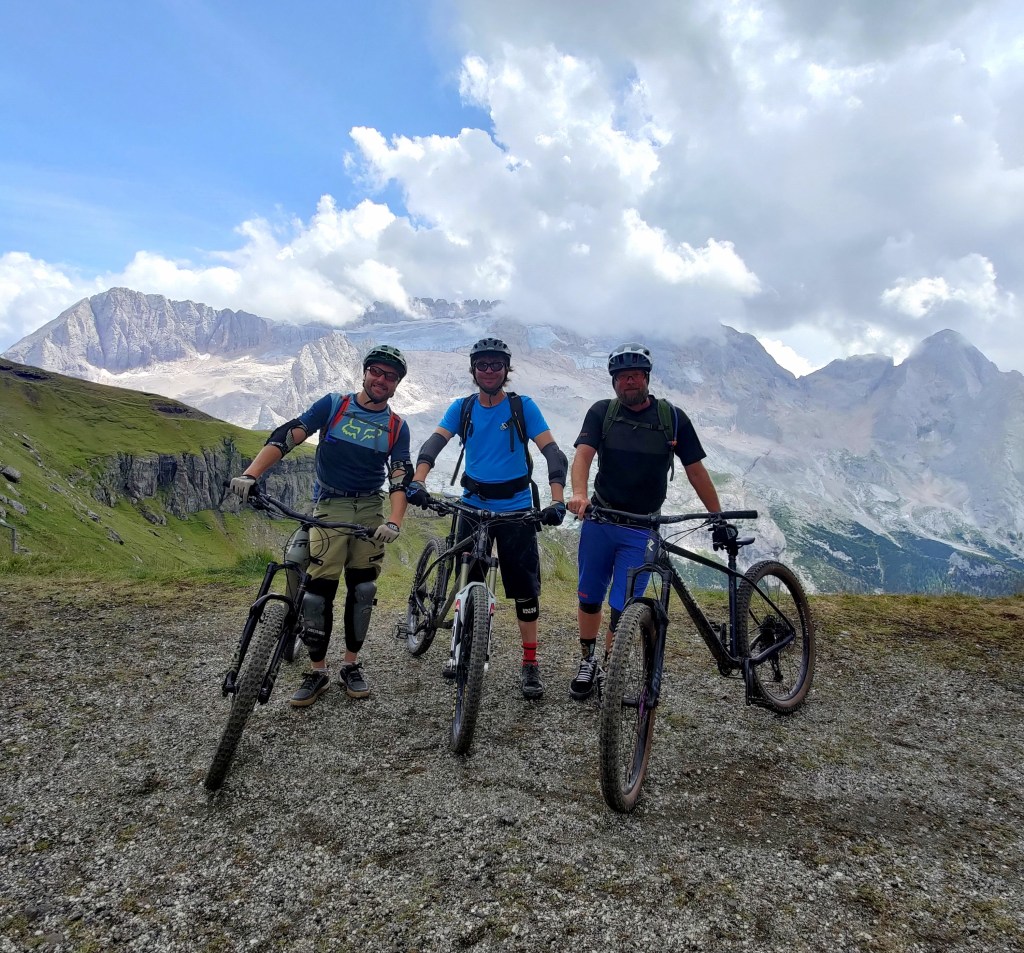
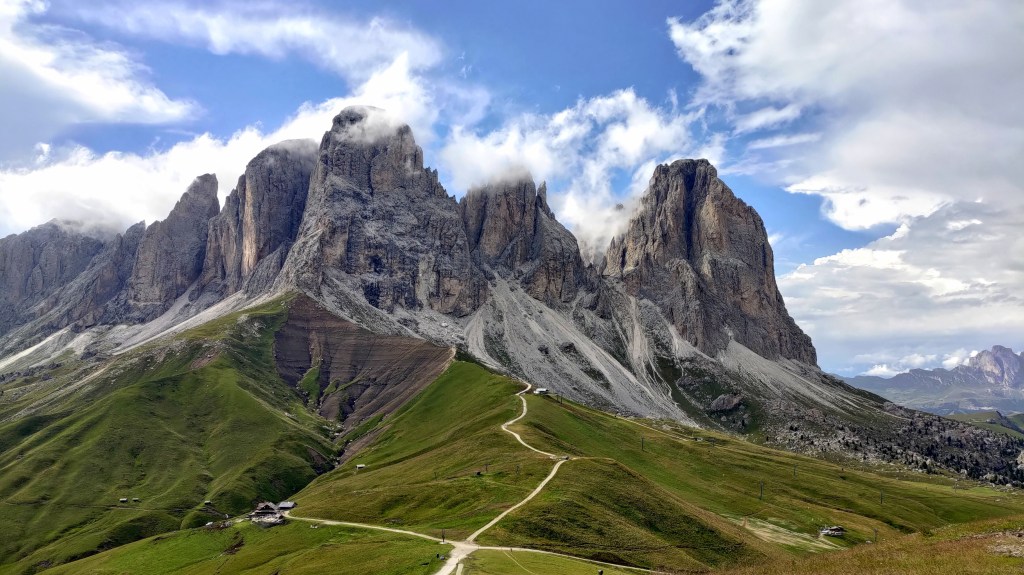
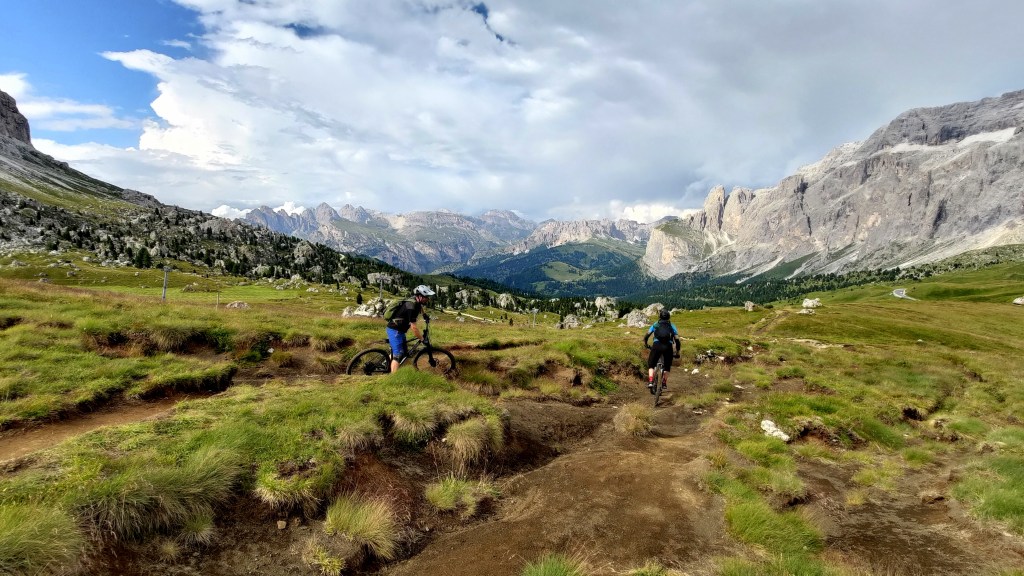
Sellaronda MTB Tour
Südtriol or Alto Adige?
The last day took us on a loop I had scoped out on the map, from St Ulrich to Brogles Alm, down to Seceda cable car, and back to Baita Sëurasas across Monte Pic. Not all trails on this itinerary were as playful and perfectly inclined as the one down Brogles Alm and we briefly had to split from Mike for the steepest part. Neither were all of them equally welcoming of mountain bikers. None of that mattered by the time we stopped for a lunch of Kaminwurzn on a beautiful meadow, made another stop at Baita Sëurasas and were back at the hotel by the time it started pouring down.
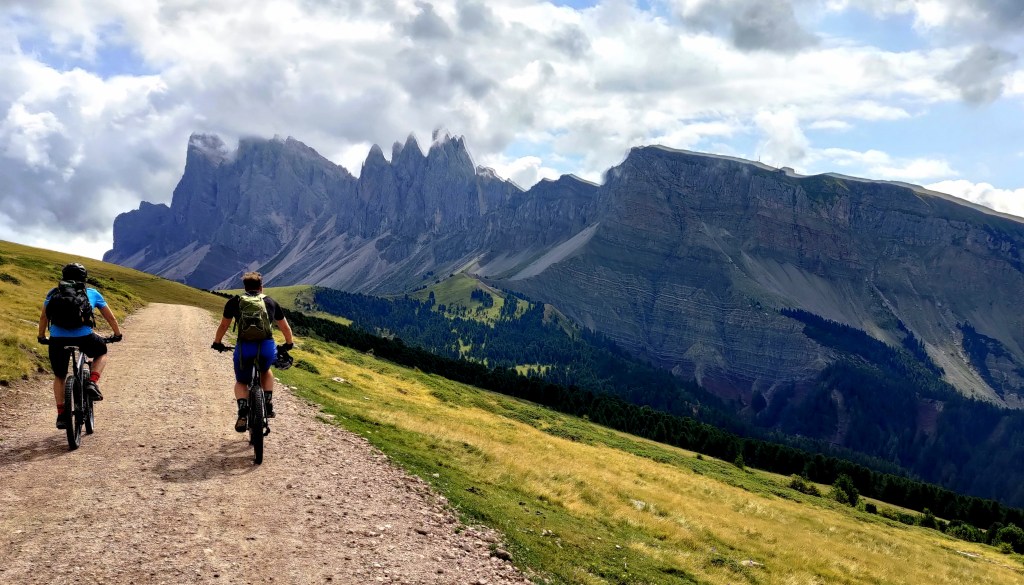
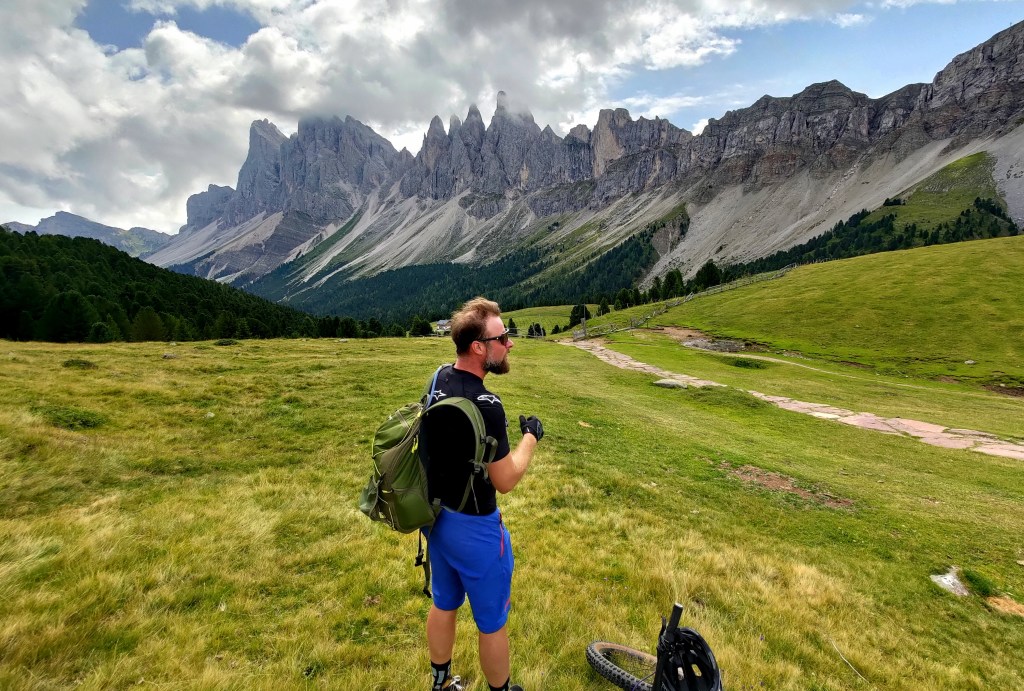
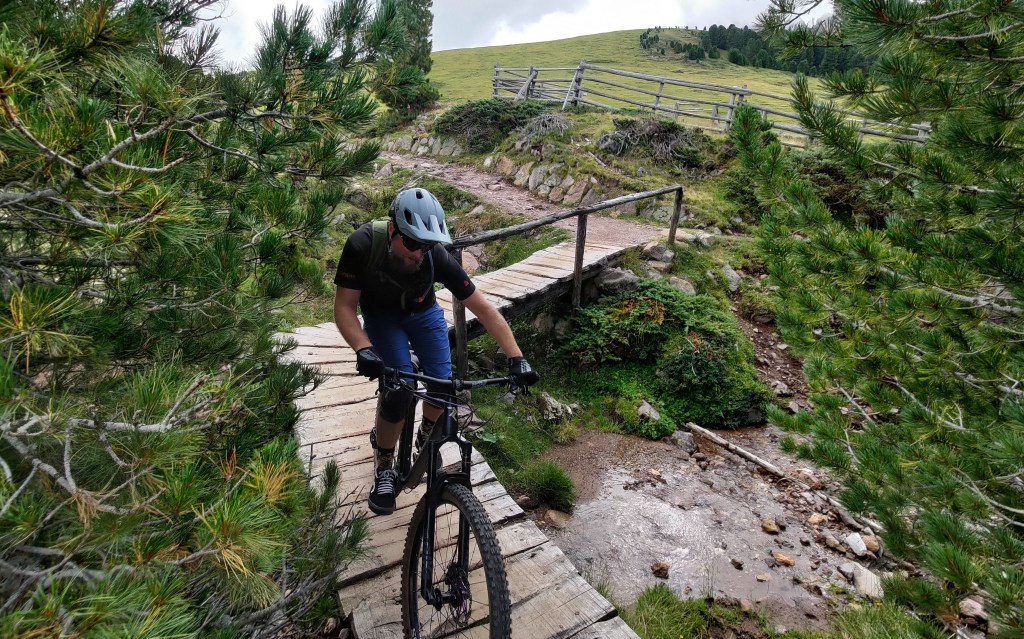
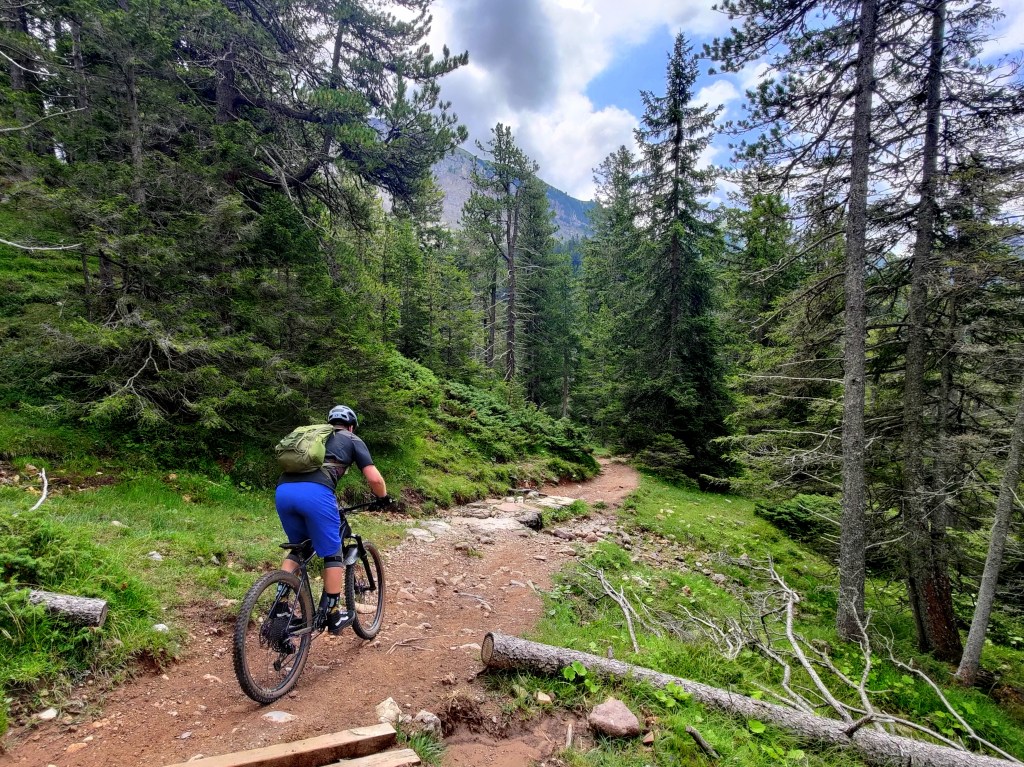
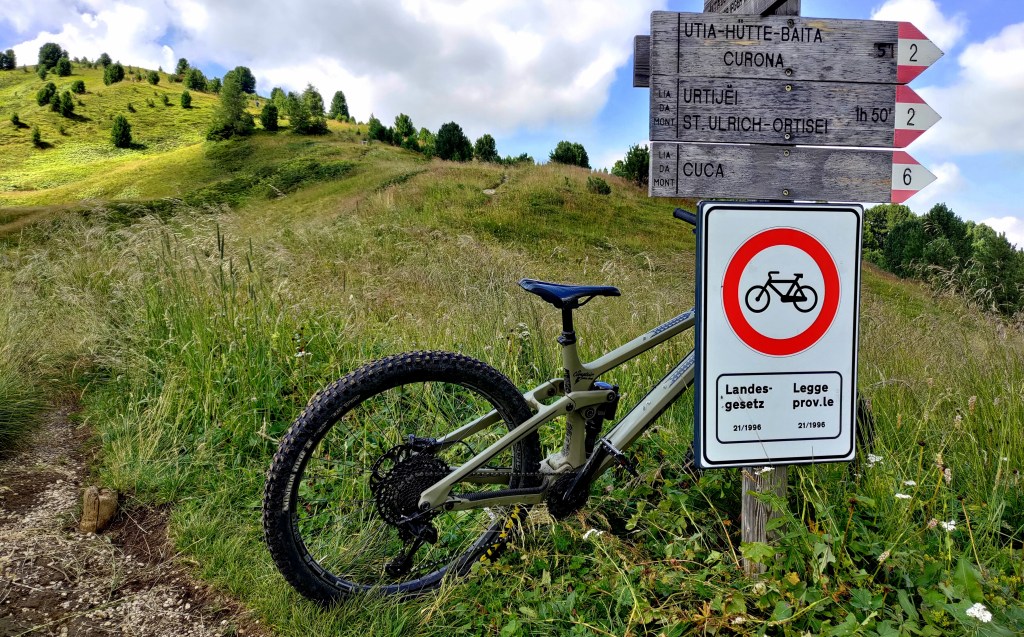

A last day on our bikes
As it turned out, there was no contest between Südtirol and Alto Adige and I felt naive for having somehow expected it to be close. No part of Austria I know felt more Austrian than Südtirol. My match against various trains, on the other hand, ended in what I’ll call a draw. Diligent the travel planner I am, I double checked the departure time of the first train on my way back to France, which, I thought, would leave from Waidbruck the next morning. It had departed at 8.10am some 12 hours earlier. I bought a new ticket, disassembeld my bike and asked Paul to drop me at the station. Half a day and several changes later, I got on the last train from Torino to Bardonecchia in blistering heat. The air conditioning was not working.
Navigate to
Pages
Categories
 My Impressions
Leave a comment